English
 Français
 Español
Reliable Diesel Generator Sets for Critical Power Applications
Oct 12, 2026
Content
- 1 Why Diesel Generator Sets Remain Essential for Critical Power
- 2 Product Overview and Configuration
- 3 Advantages of the Engine Platform
- 4 Alternator Performance and Electrical Quality
- 5 Intelligent Control and Protection
- 6 Compliance with Recognized Standards
- 7 Power Ratings and Application Selection
- 8 Fuel Efficiency and Operating Economics
- 9 Low Emissions and Environmental Considerations
- 10 Applications Across Multiple Industries
- 11 Manufacturing Strengths and Quality Management
- 12 Installation Engineering
- 13 Maintenance and Lifecycle Support
- 14 Advantages Compared with Generic or Poorly Matched Alternatives
- 15 Customization and Project Configuration
- 16 Purchasing Checklist for International Customers
- 17 Company Capability and Customer Partnership
- 18 Recommended Operating Practices
- 19 Conclusion
- 20 Questions and Answers
- 20.1 What power range is available for the Cummins powered diesel generator set series?
- 20.2 Which operating modes are supported?
- 20.3 What type of alternator is used?
- 20.4 Are the generator sets suitable for data centers?
- 20.5 Can the generator sets operate in hospitals?
- 20.6 What standards are associated with the product?
- 20.7 Can the generator be customized?
- 20.8 How should the generator be sized?
- 20.9 What maintenance does a diesel generator require?
- 20.10 What information should be included in a quotation request?
- 20.11 What is the difference between the company’s stated range and the series range?
- 20.12 Does the supplier provide installation support?
- 21 References
- 22 Product: Cummins Powered Diesel Generator Sets
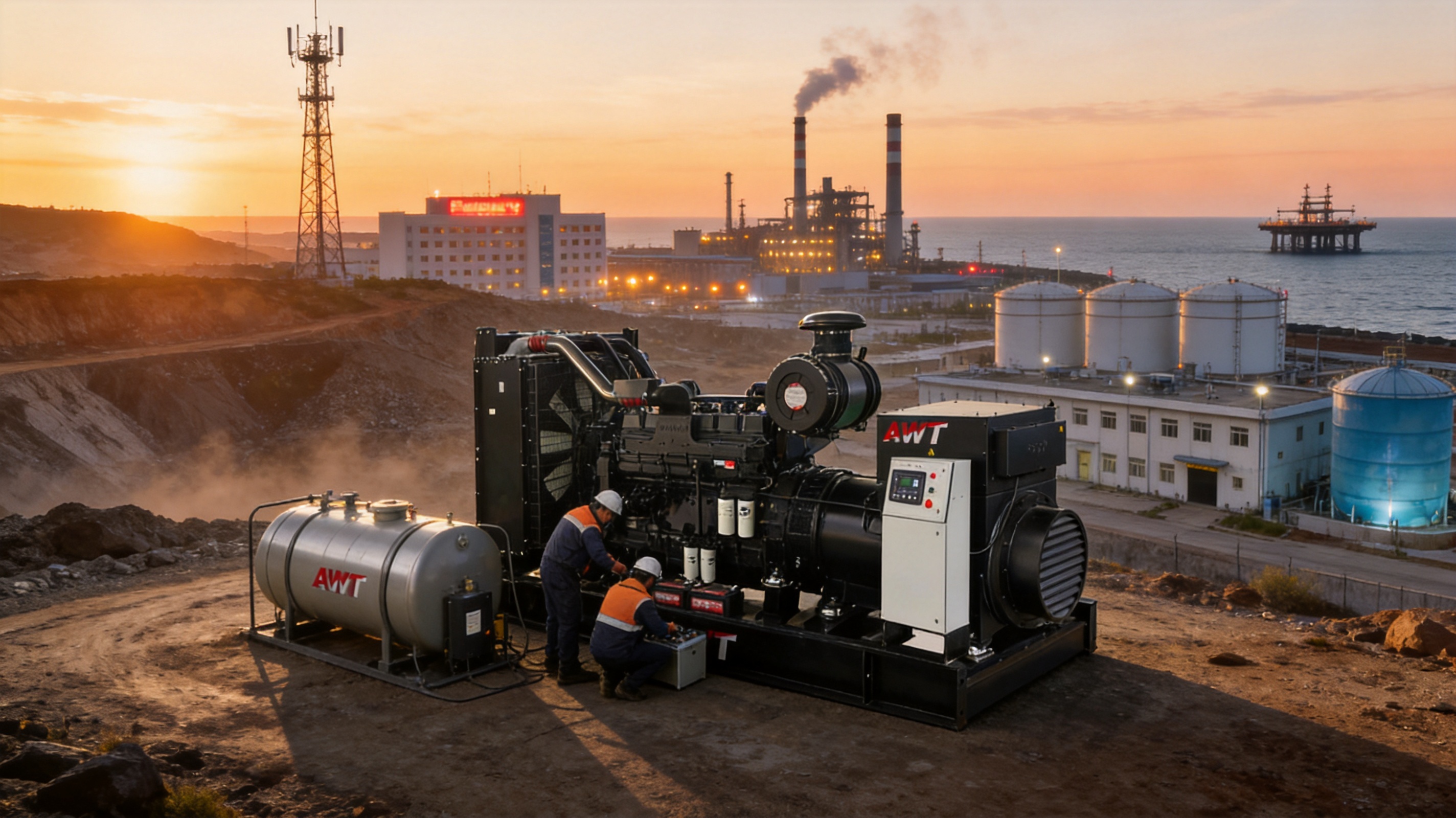
Reliable electrical power is essential wherever interruption can affect safety, productivity, communications, data integrity, or business continuity. Hospitals, data centers, telecommunications facilities, industrial plants, mines, hotels, municipal infrastructure, offshore installations, and emergency-response organizations all require power systems that can operate dependably when the utility grid is unstable or unavailable. For these applications, diesel generator sets remain one of the most practical and proven solutions because they combine high output, long operating endurance, rapid load response, and flexible installation.
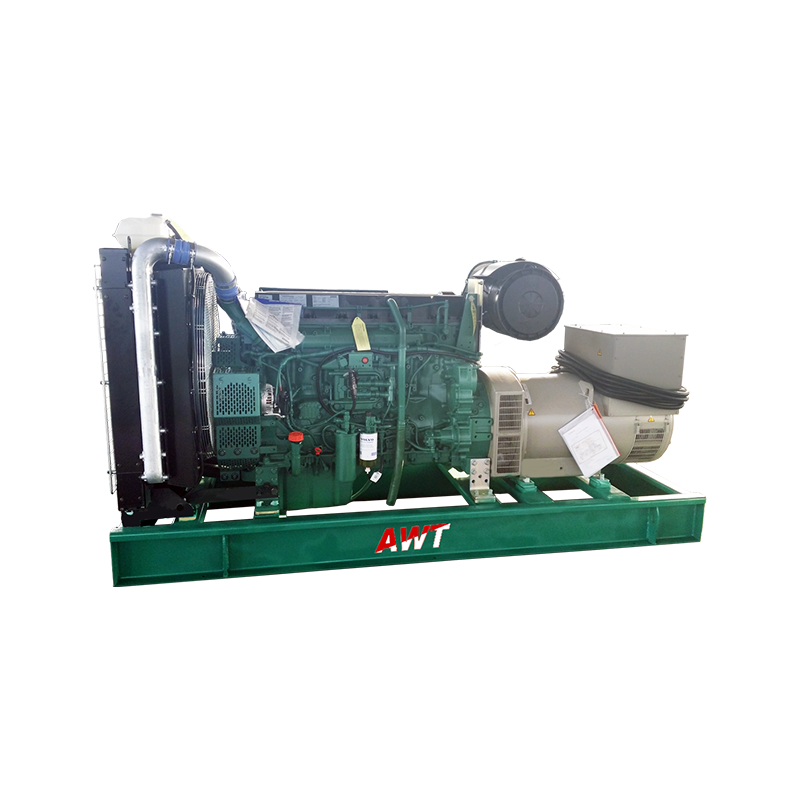
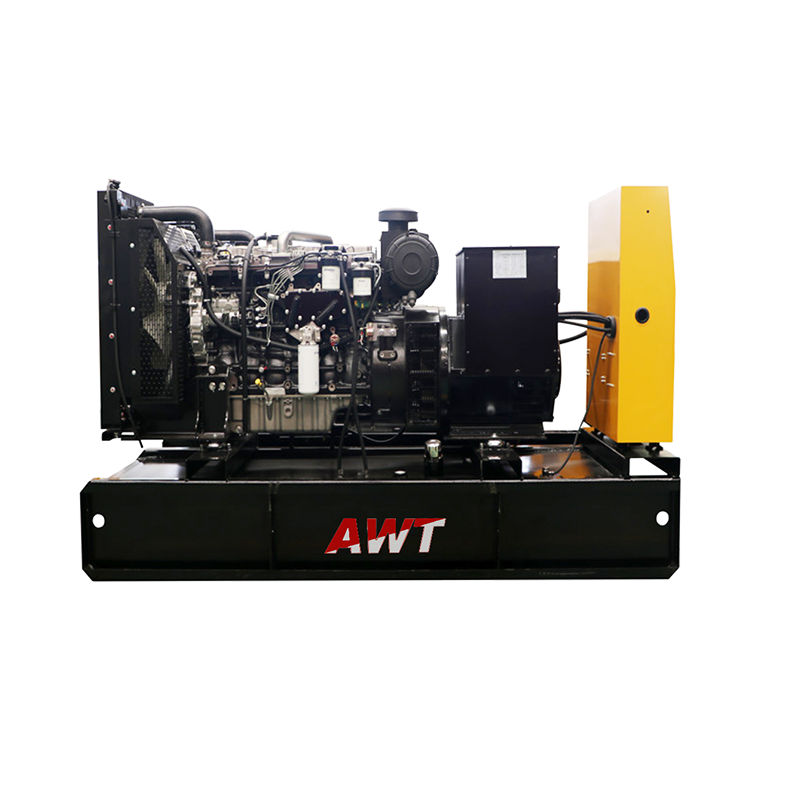
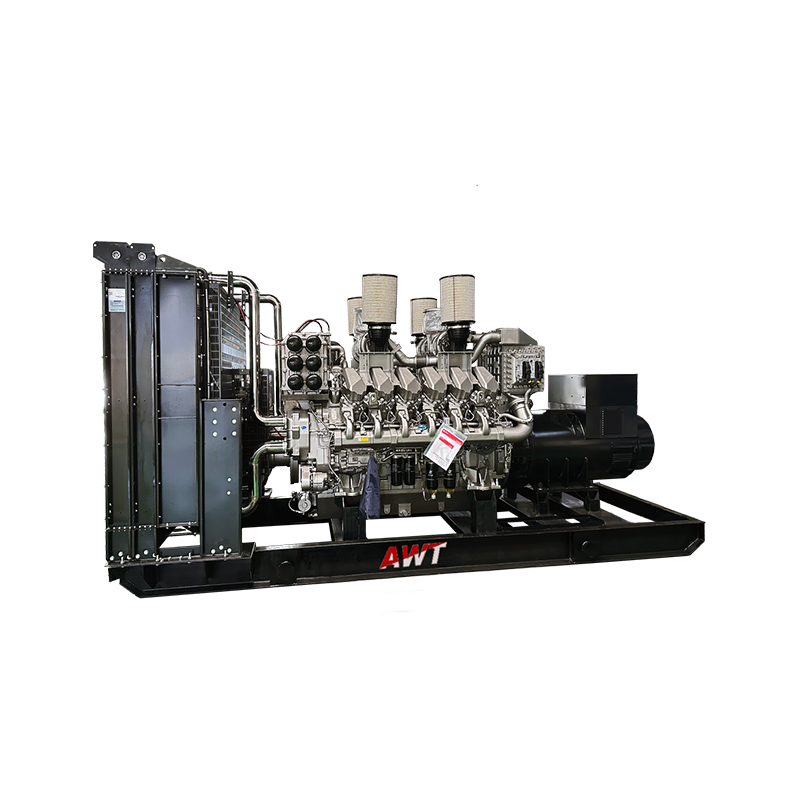
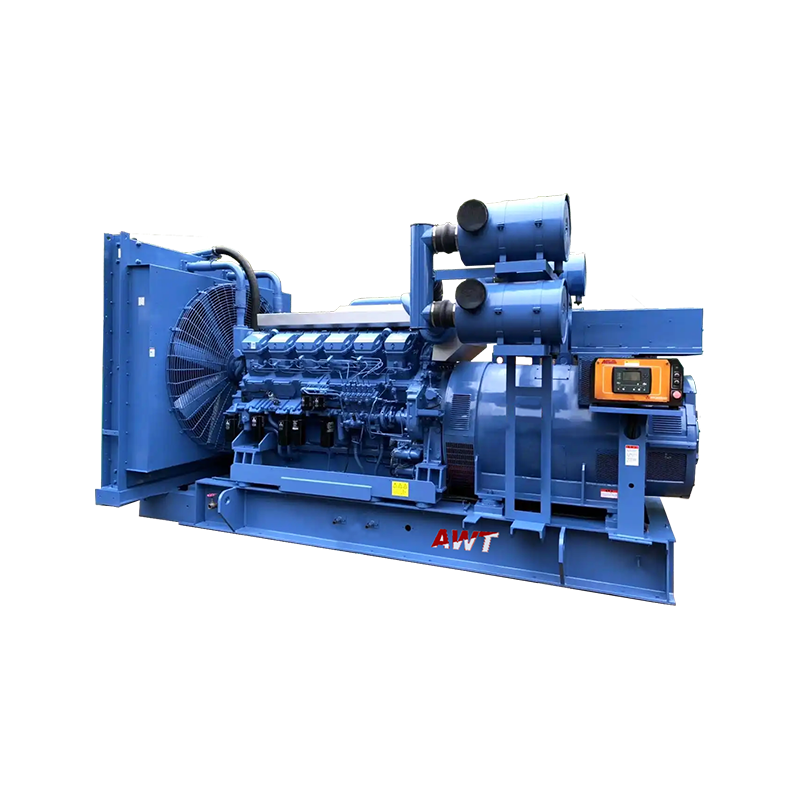
The Cummins powered diesel generator sets described in this article are designed as dependable sources of standby, prime, and continuous power. The series combines original Cummins diesel engines, high-quality brushless synchronous full-copper alternators, and intelligent control systems. With a stated power coverage from 8 kW to 3,750 kW, the product family can support applications ranging from small commercial facilities to large industrial and infrastructure projects.
Manufactured and supplied by Yangzhou Aiweite Electromechanical Co., Ltd., these generator sets are developed for customers seeking durable equipment, predictable performance, manageable operating costs, and professional project support. The company provides diesel generator sets, installation services, and customer assistance for international markets, while emphasizing manufacturing quality, equipment reliability, and long-term cooperation.
Why Diesel Generator Sets Remain Essential for Critical Power
Modern electrical networks are generally stable, but no grid can eliminate every risk. Severe weather, equipment failure, construction incidents, fuel shortages, transmission faults, overloads, and emergency events can all cause power interruptions. Even a short outage may lead to production losses, communication failures, equipment damage, corrupted data, or hazardous conditions.
A diesel generator set provides an independent power source that can be activated when the utility supply fails. When connected to an automatic transfer switch and a properly configured control panel, the generator can detect a loss of mains power, start automatically, stabilize its output, and supply designated loads. Once normal utility power is restored, the system can transfer the loads back and shut down according to programmed operating procedures.
Diesel technology is particularly suitable for critical applications because diesel engines offer high torque, strong transient response, and efficient operation under demanding loads. Diesel fuel is also widely available and can be stored on site, allowing facilities to continue operating during extended grid failures. Compared with smaller fuel systems, diesel generator sets are well suited to high-power applications and long-duration operation.
The product family described here is designed for three primary operating modes. Standby power is used when the generator provides emergency backup during utility failure. Prime power is used where the generator operates as the main source of electricity and load conditions may vary. Continuous power is used where the generator supplies a stable load for extended periods, often in remote or off-grid locations.
Product Overview and Configuration
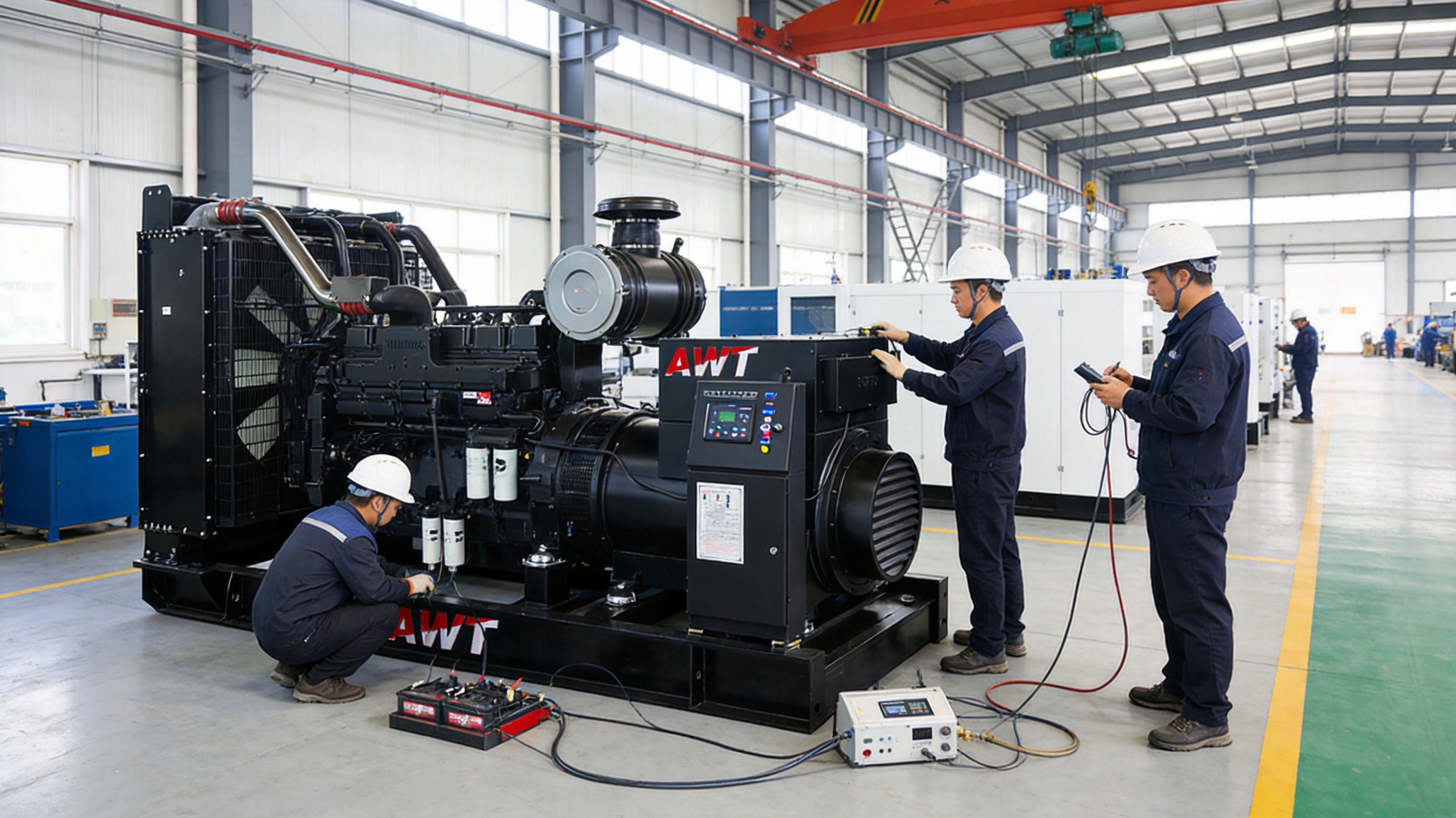
Each generator set is engineered as an integrated power package rather than as an engine alone. The main components include the diesel engine, alternator, base frame, coupling arrangement, fuel system, cooling system, exhaust system, control panel, protection devices, and optional sound-attenuation or weatherproof enclosures. The combination of these components determines the generator’s electrical performance, service life, installation requirements, and operational convenience.
The use of original Cummins engines provides a foundation based on a widely recognized diesel-engine platform. These engines are supported by extensive field experience across transportation, construction, mining, industrial, energy, and emergency-power applications. Their established design helps simplify maintenance planning, operator training, and spare-parts management for customers familiar with Cummins equipment.
The alternators are brushless synchronous units with full-copper windings. This configuration helps reduce routine maintenance because the brushless excitation system eliminates the regular replacement of conventional carbon brushes. Copper windings also provide strong electrical conductivity and thermal performance when correctly designed, manufactured, and cooled.
The intelligent control system serves as the operating interface and supervisory center of the generator set. It can monitor key parameters, display operating status, record alarms, and provide protection against abnormal conditions. Depending on the selected configuration, control functions may include automatic start and stop, emergency shutdown, overcurrent protection, overvoltage and undervoltage protection, overspeed protection, low oil pressure monitoring, high coolant temperature monitoring, and communication with external power-management systems.
| Item | Product Characteristics | Customer Value |
|---|---|---|
| Engine | Original Cummins diesel engine | Reliable starting, strong load response, and established service experience |
| Alternator | Brushless synchronous full-copper alternator | Stable electrical output, reduced brush maintenance, and efficient conductivity |
| Control system | Intelligent monitoring and protection | Clear operating information, automatic functions, and improved safety |
| Power range | 8 kW to 3,750 kW as stated for the series | Suitable for small facilities through large industrial projects |
| Operating modes | Standby, prime, and continuous power | Flexible application across emergency, main-power, and off-grid projects |
| Standards | Designed to comply with ISO 8528 and GB/T 2820 requirements | A recognized framework for generator-set performance and testing |
Actual output, voltage, frequency, fuel consumption, enclosure design, emissions configuration, and installation requirements depend on the selected model and project conditions. Customers should confirm the final technical configuration with the supplier before ordering, especially when the generator will operate at high altitude, high ambient temperature, severe humidity, marine exposure, or unusual load profiles.
Advantages of the Engine Platform
The engine is the primary mechanical power source of a diesel generator set, and its characteristics directly influence fuel consumption, service life, transient performance, and operating stability. The Cummins engine platform used in this product family is recognized for its broad industrial application history and extensive field verification.
One important advantage is the engine’s ability to respond to changes in electrical load. Many facilities do not consume a perfectly constant amount of electricity. Motors start and stop, pumps cycle, compressors engage, and electronic equipment changes its demand. A generator must respond quickly without allowing excessive voltage or frequency deviation. A well-matched diesel engine and alternator can accept these changes while maintaining stable output.
Another advantage is suitability for continuous operating duty. When properly sized, installed, lubricated, cooled, and serviced, industrial diesel engines can operate for long periods under demanding conditions. Their robust construction and serviceable design make them practical for applications where the generator may run for many hours or days during a grid emergency.
Fuel efficiency is also a major consideration. Fuel represents a significant portion of the lifetime cost of generator operation. An efficient engine can reduce fuel consumption during planned testing, prime-power operation, and extended emergencies. Actual results depend on load factor, ambient conditions, maintenance, fuel quality, engine speed, and application design, but the product is intended to provide low fuel consumption relative to less optimized or poorly matched power systems.
Maintenance accessibility supports long-term performance. Routine work such as oil and filter replacement, coolant inspection, belt inspection, battery checks, and fuel-system maintenance must be performed at appropriate intervals. A generator that is easy to inspect and service can reduce downtime and help operators identify developing problems before they become major failures.
Global field experience is another practical strength. Equipment that has been used in multiple regions and industries benefits from a broad history of operating data. This experience can assist with application engineering, spare-parts planning, troubleshooting, operator training, and lifecycle support. It also gives project owners greater confidence when deploying generator sets in unfamiliar environments.
Alternator Performance and Electrical Quality
The alternator converts mechanical energy from the diesel engine into electrical energy. Its design affects voltage stability, waveform quality, short-circuit performance, efficiency, and the ability to supply sensitive loads. The brushless synchronous full-copper alternators used in this series are selected to support dependable electrical output in commercial and industrial environments.
A brushless excitation system reduces the number of wear components in the alternator. Traditional brushed systems require periodic inspection and eventual brush replacement. A brushless design can reduce this maintenance burden and support longer service intervals, provided that the alternator is protected from excessive contamination, overheating, moisture, and mechanical vibration.
Full-copper windings provide good electrical conductivity and help manage heat generated during operation. Thermal performance is especially important when the generator operates at high load, in hot climates, or inside an enclosure with restricted airflow. Correct ventilation, cooling-air circulation, and alternator sizing remain essential, but high-quality windings provide a strong foundation for reliable output.
Voltage regulation is important for both conventional motors and sensitive electronic equipment. Excessive voltage fluctuations can affect lighting, control devices, variable-frequency drives, medical equipment, communications equipment, and computer systems. The alternator and control system work together to regulate the output and respond to changes in load.
Customers should also consider harmonic-producing loads. Data centers, battery chargers, uninterruptible power supplies, variable-speed drives, and other electronic systems can create nonlinear current demand. Generator selection should therefore consider the total connected load, starting requirements, harmonic distortion, power factor, load diversity, and future expansion. Professional application engineering helps ensure that the alternator is correctly matched to the real operating profile.
Intelligent Control and Protection
A modern generator set must do more than start an engine and produce electricity. It must supervise operating conditions, protect the equipment, communicate information to operators, and coordinate with the facility’s electrical system. The intelligent control system included in this product family is intended to provide these functions through a clear and practical user interface.
Automatic start capability is central to emergency-power operation. When the control system receives a start signal from an automatic transfer switch or remote supervisory device, it can initiate the starting sequence. The controller can monitor engine speed, oil pressure, coolant temperature, generator voltage, and frequency before allowing the load to be connected.
Protection functions help prevent damage caused by abnormal operating conditions. Low oil pressure may indicate inadequate lubrication, while high coolant temperature may indicate an overloaded engine, blocked radiator, low coolant level, or cooling-system fault. Overspeed, overcurrent, underfrequency, overvoltage, and emergency-stop conditions also require rapid protective action.
Alarm records and operating data can assist maintenance teams in diagnosing problems. A clear record of shutdown events, warning conditions, running hours, voltage, frequency, and load information can make service more efficient. It also supports preventive maintenance planning because the operator can track usage and identify repeated abnormal events.
For larger installations, multiple generator sets may operate in parallel. In such cases, synchronization, load sharing, priority control, and communication functions must be engineered carefully. A suitable control system can support coordinated operation, although the exact parallel configuration depends on the project’s electrical design and selected equipment.
Remote monitoring may also be integrated where the facility requires centralized supervision. Data centers, telecommunications sites, industrial campuses, and geographically distributed infrastructure can benefit from remote status information. Remote monitoring does not replace physical inspection, but it can improve response time and help maintenance teams prioritize site visits.
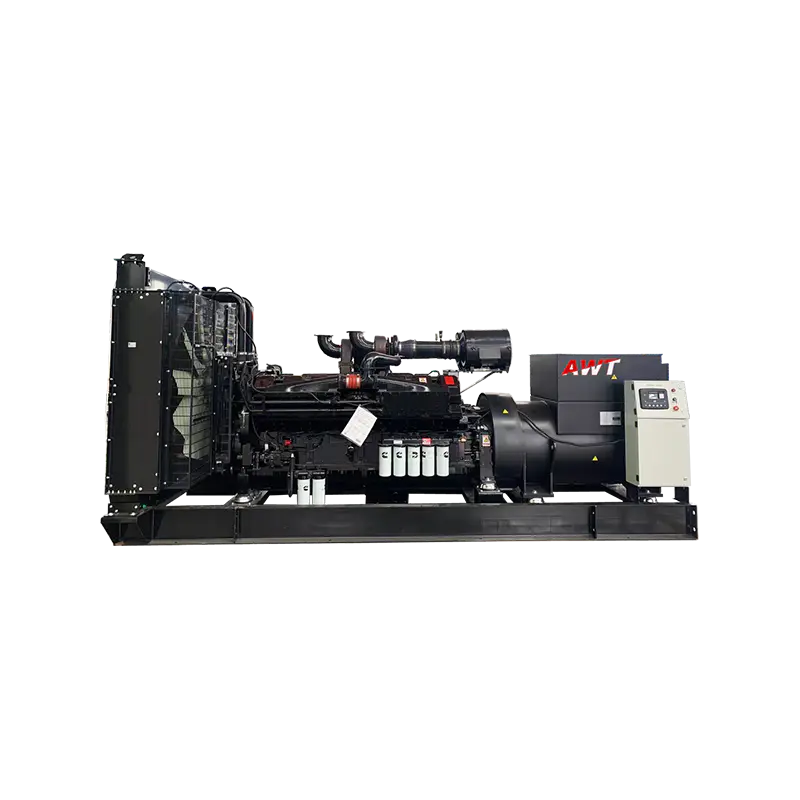
Cummins Powered Diesel Generator Sets
Compliance with Recognized Standards
The product series is described as complying with ISO 8528 and GB/T 2820 standards. These standards provide important frameworks for the performance, classification, testing, and application of reciprocating internal combustion engine generator sets.
ISO 8528 addresses generator sets driven by reciprocating internal combustion engines. It covers terminology, ratings, performance requirements, speed governing, voltage characteristics, testing, and other aspects of generator-set operation. Applying this framework helps manufacturers and customers use consistent technical language when discussing standby, prime, and continuous ratings.
GB/T 2820 is a Chinese national standard series associated with generating sets driven by reciprocating internal combustion engines. It provides technical requirements and testing principles for generator-set equipment. Compliance claims should always be confirmed through the relevant technical documents, inspection reports, certificates, and model-specific test records.
Standards compliance is valuable because it creates a common basis for product evaluation. Buyers can compare key performance criteria, clarify rating definitions, and develop more precise acceptance procedures. It also helps consultants and contractors prepare equipment specifications for infrastructure projects.
However, compliance with a standard does not remove the need for correct system design. Generator performance depends on installation, load selection, fuel quality, ventilation, exhaust design, grounding, cable sizing, transfer equipment, battery systems, and maintenance. A compliant generator can still perform poorly if it is undersized, incorrectly installed, or operated outside its rated conditions.
Power Ratings and Application Selection
The stated 8 kW to 3,750 kW range allows the product family to address a broad selection of applications. Smaller units may be suitable for retail premises, workshops, communication shelters, small offices, and residential or commercial backup. Medium-size units can serve hotels, hospitals, schools, factories, farms, and construction sites. High-capacity units can support industrial plants, mines, data centers, ports, infrastructure projects, and large emergency-power systems.
Correct sizing requires more than adding the nameplate wattage of connected equipment. The designer should identify essential loads, motor-starting currents, transformer inrush, power factor, nonlinear loads, future expansion, load diversity, and the desired reserve capacity. A generator that is too small may experience excessive voltage and frequency deviations, while an oversized unit may operate inefficiently at light load.
Standby rating is normally associated with emergency operation during utility failure. The generator may operate for limited hours per year, with the exact limitations determined by the rating definition and manufacturer’s technical documentation. Standby systems are common in offices, hotels, hospitals, commercial buildings, and emergency facilities.
Prime rating is suitable for applications where the generator is the main power source and load varies over time. Prime-power projects may be located in remote regions, construction areas, agricultural facilities, temporary installations, or locations where grid service is unreliable. The allowable average load and operating conditions should be confirmed for each model.
Continuous rating is used where the generator supplies a constant load for extended operation. Typical applications include base-load power, remote industrial sites, off-grid infrastructure, and certain marine or mining installations. Continuous operation places greater demands on cooling, lubrication, fuel systems, filtration, and maintenance planning.
In addition to power rating, users should specify voltage, frequency, phase configuration, altitude, ambient temperature, fuel type, enclosure requirements, emissions requirements, noise limits, and local electrical regulations. These factors influence the final selection and may affect the available output.
Fuel Efficiency and Operating Economics
Fuel consumption is one of the most visible operating expenses of a generator set. A unit that uses less fuel for the same useful electrical output can reduce operating costs and extend the duration of emergency operation from a fixed fuel reserve. Lower consumption may also reduce the frequency of refueling and simplify logistics in remote locations.
The actual fuel economy of any diesel generator depends on the load profile. Diesel engines generally operate most efficiently when carrying a suitable percentage of their rated load. Running a large generator continuously at very light load can reduce efficiency and may contribute to wet stacking or incomplete combustion. For this reason, generator selection should reflect both the maximum demand and the normal operating load.
Load management can improve efficiency. Nonessential loads may be disconnected during an outage, while priority loads remain energized. In installations with multiple generator sets, a control system can start only the number of units required for the current demand and add units as the load increases. This approach can improve part-load efficiency and provide redundancy.
Preventive maintenance also influences fuel consumption. Dirty air filters restrict airflow, clogged fuel filters affect injection performance, degraded injectors reduce combustion quality, and incorrect coolant temperatures can affect engine efficiency. Regular maintenance helps the engine operate closer to its intended performance level.
Fuel quality and storage conditions should not be overlooked. Water, sediment, microbial contamination, and long-term fuel degradation can cause starting problems or damage fuel-system components. Proper tank design, filtration, fuel polishing where necessary, and periodic fuel testing can protect the generator and improve reliability.
Low Emissions and Environmental Considerations
Environmental performance is increasingly important for industrial power equipment. Customers must consider exhaust emissions, noise, fuel storage, oil management, cooling systems, and end-of-life disposal. The product description emphasizes low emissions and environmental adaptability, but the exact emissions performance depends on the selected engine model, engine certification, fuel quality, operating conditions, and local regulations.
Emission requirements vary by country, region, application, and operating mode. Some projects require specific certification levels or after-treatment systems. Others impose restrictions on operating hours, exhaust discharge, or temporary power equipment. Before purchase, the customer should provide the applicable environmental requirements so the supplier can recommend a compliant configuration.
Noise control is also important, especially for hospitals, hotels, residential areas, schools, and urban construction sites. Options may include acoustic enclosures, low-noise exhaust silencers, vibration isolators, flexible connections, and carefully designed ventilation paths. Noise reduction must be balanced with cooling airflow because a restricted enclosure can cause overheating.
Diesel generators should be installed with appropriate exhaust routing. Exhaust gases must be discharged safely away from air intakes, occupied areas, windows, and neighboring properties. Exhaust piping should account for back pressure, thermal expansion, condensation, support, insulation, and access for maintenance.
Environmental adaptability includes the ability to operate under difficult climatic conditions. High temperatures reduce air density and may affect engine and alternator output. High altitude can also reduce available engine power because of lower oxygen density. Humidity, salt spray, dust, freezing temperatures, and vibration may require special filters, heaters, coatings, enclosures, or marine-grade components.
Applications Across Multiple Industries
Data Centers
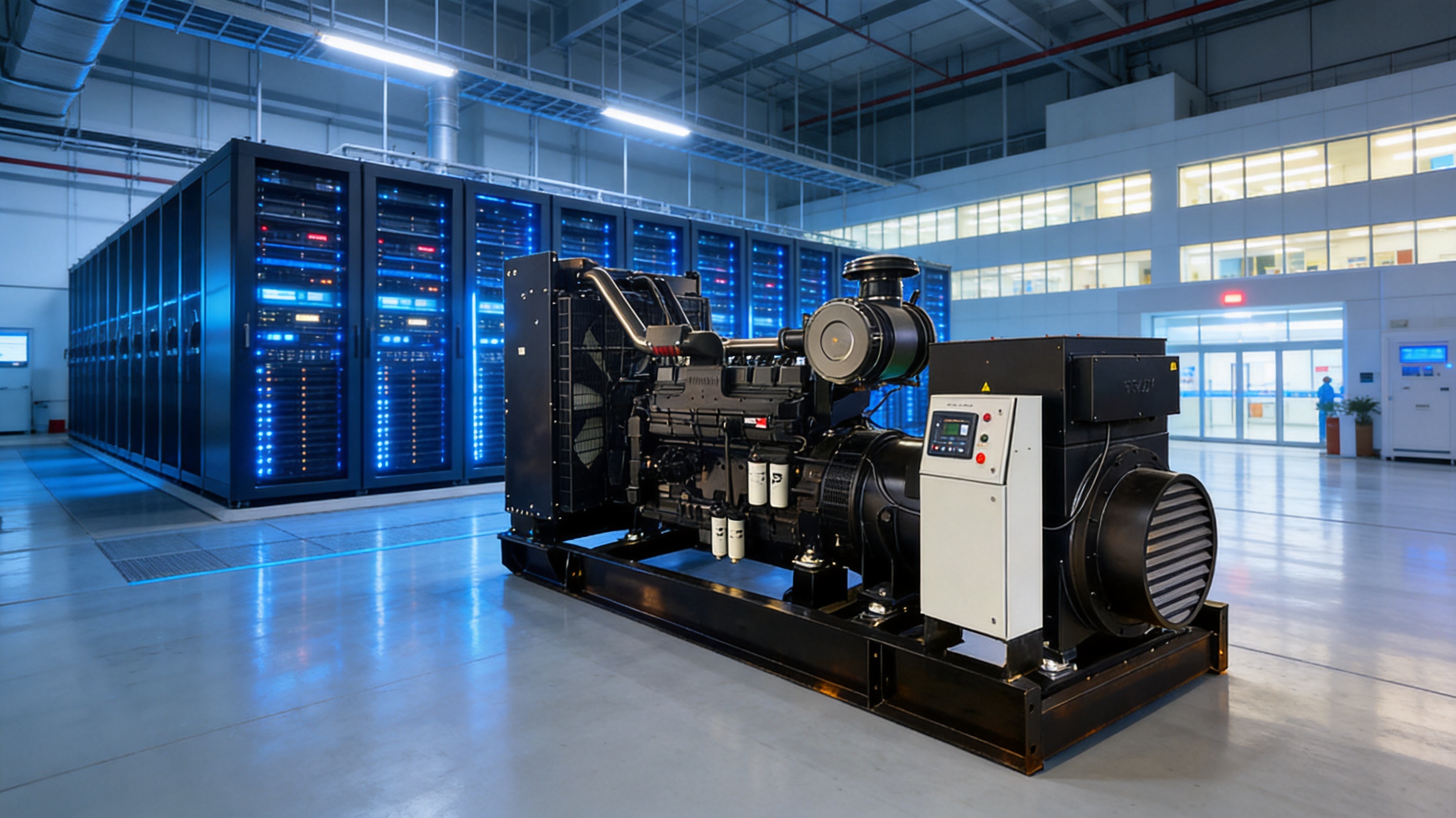
Data centers require dependable backup power because servers, storage systems, cooling equipment, fire protection, security systems, and network infrastructure must remain operational. Generator sets are usually integrated with uninterruptible power supplies and automatic transfer systems. The generator must be capable of accepting the required load without excessive frequency or voltage disturbance.
Data-center projects often require redundancy, parallel operation, remote monitoring, fuel autonomy, strict testing procedures, and carefully documented maintenance. The intelligent control system and scalable power range make this product family suitable for evaluating single-generator or multi-generator configurations, subject to project engineering.
Telecommunications Stations
Telecommunications sites may be located in remote areas where grid access is unreliable. A generator can support radio equipment, network switching, cooling, lighting, and security systems. Compact installation, dependable automatic starting, fuel storage, remote monitoring, and resistance to weather conditions are important considerations.
Because many telecommunications sites operate with limited on-site personnel, alarm communication and preventive maintenance planning are especially valuable. The generator should be configured for unattended operation while still allowing technicians to inspect and service it efficiently.
Industrial Plants
Industrial facilities often use motors, pumps, compressors, furnaces, conveyors, process-control systems, and instrumentation. These loads may have high starting currents or rapidly changing demand. Generator sizing must account for the largest motor starts, sequential starting logic, process-critical loads, and the consequences of voltage dips.
A generator may provide emergency power, prime power, or a supplementary source for selected production systems. In factories where power interruption can damage materials or create unsafe process conditions, a properly engineered generator system can protect both personnel and equipment.
Hospitals and Healthcare Facilities
Healthcare facilities depend on electrical power for operating rooms, intensive-care equipment, medical gas systems, elevators, lighting, refrigeration, communications, and life-safety systems. Emergency generators must start reliably and transfer priority loads according to applicable local regulations.
Healthcare applications demand careful segregation of essential and nonessential circuits. The generator should be supported by routine testing, fuel-quality management, battery maintenance, and documented emergency procedures. Low noise, exhaust safety, and physical separation from patient areas are also important.
Hotels and Commercial Buildings
Hotels, shopping centers, office buildings, and large commercial properties may use generators to maintain emergency lighting, elevators, fire pumps, security systems, refrigeration, information technology, and selected tenant services. Some facilities also use generators to support business continuity during grid instability.
Commercial installations often place strong emphasis on compact layout, noise control, visual appearance, automatic operation, and service accessibility. Enclosure selection, ventilation design, and exhaust treatment should be coordinated with the building architecture.
Mines and Remote Industrial Sites
Mines and remote industrial sites may have limited grid access and demanding operating conditions. Generators must often operate for long periods, supply large motors, withstand dust and vibration, and remain serviceable far from major maintenance centers. Fuel logistics, spare parts, filtration, and technician training are essential parts of the project plan.
The broad power range allows designers to consider single-generator or multi-generator arrangements. Parallel operation can provide capacity flexibility and redundancy, while separate units may supply different operational zones.
Marine and Offshore Projects
Marine and offshore environments expose equipment to salt, humidity, vibration, restricted space, and difficult maintenance conditions. Generator sets for these applications may require specialized coatings, marine-approved components, strengthened mounting, corrosion protection, and dedicated ventilation and exhaust arrangements.
Electrical classification, fire safety, fuel-system design, and emergency shutdown arrangements must be reviewed according to the vessel or offshore installation’s governing rules. The engine and alternator provide the core power package, while the final marine configuration must be confirmed for the specific project.
Municipal Projects and Emergency Rescue
Municipal infrastructure includes water-treatment plants, drainage stations, public buildings, traffic systems, emergency shelters, and disaster-response facilities. During floods, storms, earthquakes, or other emergencies, grid power may be unavailable precisely when public services are most needed.
Emergency-rescue organizations require equipment that can be deployed rapidly and operated by trained personnel under stressful conditions. Clear controls, robust construction, easy access, secure fuel arrangements, and reliable starting performance are practical advantages for these applications.
Manufacturing Strengths and Quality Management
Generator-set quality depends not only on the engine and alternator brands but also on how the complete unit is engineered, assembled, tested, documented, and supported. Yangzhou Aiweite Electromechanical Co., Ltd. was founded in 2008 and specializes in the manufacture and installation of diesel generator sets. Its stated company capability covers generator sets from 1 kVA to 2,500 kVA, while the described Cummins-powered product series is presented with a broader power range reaching 3,750 kW. Customers should confirm the exact supply scope and model availability for each project.
The company emphasizes advanced manufacturing equipment and strict quality management. These elements are important because generator-set assembly involves many interfaces: engine mounting, alternator alignment, coupling, fuel connections, cooling airflow, exhaust routing, control wiring, protection settings, and enclosure construction. Errors at any interface can affect reliability even when the individual components are high quality.
A disciplined manufacturing process normally begins with technical review. The supplier evaluates the customer’s required power, voltage, frequency, duty rating, installation location, ambient conditions, noise limits, emissions requirements, fuel autonomy, and control functions. This information is used to select the engine, alternator, controller, base frame, radiator, fuel tank, enclosure, and optional accessories.
Component inspection is another important stage. Incoming parts should be checked against purchase specifications and technical drawings. This may include inspection of dimensions, materials, electrical ratings, connectors, fasteners, fuel-system components, and protective devices. Traceability helps the manufacturer identify the source and batch of key parts when service or quality investigation is required.
Mechanical assembly must maintain proper alignment and secure fastening. The engine and alternator need to be mounted correctly on the base frame, with suitable vibration isolation and coupling. Incorrect alignment can cause excessive vibration, bearing wear, coupling damage, or premature failure. Fuel, coolant, exhaust, and electrical connections should be routed to allow safe operation and practical maintenance access.
Electrical assembly requires careful attention to cable sizing, terminal tightening, grounding, insulation, phase identification, control wiring, and protection settings. The control panel should be tested for correct sensor operation, alarm display, shutdown logic, emergency-stop response, and automatic-start functions.
Factory testing provides an opportunity to verify the completed package before shipment. Depending on the project, testing may include no-load starting, voltage and frequency verification, load-bank testing, protection checks, automatic transfer simulation, emergency-stop testing, noise evaluation, and inspection of fuel, exhaust, cooling, and control systems. Test records can support project acceptance and future maintenance reference.
Documentation is an important part of manufacturing quality. A complete supply package may include operation manuals, maintenance schedules, wiring diagrams, foundation recommendations, technical data sheets, factory test reports, spare-parts lists, and commissioning records. Clear documentation improves installation quality and helps operators maintain the equipment correctly.
Installation Engineering
A reliable generator set requires an installation that supports airflow, cooling, safe exhaust discharge, stable fuel delivery, proper grounding, and convenient maintenance. The generator room or outdoor location should be evaluated before equipment delivery. Space must be provided for the generator, control panel, fuel system, batteries, exhaust equipment, ventilation components, and service access.
Ventilation is critical because the engine produces heat and the alternator also releases heat during operation. Fresh air must enter the room in sufficient volume, while hot air must be discharged without recirculating into the radiator. Inadequate ventilation can cause high coolant temperatures, reduced output, nuisance shutdowns, and accelerated component aging.
The foundation must support the equipment’s weight and operating vibration. The surface should be level and strong enough to resist settlement. Vibration isolators may be used to reduce transmission to the building structure, but their selection must be compatible with the generator frame and installation arrangement.
Fuel systems should provide clean, reliable fuel under all expected operating conditions. The tank must be sized according to the required autonomy, local regulations, and operating schedule. Fuel lines should be protected from damage and arranged to avoid air ingress, excessive pressure, and contamination. Where the generator is installed outdoors, the tank and associated components may require weather and corrosion protection.
Electrical installation includes output cables, grounding conductors, protective devices, transfer equipment, synchronization equipment where applicable, and control wiring. The system must be designed by qualified professionals according to the generator rating and local electrical codes. Incorrect phase sequence, inadequate cable sizing, poor grounding, or unsuitable protection settings can create serious risks.
Maintenance and Lifecycle Support
Preventive maintenance is essential for a generator that may be required to start during an emergency after months of limited operation. A maintenance program should include routine visual inspections, battery checks, coolant checks, oil-level checks, fuel inspection, filter replacement, belt inspection, radiator cleaning, exhaust inspection, and control-system testing.
Generator sets should be exercised periodically under suitable conditions. Short no-load runs may confirm starting ability, but they do not fully demonstrate performance under load. Load-bank testing or controlled facility-load testing can verify voltage regulation, frequency stability, cooling performance, and protection functions.
Batteries deserve particular attention because a generator cannot start if the starting system is weak. Battery terminals should be clean and secure, charging voltage should be checked, and battery condition should be evaluated according to the manufacturer’s recommendations. In cold environments, battery heaters or other cold-start provisions may be necessary.
Cooling-system maintenance includes checking coolant concentration, hoses, radiator fins, fan operation, belts, and water quality. Dust and debris can restrict airflow, while incorrect coolant mixtures may reduce freeze protection or corrosion protection. The cooling system should be serviced according to the engine manufacturer’s requirements.
Lubrication and filtration are equally important. Correct oil grade and service intervals help protect bearings, pistons, turbochargers, and other moving parts. Air and fuel filters must be replaced when required, especially in dusty or contaminated environments. Maintenance records should include operating hours, parts replaced, test results, alarms, and corrective actions.
Aiweite’s stated approach emphasizes support before, during, and after each project. This type of lifecycle support is valuable because generator ownership involves more than initial purchase. Customers may require application consultation, installation coordination, commissioning assistance, operator instruction, troubleshooting, spare-parts planning, and long-term maintenance advice.
Advantages Compared with Generic or Poorly Matched Alternatives
Customers comparing generator suppliers should evaluate the complete power solution rather than focusing only on purchase price. A low-cost generator may appear attractive initially but create higher expenses through fuel consumption, frequent failures, difficult maintenance, poor documentation, limited spare-parts access, or inadequate technical support.
The described product family offers several strengths compared with generic or poorly matched alternatives. The first is the use of an established industrial engine platform with extensive field experience. The second is the combination of a brushless full-copper alternator and intelligent control system. The third is the broad range of power ratings and operating modes. The fourth is alignment with recognized technical standards.
Another advantage is application flexibility. The same product family can be considered for standby, prime, and continuous power, with configurations adapted to data centers, industrial plants, telecommunications facilities, healthcare buildings, mines, marine sites, and emergency projects. This can simplify supplier evaluation for customers managing multiple facility types.
Manufacturing and installation capability also matter. A supplier that can support technical design, assembly, testing, installation, and after-sales service may reduce coordination problems between different contractors. The result can be a more consistent responsibility chain from specification through commissioning.
However, responsible comparison requires model-specific data. Customers should request fuel-consumption curves, transient-response data, voltage-regulation performance, noise values, emissions certificates, load-bank test results, warranty terms, maintenance intervals, and spare-parts information. Performance should be evaluated against the actual project requirements rather than general marketing claims.
Customization and Project Configuration
Different applications require different generator configurations. A telecommunications shelter may require a compact weatherproof enclosure and remote monitoring. A hospital may require automatic transfer, low noise, emergency exhaust arrangements, and strict testing. A mine may require oversized filtration, large fuel autonomy, and heavy-duty installation. A data center may require parallel operation, redundancy, synchronization, and detailed commissioning procedures.
Common customization areas include voltage and frequency, fuel-tank size, automatic transfer switch, parallel-control system, remote monitoring, acoustic enclosure, weatherproof enclosure, cold-start equipment, battery charger, block heater, exhaust silencer, flexible connectors, cable terminals, and emergency-stop stations.
Color, enclosure dimensions, lifting points, access doors, and foundation arrangements may also be adapted to the project. Where the equipment must be transported to a remote site, packaging and lifting design become important. Where installation space is limited, the supplier may need to coordinate radiator placement, exhaust routing, and service clearances at an early stage.
Customization should be managed through formal technical documents. A project specification, approved drawing, bill of materials, control logic description, inspection plan, and test procedure help ensure that all parties share the same expectations. Changes should be reviewed carefully because even a small modification can affect cooling, noise, emissions, electrical protection, or maintenance access.
Purchasing Checklist for International Customers
Before requesting a quotation, customers should prepare a clear technical brief. The brief should identify the required standby, prime, or continuous rating; voltage; frequency; phase; number of generator sets; operating environment; fuel autonomy; enclosure type; noise requirements; emissions regulations; control functions; and installation location.
It is also helpful to provide a load list. The load list should distinguish resistive loads, motors, transformers, electronic loads, medical equipment, uninterruptible power supplies, heating systems, air-conditioning systems, pumps, and other major equipment. Starting methods and sequential-start requirements should be included whenever possible.
Customers should ask for the following information during supplier evaluation:
1. Engine and alternator model information.
2. Standby, prime, and continuous ratings.
3. Voltage, frequency, and phase configuration.
4. Fuel-consumption data at different load levels.
5. Transient-response and voltage-regulation information.
6. Noise level and enclosure specifications.
7. Emissions documentation applicable to the destination country.
8. Factory testing and inspection procedures.
9. Warranty terms and exclusions.
10. Recommended spare parts and maintenance intervals.
11. Installation and commissioning responsibilities.
12. Remote monitoring and communication options.
13. Delivery scope, packaging, and shipping requirements.
14. Operator manuals, wiring diagrams, and technical documentation.
This information enables a more accurate comparison between suppliers. It also reduces the possibility of receiving a generator that meets the nominal kilowatt requirement but fails to satisfy the site’s starting, environmental, acoustic, or regulatory conditions.
Company Capability and Customer Partnership
Yangzhou Aiweite Electromechanical Co., Ltd. was founded in 2008 and focuses on the manufacture and installation of diesel generator sets. The company states that its generator-set business covers products from 1 kVA to 2,500 kVA and that it serves customers in international markets. Its capabilities are positioned around stable equipment, durable construction, efficient operation, and environmentally responsible power solutions.
The company’s stated business philosophy emphasizes quality, customer service, integrity, responsibility, innovation, and mutual success. These values are particularly relevant to generator projects because the relationship between supplier and customer often continues for many years after delivery. A generator set is a lifecycle asset that requires technical support, service parts, training, testing, and periodic upgrades.
Since beginning its foreign-trade business in 2022, the company has worked to expand its international presence. International customers benefit from clear communication, accurate commercial documents, export packaging, coordinated shipping, application support, and an understanding of destination-market requirements. The level of support should be confirmed for each project, including installation location, language requirements, service coverage, and response arrangements.
The company’s role as a manufacturer and installer can help customers coordinate equipment supply with project execution. A supplier familiar with both factory assembly and field installation is better positioned to identify practical issues involving ventilation, exhaust routing, cable connection, fuel storage, access, and commissioning.
Recommended Operating Practices
Operators should read the manuals provided for the specific generator model and follow the recommended inspection and maintenance intervals. Before starting the unit, they should confirm that fuel, lubricating oil, coolant, batteries, ventilation, exhaust discharge, and emergency-stop systems are in acceptable condition.
The generator room should remain clean and free of stored materials. Combustible items should not be placed near hot exhaust components. Air inlets and radiator outlets should not be blocked. Access doors should remain available for emergency operation and maintenance.
During operation, operators should monitor voltage, frequency, current, load percentage, oil pressure, coolant temperature, battery charging, and alarm status. Any abnormal noise, vibration, smoke, leakage, or repeated alarm should be investigated promptly.
After an operating event, the generator should be inspected before being returned to automatic mode. Fuel level, coolant level, oil level, battery condition, and alarm history should be checked. Maintenance records should be updated so that the next service requirement is clear.
Training should cover normal operation, automatic mode, manual mode, emergency shutdown, safe refueling, alarm recognition, transfer-switch operation, and basic inspection. Only qualified personnel should conduct electrical testing, protection adjustment, fuel-system work, or major engine service.
Conclusion
The Cummins powered diesel generator sets described in this article are designed as dependable solutions for standby, prime, and continuous power applications. By combining original Cummins engines, brushless synchronous full-copper alternators, intelligent control systems, and a broad power range from 8 kW to 3,750 kW, the series can address the needs of commercial, industrial, infrastructure, emergency, and remote-power projects.
The key product benefits include established engine technology, strong load response, low fuel consumption, reduced brush maintenance, stable electrical performance, intelligent protection, broad application flexibility, and suitability for demanding environmental conditions. Compliance with ISO 8528 and GB/T 2820 provides a recognized technical foundation, while model-specific documentation remains essential for final verification.
Product quality is supported by manufacturing discipline, component inspection, professional assembly, electrical testing, documentation, and project-oriented installation. Yangzhou Aiweite Electromechanical Co., Ltd. adds value through its experience in generator-set manufacturing and installation, international-market development, and commitment to customer support before, during, and after each project.
For the best result, customers should select a generator based on the complete application rather than nominal output alone. Load characteristics, operating mode, environmental conditions, emissions, noise, fuel autonomy, control requirements, maintenance access, and future expansion should all be considered. With correct engineering, installation, commissioning, and maintenance, a well-configured diesel generator set can provide dependable power and long-term protection for critical operations.
Questions and Answers
What power range is available for the Cummins powered diesel generator set series?
The product description states that the series covers 8 kW to 3,750 kW. The exact available output depends on the selected engine, alternator, rating, voltage, frequency, and project configuration. Customers should request a model-specific technical quotation.
Which operating modes are supported?
The series is intended for standby, prime, and continuous power operation. Standby power is used for emergency backup, prime power is used as the main source where the generator operates for varying periods, and continuous power is used for extended operation at a relatively stable load.
What type of alternator is used?
The generator sets use brushless synchronous full-copper alternators. The brushless design can reduce routine brush replacement, while copper windings support electrical conductivity and thermal performance when properly designed and cooled.
Are the generator sets suitable for data centers?
They can be considered for data-center applications when correctly sized and configured. Data centers typically require attention to transient response, nonlinear loads, redundancy, synchronization, automatic transfer, fuel autonomy, remote monitoring, and commissioning tests. These requirements must be confirmed during application engineering.
Can the generator sets operate in hospitals?
They can support healthcare facilities when the complete system meets applicable local healthcare, electrical, fire-safety, emissions, and emergency-power requirements. Essential circuits, transfer equipment, exhaust routing, noise, testing, and maintenance procedures must be designed specifically for the hospital.
What standards are associated with the product?
The product description states compliance with ISO 8528 and GB/T 2820. Buyers should request the relevant certificates, test reports, and model-specific compliance documents before final acceptance.
Can the generator be customized?
Typical customization may include voltage, frequency, enclosure, fuel-tank size, automatic transfer, remote monitoring, parallel operation, acoustic treatment, cold-start equipment, exhaust systems, and control functions. The exact customization scope should be confirmed with the supplier.
How should the generator be sized?
Sizing should consider the total essential load, motor-starting current, transformer inrush, power factor, nonlinear electronic loads, load diversity, future expansion, and required reserve capacity. A professional load analysis is recommended instead of selecting a unit based only on connected wattage.
What maintenance does a diesel generator require?
Routine maintenance typically includes oil and filter service, coolant inspection, battery checks, air-filter inspection, fuel-system maintenance, radiator cleaning, belt inspection, exhaust inspection, control-system testing, and periodic load testing. The manufacturer’s manual should determine the specific intervals.
What information should be included in a quotation request?
The request should include the required rating and operating mode, voltage, frequency, phase, load list, installation location, ambient conditions, altitude, enclosure requirements, fuel autonomy, noise limits, emissions requirements, control functions, delivery destination, and desired installation or commissioning services.
What is the difference between the company’s stated range and the series range?
The company information states that Yangzhou Aiweite manufactures generator sets from 1 kVA to 2,500 kVA, while the product description states that this Cummins-powered series covers 8 kW to 3,750 kW. These ranges may refer to different product scopes or configurations. Customers should confirm the exact model and supply capability for their project.
Does the supplier provide installation support?
The company specializes in the manufacture and installation of diesel generator sets and states that it provides comprehensive support before, during, and after projects. The precise installation scope, commissioning services, service location, and technical response arrangements should be agreed in the contract.
References
1. ISO 8528, Reciprocating Internal Combustion Engine Driven Alternating Current Generating Sets.
2. GB/T 2820, Reciprocating Internal Combustion Engine Driven Alternating Current Generating Sets.
3. Cummins Industrial Diesel Engine Operation and Maintenance Documentation.
4. Generator Set Application, Installation, and Maintenance Engineering Practices.
5. Electrical Power System Design Principles for Standby and Prime-Power Installations.
6. International Standards and Recommended Practices for Emergency Power Systems.
7. Yangzhou Aiweite Electromechanical Co., Ltd. Product and Company Information.