English
 Français
 Español
High-Performance Diesel Generator Sets for Mission-Critical Power Applications
Oct 18, 2026
Content
- 1 Why Diesel Generator Sets Remain Important in Modern Power Systems
- 2 Integrated Product Architecture
- 3 Advantages in Comparison with Conventional Generator Solutions
- 4 Manufacturing Process and Quality Management
- 5 Power Ratings, Frequency Options, and Representative Models
- 6 Structural Configurations for Different Installation Environments
- 7 Applications Across Critical Industries
- 8 Customization and Optional Equipment
- 9 Installation Planning and Site Requirements
- 10 Maintenance, Spare Parts, and Service Support
- 11 Information Required for a Correct Quotation
- 12 Frequently Asked Questions
- 12.1 What power range is available?
- 12.2 Are both 50 Hz and 60 Hz systems available?
- 12.3 Can the generator sets operate in parallel?
- 12.4 Can a complete containerized power station be supplied?
- 12.5 What is the difference between prime and standby power?
- 12.6 How is power quality maintained for sensitive loads?
- 12.7 Can the equipment be used in high-altitude or coastal locations?
- 12.8 What testing is performed before delivery?
- 12.9 Does the company provide OEM or ODM services?
- 12.10 How should customers begin a project inquiry?
- 13 Conclusion
- 14 References
- 15 Product: MTU Powered Diesel Generator Sets
Reliable electric power is essential wherever an interruption can affect safety, productivity, data integrity, production continuity, or public services. Hospitals, data centers, petrochemical facilities, ports, industrial parks, commercial buildings, municipal projects, and national infrastructure all require power systems that can start quickly, accept demanding loads, operate for long periods, and remain stable under difficult environmental conditions. Diesel generator sets continue to be one of the most dependable solutions for standby, prime, and continuous power applications because they combine high energy density, rapid response, long service life, and flexible installation options.
Modern high-performance generator sets must do more than provide rated kilowatts. They must deliver stable voltage and frequency, support sensitive electronic equipment, manage motor starting currents, communicate with building management and supervisory control systems, and operate safely with minimal human intervention. They must also meet increasingly strict requirements for fuel economy, emissions, noise, maintenance access, remote monitoring, and lifecycle cost.
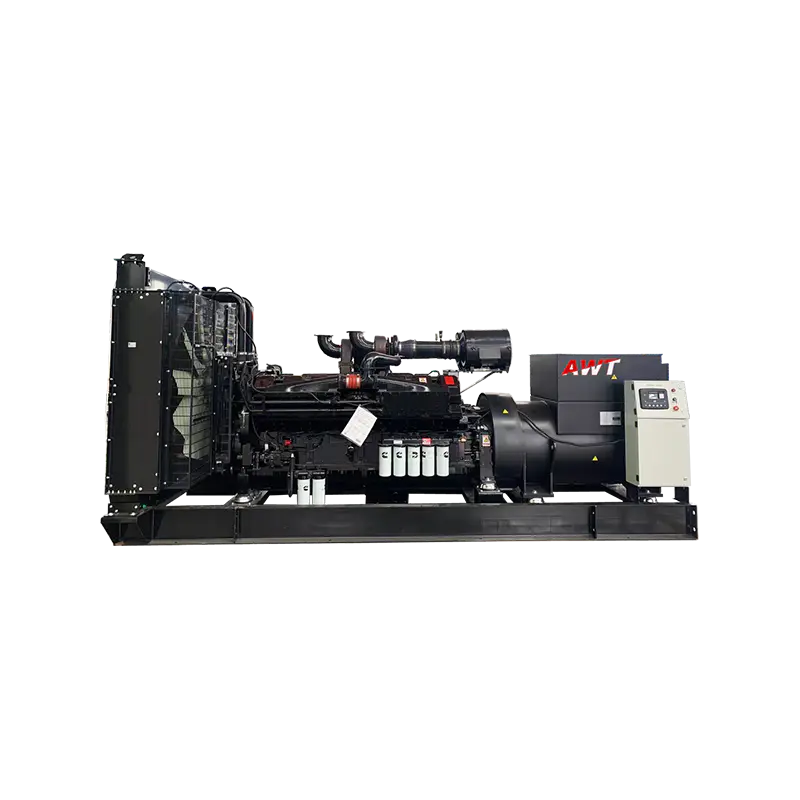
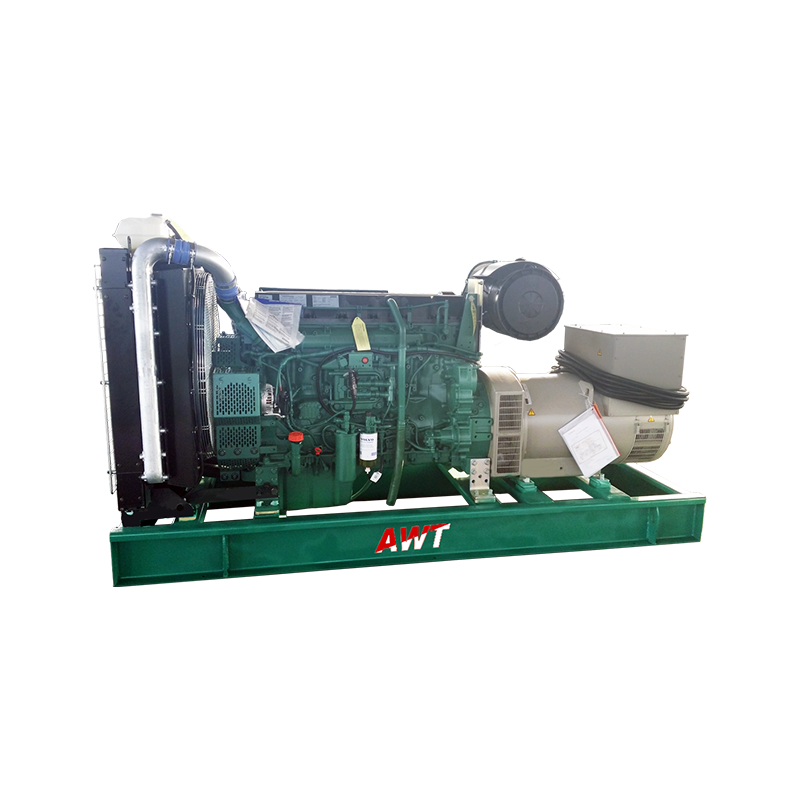
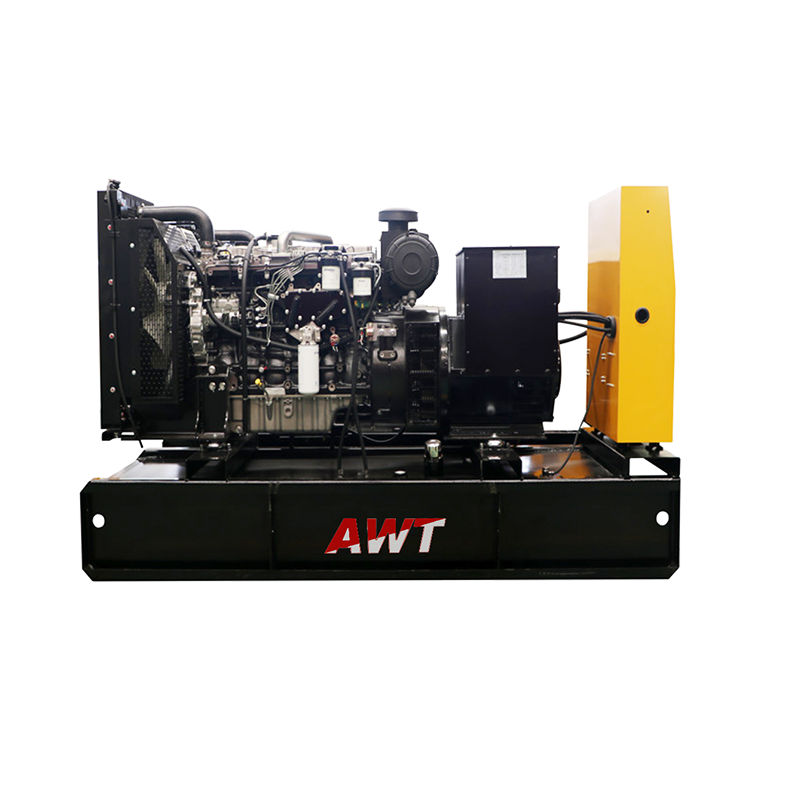
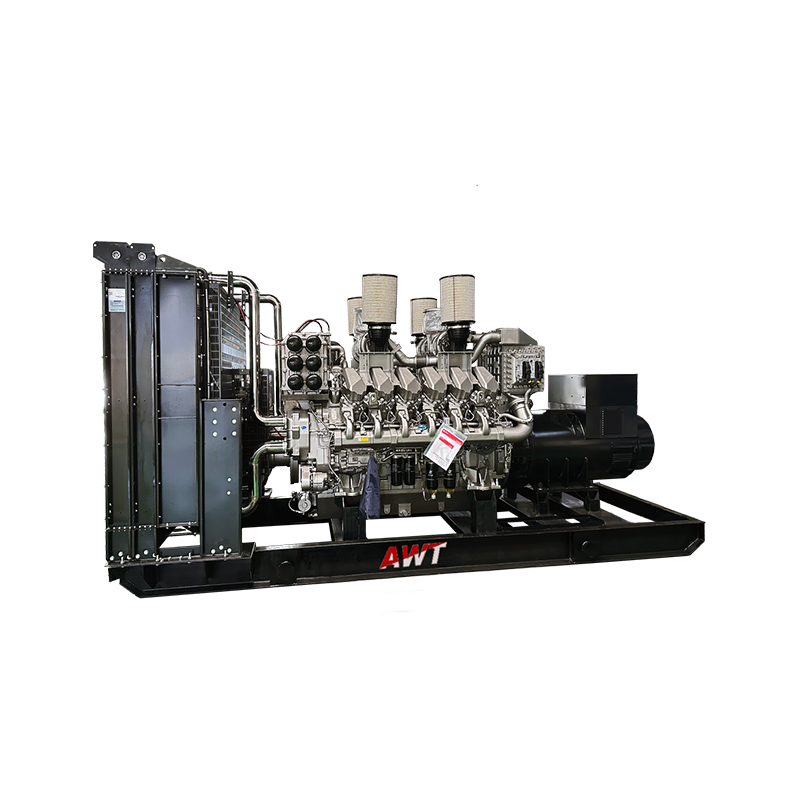
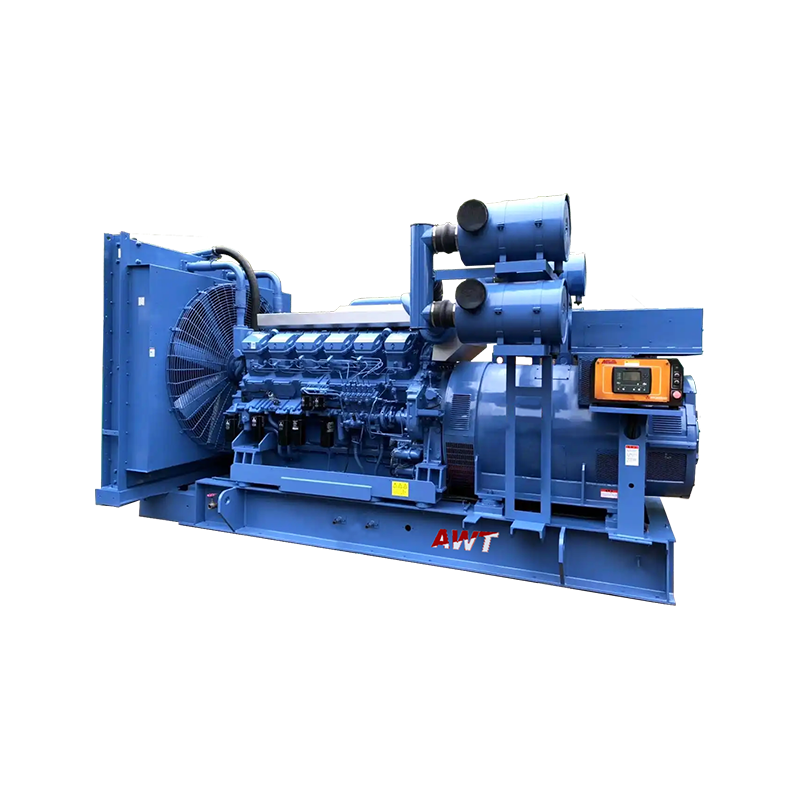
Yangzhou Aiweite Electromechanical Co., Ltd. manufactures and integrates diesel generator sets designed for these demanding conditions. Its product range combines genuine German MTU industrial engines, high-precision full-copper brushless alternators, intelligent digital controllers, engineered auxiliary systems, and application-specific structural configurations. Depending on the project, the equipment can be supplied as an open-frame set, silent canopy unit, mobile trailer system, or containerized power station.
The available product range covers small and medium installations as well as large power stations. Product information includes configurations from approximately 20 kW to 4,000 kW, while the company’s broader manufacturing and supply capability covers generator solutions from 1 kVA to 2,500 kVA and customized higher-capacity systems through multi-unit parallel operation. Final ratings depend on engine selection, frequency, voltage, ambient conditions, duty classification, and the required prime or standby operating mode.
MTU Powered Diesel Generator Sets
Why Diesel Generator Sets Remain Important in Modern Power Systems
Electrical grids are becoming more sophisticated, but they are not immune to failures. Extreme weather, overloaded networks, construction incidents, equipment faults, cyber-related disruptions, and planned maintenance can all affect utility power. A properly designed generator system provides an independent source of electricity when the normal supply is unavailable or unstable.
For standby applications, a generator set is normally connected to an automatic transfer switch. When the utility supply fails or falls outside the permitted voltage and frequency limits, the controller initiates the starting sequence. After the engine reaches stable operating speed and the alternator output is confirmed, the transfer switch moves the designated loads to generator power. When utility power returns and remains stable for the programmed period, the system transfers the loads back and performs a controlled cool-down and shutdown.
Prime-power installations use the generator set as the principal source of electricity where grid power is unavailable, unreliable, or uneconomical. These applications may include remote construction sites, mining operations, temporary infrastructure, rural facilities, island projects, and industrial plants. Continuous-power systems operate for extended periods with a stable load profile, requiring careful attention to cooling, lubrication, fuel quality, service intervals, load management, and engine loading.
A high-quality diesel generator set offers several advantages over less suitable alternatives:
- High power density for installations where space is limited.
- Fast starting and rapid load acceptance.
- Long operating life when maintained according to the manufacturer’s schedule.
- Strong performance during motor starting and sudden load changes.
- Flexible fuel storage for extended autonomy.
- Compatibility with automatic transfer, synchronization, and remote monitoring systems.
- Suitability for both temporary mobile power and permanent engineered installations.
However, these benefits are achieved only when the engine, alternator, controller, cooling system, exhaust system, fuel system, enclosure, and foundation are selected as one integrated solution. This is why generator manufacturing and application engineering are as important as the individual components.
Integrated Product Architecture
The generator sets supplied by Aiweite are built around four principal subsystems: the diesel engine, the alternator, the control system, and the auxiliary support system. Each subsystem has a direct effect on electrical performance, reliability, maintenance requirements, and operating cost.
Industrial Diesel Engine
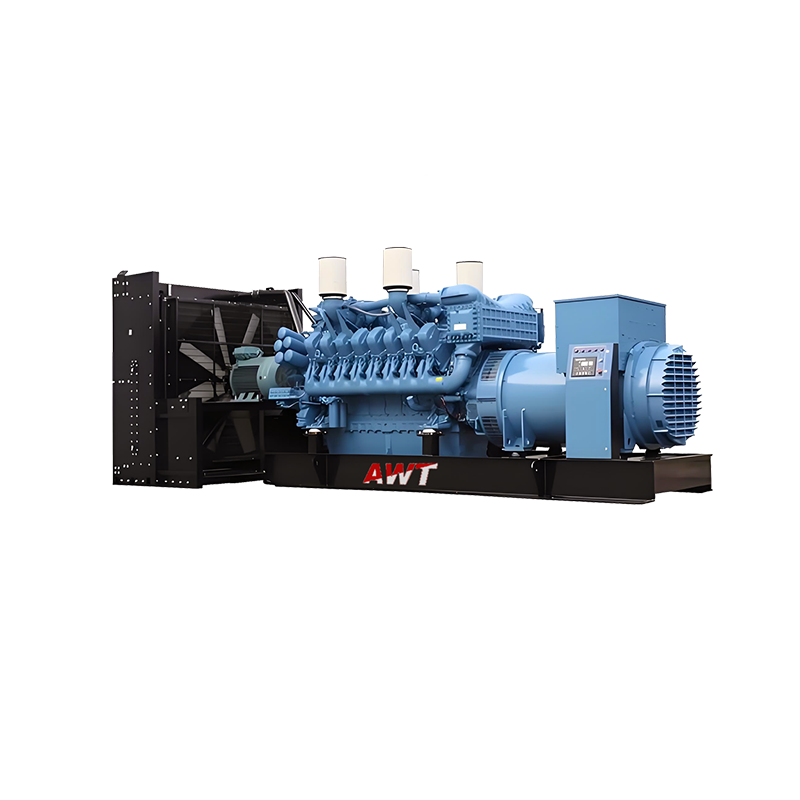
The MTU-powered configurations use genuine German MTU industrial diesel engines. These engines are designed for demanding industrial duty and incorporate electronic fuel injection, turbocharged intercooling, rigid block construction, and carefully calibrated fuel and air systems.
Electronic fuel injection allows the engine controller to regulate fuel delivery precisely according to speed, load, temperature, and operating conditions. More accurate injection supports cleaner combustion, better fuel utilization, smoother operation, and quicker response to changing loads. Turbocharged intercooling increases the density of the intake air and helps the engine produce substantial power from a compact package.
The rigid engine block contributes to mechanical stability under heavy loading. It helps maintain alignment among the crankshaft, bearings, cylinder assemblies, and other internal components. This is particularly important in prime and continuous applications, where the engine may operate for many hours at a time.
Engine selection is not based solely on the required rated output. The project engineer must also consider the load profile, the number and size of motors, transformer inrush, nonlinear electronic loads, altitude, ambient temperature, humidity, fuel conditions, and the desired operating life. A correctly selected engine can accept load changes with less frequency dip and recover more quickly after a large motor or electrical system is energized.
High-Precision Alternator
The alternator converts the engine’s mechanical power into electrical power. The supplied configurations use maintenance-free brushless synchronous alternators with full-copper windings, Class H insulation, and IP22 to IP23 protection levels, depending on the configuration.
Brushless construction eliminates the routine replacement and cleaning associated with conventional brush systems. This reduces maintenance points and improves suitability for unattended or remote installations. Full-copper conductors provide efficient electrical performance and support reliable heat dissipation when the alternator is operating near its rated capacity.
Class H insulation is designed for high-temperature operation and provides an additional thermal margin when the alternator experiences high ambient temperatures, overload conditions within the permitted range, or temporary load transients. The selected protection level helps shield internal components from normal environmental exposure while allowing the alternator to be cooled effectively.
Power quality is especially important for data centers, hospitals, laboratories, communication facilities, server clusters, industrial automation systems, and other sensitive loads. Stable voltage and frequency reduce the risk of nuisance trips, equipment damage, control errors, and unexpected shutdowns. The alternator and voltage regulation system are therefore configured to support high-precision power output and low electrical fluctuation.
Intelligent Control System
The control panel is the operating center of the generator set. The standard intelligent controller uses a Chinese-English LCD interface and provides comprehensive monitoring, protection, and automation functions. The controller can display operating parameters such as engine speed, oil pressure, coolant temperature, battery voltage, generator voltage, output current, frequency, active power, apparent power, power factor, and accumulated operating hours.
Protection functions can include low oil pressure, high coolant temperature, overspeed, overcrank, emergency stop, overvoltage, undervoltage, overfrequency, underfrequency, overload, short circuit, reverse power, and charging-system faults. When a serious condition occurs, the system can issue an alarm or shut down the engine to prevent further damage.
Automatic start-stop and automatic transfer operation enable the generator to work without continuous operator attendance. For larger facilities, the control platform can support synchronization, load sharing, multi-unit parallel operation, and staged load management. These functions make it possible to expand capacity, improve redundancy, and optimize the loading of several generator sets.
Remote communication can be provided through 4G monitoring, cloud management, or an interface compatible with a supervisory control and data acquisition system, building management system, or plant distributed control system. Operators can view alarms, operating status, electrical measurements, and maintenance information from a control room or authorized remote device.
Auxiliary Systems and Mechanical Integration
Reliable operation depends on more than the engine and alternator. The auxiliary systems include closed circulating cooling, lubrication, fuel filtration, air filtration, exhaust silencing, vibration isolation, battery starting, and a rigid integrated base frame.
The closed circulating cooling system transfers heat from the engine to the radiator or remote heat exchanger. Proper cooling design is essential for maintaining oil viscosity, cylinder temperature, combustion efficiency, and component life. For high-temperature or high-altitude sites, cooling capacity and derating must be evaluated during the design stage.
Triple filtration improves protection against contaminants in the fuel, lubricating oil, and intake air. Clean fuel supports injector performance, clean lubricating oil protects bearings and moving parts, and effective air filtration prevents abrasive particles from entering the cylinders.
Damping vibration absorbers reduce the transmission of engine vibration to the foundation and surrounding structure. A high-efficiency muffler helps control exhaust noise, while the enclosure design can be optimized for acoustic performance, ventilation, weather protection, and access for maintenance.
The integrated base frame supports alignment and simplifies lifting, transport, and installation. For larger equipment, the foundation design must account for static weight, dynamic forces, anchor points, service clearances, and cable routing. A complete technical package can include foundation loading information, lifting points, equipment dimensions, air requirements, exhaust requirements, fuel connection details, and electrical interface drawings.
Advantages in Comparison with Conventional Generator Solutions
Generator sets from different manufacturers may appear similar in rated power, but their long-term performance can vary significantly. The main advantages of this product range arise from the combination of engine quality, alternator construction, control capability, customization, and manufacturing discipline.
Rapid Load Response
Mission-critical loads cannot always be added gradually. Pumps, compressors, elevators, fire systems, air-conditioning equipment, transformers, and large motors may impose sudden demands on the generator. An engine with precise electronic fuel control and an optimized air-intake system can respond quickly to these changes.
Rapid load response helps limit frequency dips and reduces the time required for the generator to stabilize after a step-load event. This is particularly valuable in hospitals, industrial control systems, data centers, and facilities where even a brief disturbance can activate protective equipment or interrupt a process.
Stable Power for Sensitive Equipment
Low-quality generator output can cause problems for variable-speed drives, server power supplies, medical equipment, automation controls, communication systems, and precision instruments. The alternator, excitation system, voltage regulation, engine governor, and control logic must operate together to maintain stable output.
The use of a brushless synchronous alternator, high-grade insulation, full-copper windings, and intelligent regulation supports a cleaner and more stable electrical supply. When the project requires additional protection, the generator set can be combined with an uninterruptible power supply, automatic transfer equipment, harmonic mitigation, or a paralleling system.
Strong Environmental Adaptability
Industrial generator sets may be installed in cold northern climates, hot desert regions, high-altitude locations, humid coastal areas, or dusty industrial zones. Environmental conditions affect air density, cooling capacity, fuel behavior, battery performance, corrosion risk, and engine output.
These generator sets can be configured with cold-start preheaters, larger batteries, fuel heaters, anti-corrosion treatments, dust-resistant filtration, rainproof canopies, enhanced ventilation, and other site-specific upgrades. For coastal or chemical environments, material selection and surface protection should be considered together with enclosure ventilation and exhaust design.
Lower Lifecycle Cost
Purchase price is only one part of generator ownership cost. Fuel consumption, maintenance intervals, spare parts availability, downtime, installation complexity, and service support have a major effect on the total cost of ownership.
Precise fuel injection supports efficient combustion, while durable engine construction and long maintenance intervals can reduce service frequency. Brushless alternators reduce routine wear points, and modular base-frame construction makes filters, belts, electrical components, and service areas more accessible. A properly matched generator also avoids the fuel waste and engine wear associated with operating far below its recommended load for long periods.
Flexible Expansion and Redundancy
One large generator is not always the best solution. Some facilities require redundancy, staged capacity, easier maintenance, or future expansion. Multi-unit parallel operation allows several sets to share the load and can provide N+1 or other redundancy arrangements.
Parallel systems can start only the number of units required by the current load, improving operating efficiency. During maintenance, one unit can be isolated while the remaining sets continue to support essential loads. Additional units can be added as the facility expands, subject to the design of the synchronization, switchgear, protection, fuel, cooling, and exhaust systems.
Manufacturing Process and Quality Management
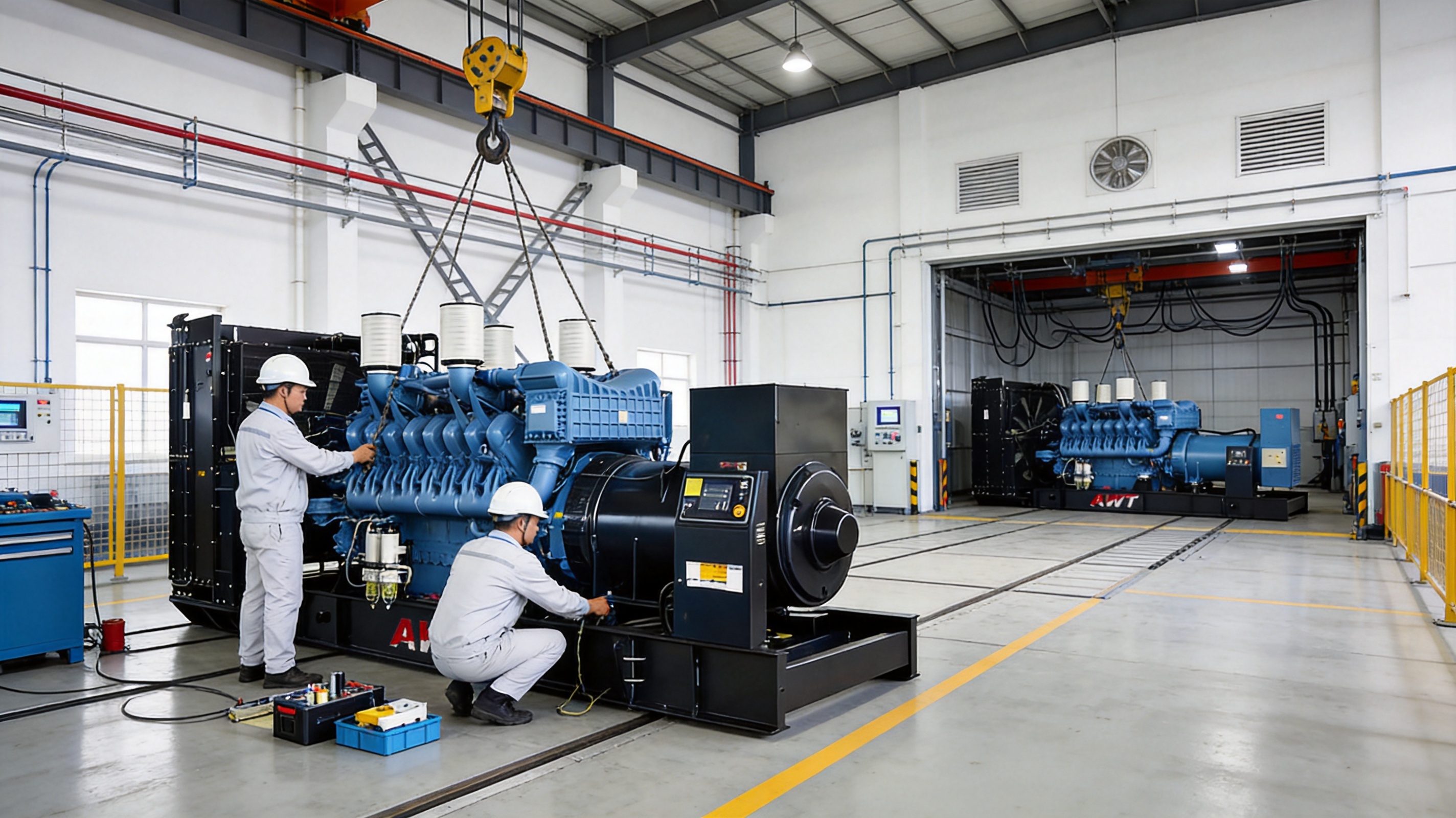
Advanced generator manufacturing is a controlled sequence rather than a simple assembly activity. The quality of the final product depends on incoming component inspection, engineering review, mechanical alignment, electrical wiring, software configuration, testing, documentation, and packaging.
Project Engineering and Configuration Review
Before production begins, the technical team reviews the customer’s required power, duty class, voltage, frequency, phase arrangement, neutral configuration, load characteristics, environmental conditions, enclosure type, communication requirements, and delivery restrictions.
Motor starting, nonlinear loads, transformer energization, emergency systems, and future capacity requirements must be considered. The engineering team may also review the site altitude, maximum and minimum ambient temperatures, humidity, dust, salt exposure, available fuel, exhaust route, cooling-air path, foundation, lifting equipment, and local emission or noise requirements.
This review prevents common design errors such as insufficient alternator capacity, inadequate radiator airflow, excessive exhaust back pressure, undersized fuel lines, poor cable access, incompatible control protocols, or insufficient maintenance clearance.
Incoming Inspection
Key components are inspected before they enter the assembly process. The inspection scope may include engine identification, alternator ratings, controller model, electrical components, radiator condition, base-frame dimensions, battery capacity, flexible connectors, filters, vibration isolators, and enclosure materials.
Component documentation and identification records help maintain traceability. Genuine engine components and approved alternator equipment are selected according to the project specification. Any discrepancy in model, rating, physical condition, or documentation can be resolved before assembly rather than after the set reaches the installation site.
Mechanical Assembly
During mechanical assembly, the engine and alternator are mounted on the base frame with appropriate flexible coupling and vibration isolation. Alignment is checked to reduce mechanical stress and prevent premature wear. Fuel, cooling, exhaust, lubrication, and starting-system connections are installed according to the approved drawings.
Large generator sets require particular attention to structural rigidity, lifting points, access panels, service clearances, and the distribution of weight. The final assembly must withstand transport, lifting, installation, and dynamic operation without compromising alignment or enclosure integrity.
Electrical Assembly and Control Integration
Electrical assembly includes alternator connections, output busbars or terminals, circuit breakers, protection devices, battery chargers, starting batteries, emergency stops, sensors, control wiring, and communication interfaces. Cable routing is arranged to reduce interference, prevent mechanical damage, and provide clear access for inspection.
The controller is configured for the engine, alternator, generator ratings, automatic transfer system, and any parallel operation requirements. Alarm thresholds, shutdown settings, start delays, return-to-mains delays, cool-down periods, and communication parameters are reviewed before testing.
Testing Before Dispatch
Testing is a critical part of manufacturing. Each generator set can undergo mechanical fitting inspection, electrical safety checks, starting tests, no-load operation, voltage and frequency verification, load testing, step-load testing, protection testing, and communication checks.
Full-load testing may be performed from zero to 110 percent of rated capacity when specified by the project and test equipment. Step-load response verifies how the engine and alternator react to sudden demand changes. Endurance testing evaluates stable operation over a defined period, while emergency protection tests confirm that the controller responds correctly to abnormal conditions.
Testing records can include voltage, current, frequency, active power, apparent power, power factor, coolant temperature, oil pressure, fuel consumption, exhaust behavior, vibration observations, alarm events, and shutdown functions. Third-party inspection can also be supported when required by the owner, consultant, contractor, or certification authority.
The company operates under ISO 9001 and ISO 14001 management systems according to the supplied company information. These systems support repeatable production procedures, documented quality control, environmental management, corrective action, and continuous improvement.
Power Ratings, Frequency Options, and Representative Models
Generator ratings must be interpreted according to the duty classification. Prime power is used for variable-load applications where the set may operate for extended periods. Standby power is generally used for emergency backup and is subject to specific operating limitations. Continuous power is intended for long-duration operation at a stable load and must be confirmed according to the applicable engine and generator specifications.
The following table presents representative configurations from the supplied 50 Hz and 60 Hz MTU series. Actual dimensions, weights, ratings, alternator selection, and enclosure arrangements may vary according to the final project specification.
| Frequency | Model | Prime Power | Standby Power | Engine | Open-Type Weight | Silent-Type Weight |
|---|---|---|---|---|---|---|
| 50 Hz | AWT-M520 | 480 kW / 600 kVA | 520 kW / 650 kVA | 12V1600G10F | 3,900 kg | 5,200 kg |
| 50 Hz | AWT-M700 | 640 kW / 800 kVA | 700 kW / 875 kVA | 12V2000G65 | 7,000 kg | 9,000 kg |
| 50 Hz | AWT-M1000 | 900 kW / 1,125 kVA | 1,000 kW / 1,250 kVA | 18V2000G65 | 9,000 kg | 11,800 kg |
| 50 Hz | AWT-M1650 | 1,500 kW / 1,875 kVA | 1,650 kW / 2,063 kVA | 12V4000G63 | 13,000 kg | 16,500 kg |
| 50 Hz | AWT-M2200 | 2,000 kW / 2,500 kVA | 2,200 kW / 2,750 kVA | 20V4000G23 | 20,500 kg | Not listed |
| 50 Hz | AWT-M2750 | 2,500 kW / 3,125 kVA | 2,750 kW / 3,438 kVA | 20V4000G63L | 21,000 kg | Not listed |
| 60 Hz | AWT-M800 | 728 kW / 910 kVA | 800 kW / 1,000 kVA | 12V2000G85 | 6,500 kg | 9,300 kg |
| 60 Hz | AWT-M1540 | 1,400 kW / 1,750 kVA | 1,540 kW / 1,925 kVA | 12V4000G43 | 12,500 kg | 16,000 kg |
| 60 Hz | AWT-M2080 | 1,890 kW / 2,363 kVA | 2,080 kW / 2,600 kVA | 16V4000G43 | 17,500 kg | 21,500 kg |
| 60 Hz | AWT-M2800 | 2,545 kW / 3,181 kVA | 2,800 kW / 3,500 kVA | 20V4000G83 | 20,500 kg | Not listed |
The full range also includes other engine and output combinations. Some models use 12-cylinder, 16-cylinder, 18-cylinder, or 20-cylinder industrial engines, depending on the required output and operating frequency. For a final quotation, the customer should provide the intended voltage, frequency, load profile, duty classification, and installation conditions.
Structural Configurations for Different Installation Environments
Open-Frame Generator Sets
Open-frame sets are typically installed in dedicated generator rooms, industrial plants, powerhouses, and other controlled environments. They provide easy access to the engine, alternator, controller, filters, and service components. Because the set is not enclosed, the building must provide suitable ventilation, acoustic treatment, exhaust routing, fire protection, and environmental control.
Silent Canopy Generator Sets
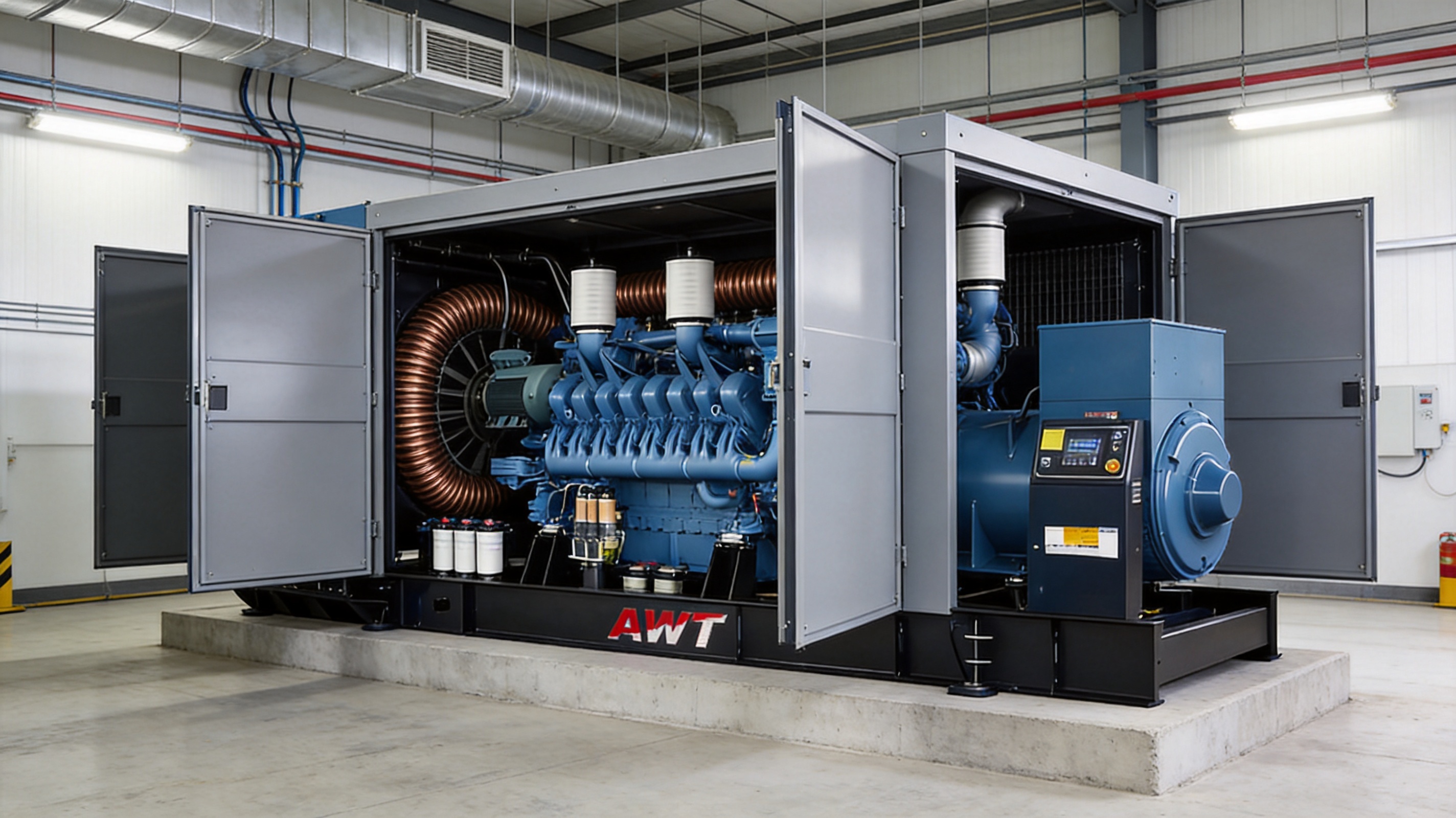
Silent canopy units are designed for locations where noise, weather protection, and compact installation are important. Acoustic materials, ventilation systems, mufflers, airflow paths, and access doors are integrated into the enclosure. The supplied information identifies silent configurations with noise levels of approximately 75 dB(A) or lower under specified test conditions. The actual result depends on distance, load, site reflections, enclosure design, and local measurement standards.
Mobile Trailer Generator Sets
Trailer-mounted generators are suitable for construction sites, temporary events, emergency response, rental fleets, road projects, and mobile backup. Their design may include a trailer chassis, road lighting, braking equipment, stabilizers, lifting points, fuel storage, cable outlets, and weather protection. Transport regulations and axle loads must be reviewed before shipment.
Containerized Power Stations
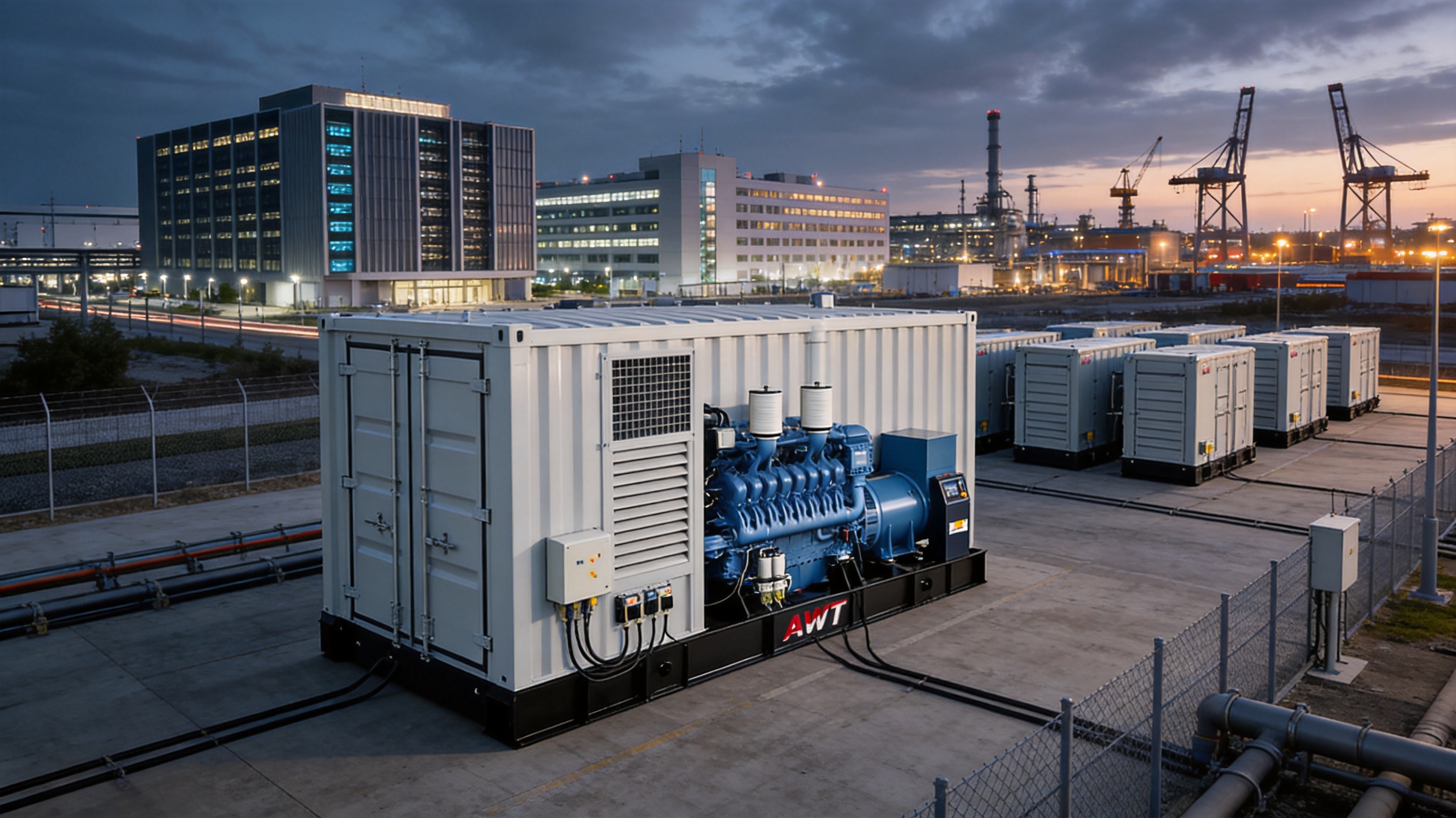
Containerized systems combine the generator, fuel system, ventilation, control equipment, acoustic treatment, and auxiliary devices in a modular enclosure. They are useful for data centers, petrochemical facilities, ports, industrial zones, remote infrastructure, and projects where rapid deployment is required.
Containerized systems must be engineered carefully because the limited internal space affects airflow, heat rejection, maintenance access, exhaust routing, fire protection, and lifting. The final package can include an integrated paralleling cabinet, ATS equipment, remote monitoring, fuel tanks, preheaters, and specialized protection for hazardous or corrosive environments.
Applications Across Critical Industries
Data Centers
Data centers require continuous availability, predictable power quality, and carefully coordinated switching. Generator sets are commonly integrated with uninterruptible power supplies, automatic transfer switches, medium-voltage or low-voltage switchgear, and parallel control systems.
MTU-powered configurations are suitable for large data centers because of their fast load response, stable output, remote monitoring capability, and ability to operate in synchronized multi-unit systems. The engineering design must consider server load growth, cooling systems, battery charging, fire pumps, mechanical loads, and redundancy targets.
Hospitals and Medical Facilities
Hospitals depend on emergency power for operating rooms, intensive care units, life-support equipment, elevators, medical imaging, fire systems, communications, and essential lighting. The generator system must be capable of starting automatically and transferring priority loads within the required time.
Noise, exhaust emissions, fuel storage, maintenance access, and testing schedules are important considerations in healthcare environments. A silent or acoustically treated installation may be preferred, while automatic testing and remote alarms help facility personnel verify readiness without interrupting normal operations.
Petrochemical and Chemical Facilities
Petrochemical plants, refineries, and chemical factories often contain large motors, pumps, compressors, process controls, emergency systems, and hazardous-area equipment. Generator reliability is important for safe shutdown, emergency response, process continuity, and essential utilities.
These projects may require explosion-conscious design, special fuel systems, corrosion protection, enhanced filtration, remote radiator arrangements, and carefully segregated electrical equipment. The generator set must be coordinated with the plant’s protection scheme and emergency operating procedures.
Industrial Parks and Manufacturing Plants
Manufacturing plants may use generator sets for emergency backup, peak support, process continuity, or off-grid operation. Loads can include motors, welding equipment, variable-frequency drives, compressors, heating systems, cranes, and automation equipment.
Load assessment is particularly important because motor starting and nonlinear loads can affect voltage stability. A parallel generator system may provide a practical way to support different production zones while maintaining flexibility during maintenance.
Ports, Municipal Projects, and Infrastructure
Ports, water treatment plants, transportation facilities, communication sites, and municipal infrastructure require dependable power for pumps, cranes, lighting, security systems, control equipment, and emergency services. These sites may be exposed to salt spray, humidity, wind, dust, and difficult access conditions.
Containerized and trailer-mounted configurations can reduce installation time and provide flexibility for phased construction or emergency deployment. Anti-corrosion treatment, enlarged fuel storage, remote monitoring, and robust lifting arrangements are often valuable additions.
Customization and Optional Equipment
A standard generator set is a starting point rather than a complete project design. Aiweite can configure the equipment around the customer’s electrical, mechanical, environmental, and operational requirements.
- Automatic transfer switches for utility-to-generator changeover.
- Generator paralleling and synchronization cabinets.
- Load-sharing and staged-load management systems.
- 4G remote monitoring and cloud-based management.
- Building management, SCADA, and plant control interfaces.
- Soundproof silent canopies and rainproof enclosures.
- Mobile trailers and integrated container power stations.
- Low-temperature preheaters and cold-start systems.
- Enlarged fuel tanks and day-tank systems.
- Explosion-conscious and anti-corrosion customization.
- Additional battery chargers and redundant starting systems.
- Special exhaust silencers, flexible connectors, and spark-control equipment.
- Genuine spare parts and lifecycle maintenance packages.
The correct options depend on the site and the customer’s operating philosophy. For example, a remote telecom site may prioritize fuel autonomy and remote alarms, while a hospital may prioritize ATS response, noise control, and automatic testing. A data center may require synchronization, redundant control, and detailed event logging. A mobile construction project may need a trailer, onboard fuel, lifting provisions, and rapid relocation.
Installation Planning and Site Requirements
Large diesel generator sets require detailed installation planning. The foundation must support the equipment’s static weight and dynamic forces. Vibration isolators must be installed correctly, and the equipment must be level and accessible for maintenance.
Combustion air and cooling air must be supplied in adequate volume. The ventilation system should prevent hot-air recirculation and maintain acceptable room temperature. Radiator discharge air must be routed away from the intake path, and building openings should be sized for the actual airflow requirement.
Exhaust systems must be designed to control back pressure, noise, heat, condensation, and vibration. Exhaust pipe supports, flexible connectors, insulation, expansion allowances, and discharge locations should comply with local regulations. The fuel system must include appropriate supply and return lines, filtration, ventilation, containment, and storage capacity.
Electrical installation requires correct cable sizing, short-circuit protection, earthing, neutral configuration, phase sequence, and coordination with the utility supply. The automatic transfer switch and generator circuit breaker must be selected for the actual voltage, current, fault level, and switching duty.
The installation documentation can include:
- Foundation loading and vibration-isolation information.
- Equipment outline drawings and service clearances.
- Combustion-air and cooling-air requirements.
- Exhaust flow and allowable back-pressure data.
- Fuel supply, return, storage, and day-tank schematics.
- Power-cable sizing and control-cable schedules.
- Earthing and neutral connection details.
- Container lifting points and transportation data.
- Controller communication and alarm information.
Maintenance, Spare Parts, and Service Support
Preventive maintenance is essential for generator readiness. A set that starts successfully during commissioning may still fail after long periods of inactivity if the batteries, fuel, lubricants, coolant, filters, or electrical connections are not inspected regularly.
Routine service normally includes engine oil and filter replacement, fuel filter inspection, air filter inspection, coolant checks, belt inspection, battery testing, terminal tightening, radiator cleaning, exhaust inspection, and verification of alarms and emergency stops. The exact interval depends on engine model, operating hours, fuel quality, environment, and duty classification.
Generators used for standby service should be exercised periodically under an appropriate load. Extended no-load or very light-load operation can contribute to incomplete combustion and deposits. Load-bank testing may be used when the facility cannot provide sufficient real load for a complete performance test.
Aiweite supplies genuine engine components, alternator parts, filters, consumables, electrical components, and control-system parts. The service team can prepare spare-parts lists based on the planned maintenance schedule, site conditions, expected annual operating hours, and required emergency response time.
Support can include installation guidance, commissioning assistance, operating instructions, troubleshooting, technical documentation, and post-commissioning consultation. For critical projects, a service agreement can define inspection frequency, response procedures, spare-parts storage, and reporting requirements.
Information Required for a Correct Quotation
A precise quotation depends on accurate project information. Customers should provide the following details whenever possible:
- Project location and delivery destination.
- Altitude, minimum temperature, maximum temperature, humidity, and environmental exposure.
- Required prime, standby, or continuous power.
- Total connected load and expected operating load.
- Motor starting requirements and transformer data.
- Nonlinear loads, variable-frequency drives, UPS systems, and sensitive electronic equipment.
- Voltage, frequency, phase, neutral, and grounding arrangement.
- Open-frame, silent, trailer, or containerized structure.
- Required acoustic level and local environmental restrictions.
- ATS, synchronization, parallel operation, and redundancy requirements.
- Remote monitoring, cloud management, SCADA, BMS, or DCS communication requirements.
- Fuel storage capacity and expected autonomy.
- Exhaust route, ventilation arrangement, and foundation limitations.
- Site access, lifting capacity, transportation restrictions, and installation schedule.
Providing these details at the beginning reduces the risk of later redesign. It also enables the engineering team to recommend the correct engine rating, alternator size, enclosure, cooling system, control platform, and accessories.
Frequently Asked Questions
What power range is available?
The supplied product information identifies MTU-powered generator configurations from approximately 20 kW to 4,000 kW, including standby, prime, and continuous-duty solutions. Representative listed models cover several hundred kilowatts to more than 3,000 kVA. Smaller or larger requirements can be addressed through alternative configurations, customized systems, or multi-unit parallel operation.
Are both 50 Hz and 60 Hz systems available?
Yes. The product range includes 50 Hz and 60 Hz configurations. Engine, alternator, controller, voltage, and protection settings must be matched to the selected frequency and the electrical standards of the destination country.
Can the generator sets operate in parallel?
Yes. Multi-unit synchronization, load sharing, and parallel operation are available. A complete parallel system normally includes generator controllers, synchronization equipment, paralleling switchgear, protection devices, and a load-management strategy.
Can a complete containerized power station be supplied?
Yes. Containerized systems can integrate the generator set, ventilation, exhaust equipment, control panel, fuel system, acoustic treatment, ATS equipment, paralleling cabinets, and remote monitoring. The container design should be confirmed according to transport limits, maintenance access, climate, noise requirements, and fire-safety rules.
What is the difference between prime and standby power?
Prime power is intended for applications where the generator is the main source and may operate for extended periods with variable loading. Standby power is generally intended for emergency backup when the utility supply fails and is subject to operating-time and load limitations. The correct rating should be selected according to the applicable standard, engine documentation, and project duty cycle.
How is power quality maintained for sensitive loads?
Power quality is supported by matching the engine, alternator, excitation system, voltage regulation, governor, and control logic to the load. The use of a brushless synchronous alternator, high-grade insulation, full-copper windings, and intelligent monitoring helps maintain stable voltage and frequency. Sensitive facilities may also require UPS systems, harmonic analysis, and detailed load sequencing.
Can the equipment be used in high-altitude or coastal locations?
Yes, subject to engineering review. High altitude can reduce air density and cooling performance, while coastal environments increase corrosion risk. The generator may require output derating, larger cooling capacity, improved filtration, anti-corrosion treatment, specialized coatings, and other environmental upgrades.
What testing is performed before delivery?
Testing can include incoming component verification, mechanical inspection, electrical safety checks, starting tests, no-load operation, full-load operation, step-load response, endurance operation, voltage and frequency stability, alarm verification, emergency shutdown, and communication testing. Testing scope can be expanded to include third-party inspection and customer witness testing.
Does the company provide OEM or ODM services?
Yes. OEM and ODM services can be provided for power configuration, engine and alternator selection, enclosure design, control-system integration, fuel storage, remote monitoring, parallel operation, and project-specific accessories.
How should customers begin a project inquiry?
Customers should provide the required power, voltage, frequency, duty classification, site conditions, load information, enclosure preference, control requirements, delivery destination, and installation limitations. The engineering team can then prepare a recommended configuration, technical proposal, commercial quotation, and preliminary delivery plan.
Conclusion
High-performance diesel generator sets are complete power systems rather than isolated engines and alternators. Their value depends on stable electrical output, fast load response, environmental adaptability, intelligent control, maintainability, and disciplined manufacturing.
The MTU-powered generator sets supplied by Yangzhou Aiweite Electromechanical Co., Ltd. combine genuine industrial engines, brushless full-copper alternators, digital control systems, engineered cooling and filtration, vibration isolation, flexible structural configurations, and application-specific customization. These features make the equipment suitable for data centers, hospitals, petrochemical facilities, industrial plants, municipal projects, ports, commercial buildings, and other locations where power reliability is essential.
The company’s manufacturing approach includes project engineering, component inspection, controlled assembly, electrical integration, full-load testing, documentation, and after-sales support. This integrated process helps customers reduce installation risk, improve operating reliability, and control the total lifecycle cost of their power infrastructure.
By selecting the correct duty rating, engine configuration, alternator capacity, enclosure, control system, and auxiliary equipment, customers can create a generator solution that is ready for emergency backup, prime power, continuous operation, or future expansion through parallel operation.
References
1. ISO 8528, Reciprocating Internal Combustion Engine Driven Alternating Current Generating Sets.
2. GB/T 2828, Sampling Procedures and Tables for Lot-by-Lot Inspection.
3. ISO 9001, Quality Management Systems — Requirements.
4. ISO 14001, Environmental Management Systems — Requirements with Guidance for Use.
5. International Electrotechnical Commission, Rotating Electrical Machines and Alternating-Current Generator Standards.
6. Manufacturer technical information for MTU industrial diesel engines and generator applications.
7. Manufacturer technical information for brushless synchronous alternators, Class H insulation, and industrial generator protection systems.
8. Manufacturer product specifications for MTU-powered diesel generator sets, 50 Hz and 60 Hz configurations.