English
 Français
 Español
High-Performance Diesel Generator Sets for Critical and Industrial Power
Nov 01, 2026
Content
- 1 Why Generator Set Selection Matters
- 2 Genuine Mitsubishi Industrial Engine Platform
- 3 Full-Copper Brushless Alternators
- 4 Intelligent Control and Automation
- 5 Auxiliary Systems Designed for Complete Performance
- 6 Manufacturing Process and Production Strength
- 7 Testing Before Delivery
- 8 Configurations for Different Applications
- 9 Power Range and Model Selection
- 10 Advantages Compared with Basic Generator Suppliers
- 11 Environmental Adaptability
- 12 Emission and Environmental Considerations
- 13 Installation and Maintenance Planning
- 14 Information Required for Accurate Configuration
- 15 Applications Across Multiple Industries
- 16 Frequently Asked Questions
- 16.1 What power range is available?
- 16.2 Are both 50 Hz and 60 Hz versions available?
- 16.3 Can the generator sets operate as prime power units?
- 16.4 Can several generator sets operate in parallel?
- 16.5 Can the controller connect to a BMS or SCADA system?
- 16.6 What enclosure types are offered?
- 16.7 How quiet are the silent versions?
- 16.8 Can the generator be adapted for high altitude or extreme temperatures?
- 16.9 Are corrosion-resistant options available?
- 16.10 What tests are completed before delivery?
- 16.11 Does the company provide spare parts and technical support?
- 16.12 What should be provided when requesting a quotation?
- 17 Conclusion
- 18 References
- 19 Product: Mitsubishi Powered Diesel Generator Sets
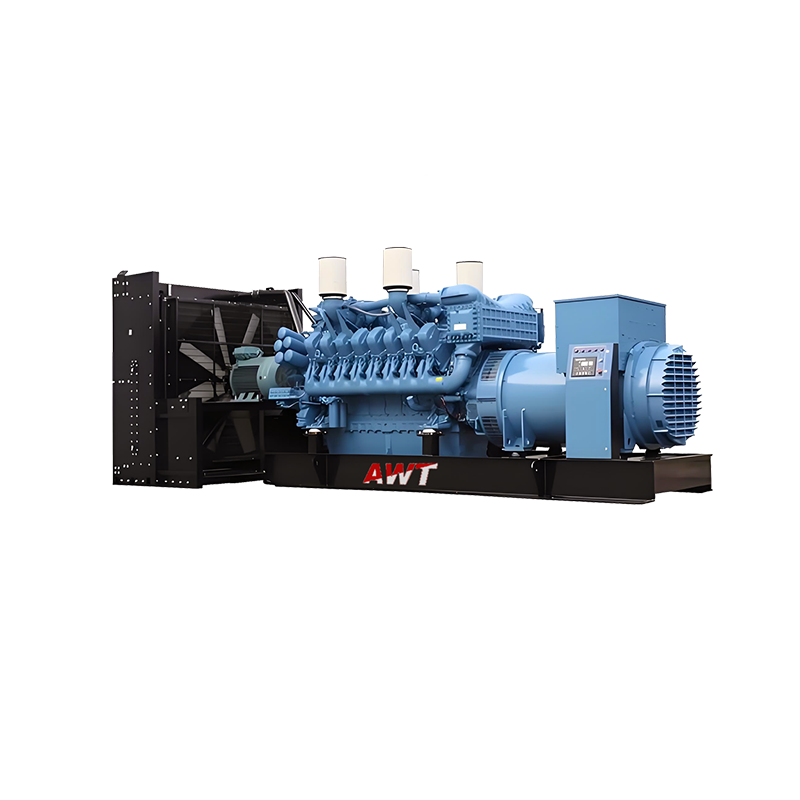
Reliable electricity is essential for modern infrastructure. Data centers, hospitals, factories, mines, ports, construction projects, commercial buildings and municipal facilities all depend on stable power to maintain safety, productivity and service continuity. When the utility supply becomes unstable or unavailable, a diesel generator set must start quickly, accept demanding loads and continue operating for extended periods under difficult environmental conditions.
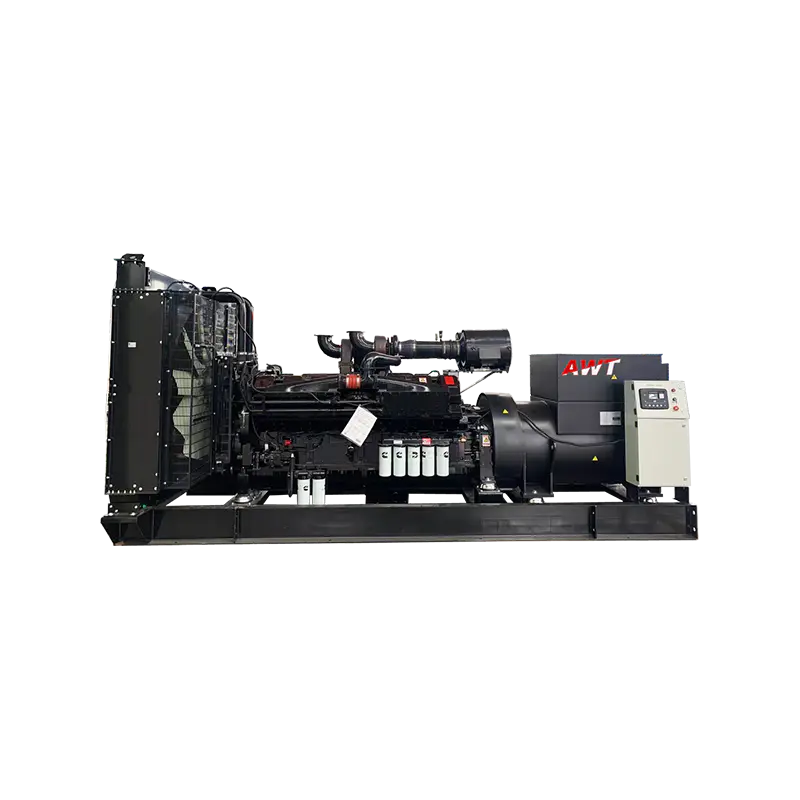
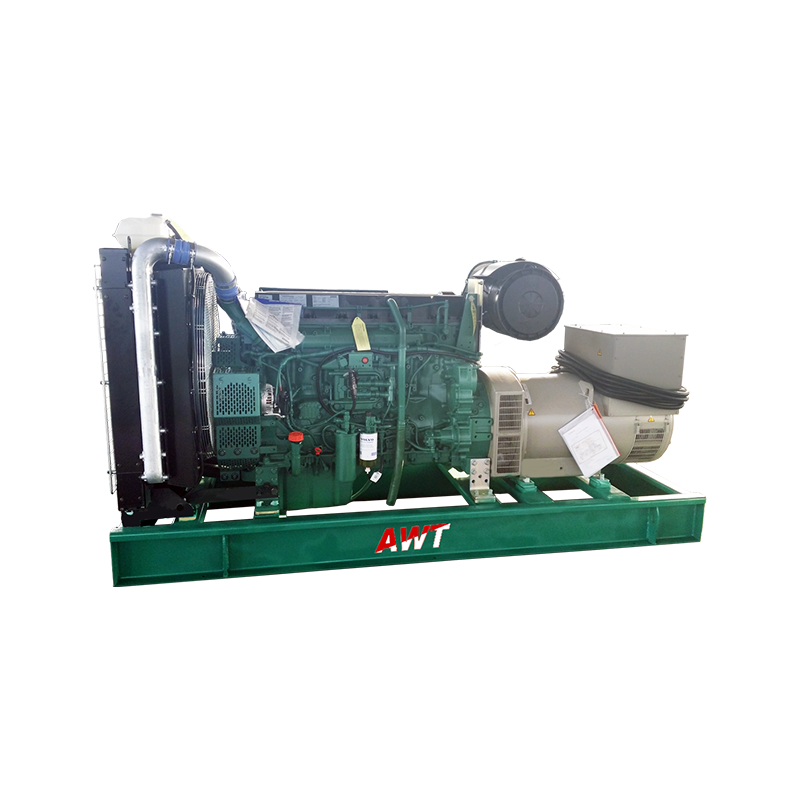
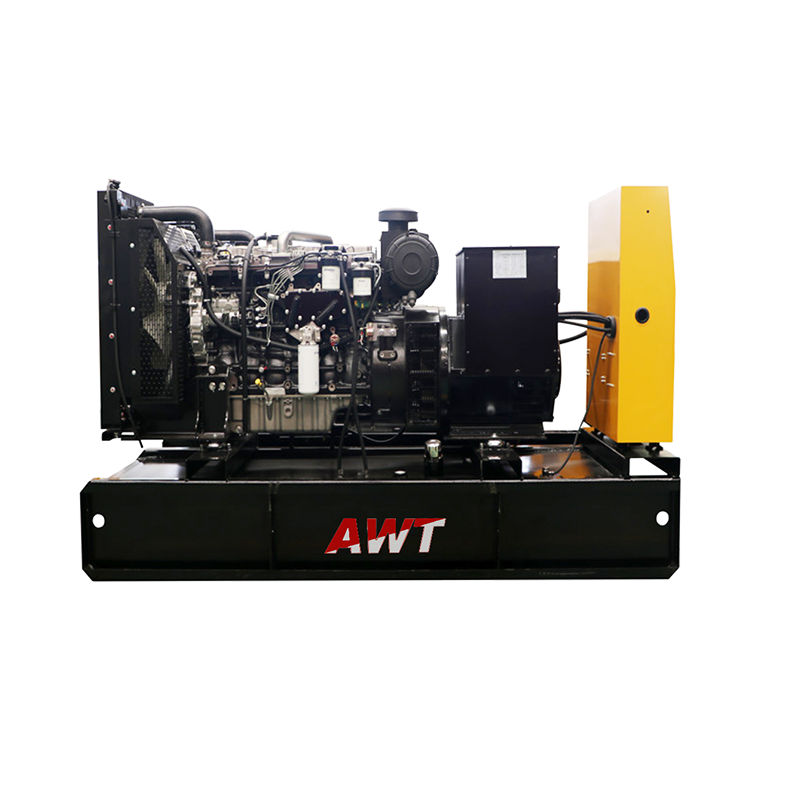
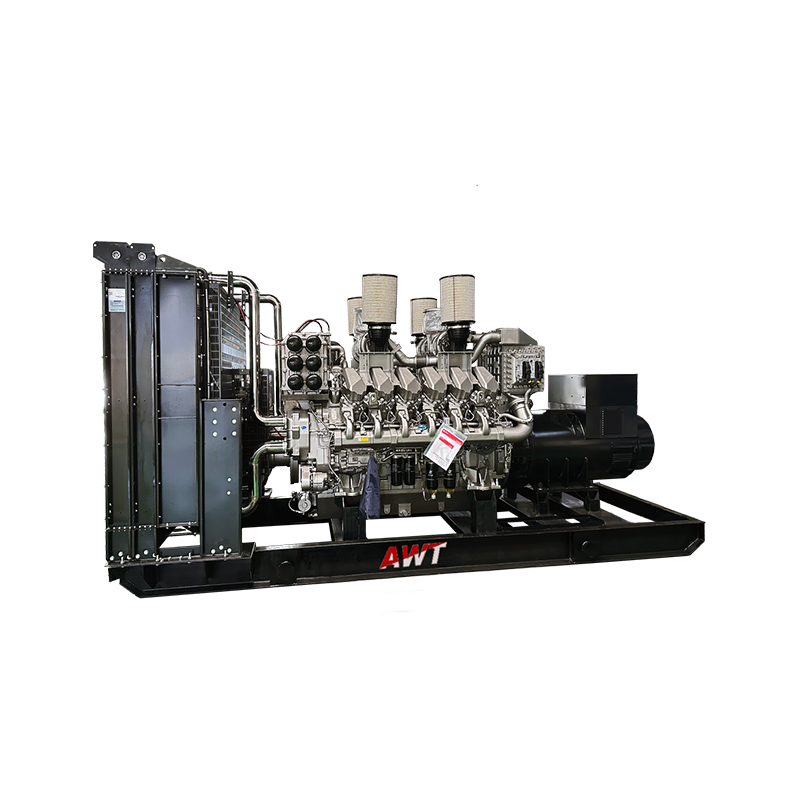
Mitsubishi powered diesel generator sets manufactured by Yangzhou Aiweite Electromechanical Co., Ltd. are designed for these demanding requirements. The product range combines genuine Japanese Mitsubishi industrial diesel engines, full-copper brushless alternators, intelligent control systems and application-specific auxiliary equipment. Available in open-frame, silent, trailer-mounted and containerized configurations, these generator sets can be adapted for standby, prime and continuous power duties.
The available range extends from approximately 20 kW to 4000 kW, with model configurations covering both 50 Hz and 60 Hz applications. Depending on the project, the generator sets can support automatic transfer, remote monitoring, cloud-based management, multi-unit paralleling and customized environmental protection. This makes them suitable not only for emergency backup but also for long-term industrial power generation.
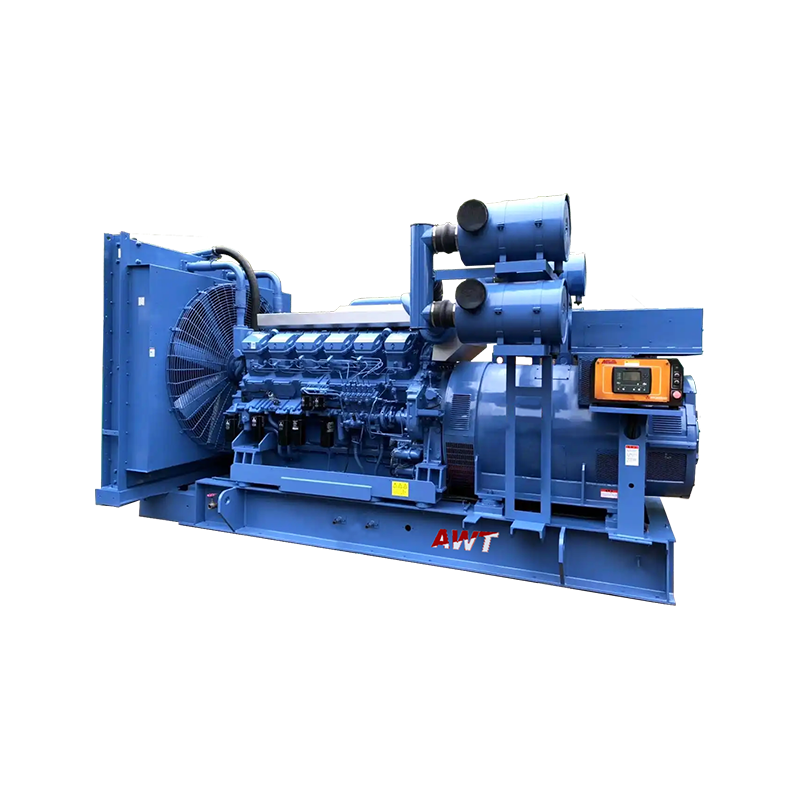
Mitsubishi Powered Diesel Generator Sets
Why Generator Set Selection Matters
A generator set is more than an engine connected to an alternator. It is a complete power system that must coordinate mechanical output, electrical quality, cooling, fuel delivery, exhaust treatment, vibration control, protection and monitoring. An incorrectly selected unit may be unable to start large motors, may experience excessive voltage fluctuation or may overheat when operating at altitude or high ambient temperature.
Professional generator selection begins with the load profile. Engineers must determine whether the unit will provide standby power during utility failures, prime power for variable operating schedules or continuous power for a site that lacks a reliable grid connection. The total running load is important, but the starting requirements of motors, pumps, compressors, elevators and other inductive equipment can be equally significant.
Electrical parameters must also be considered. Voltage, frequency, phase arrangement, power factor, neutral grounding and permissible voltage deviation all affect the selection of the alternator and control system. Physical conditions such as altitude, temperature, humidity, dust, salt exposure, noise restrictions and available installation space influence the engine configuration and enclosure design.
The Mitsubishi powered product range is engineered around this complete-system approach. Instead of treating the engine, alternator and controller as independent components, the manufacturing process integrates them into a tested package. This supports predictable performance and helps reduce the risks associated with field assembly by multiple suppliers.
Genuine Mitsubishi Industrial Engine Platform
The central strength of these generator sets is the use of genuine Mitsubishi industrial diesel engines. Mitsubishi engines are recognized for rigid construction, reliable mechanical design and stable performance in demanding industrial applications. Their high-rigidity integral blocks help maintain alignment and structural strength during heavy loading and long operating periods.
The engine platform uses turbocharged intercooling and electronic fuel injection. Turbocharging increases the amount of air available for combustion, while intercooling helps control intake-air temperature and improve combustion efficiency. Electronic fuel injection allows fuel delivery to be precisely controlled according to engine speed and load. Together, these technologies support strong load acceptance, efficient combustion and stable operation.
Industrial engines must be capable of handling more than their nominal rated output. In practical applications, loads may change suddenly when motors start, production equipment is energized or multiple circuits transfer to the generator. Mitsubishi engines are configured for strong overload resistance and rapid response to load changes, helping the generator set recover quickly after a step-load event.
Another important advantage is operating stability across different environments. A generator installed in a coastal facility may face salt-laden air and high humidity. A mining project may be exposed to dust, vibration and altitude. A construction site may experience frequent load changes and irregular operating schedules. The engine platform can be configured with appropriate cooling, filtration, starting and corrosion-protection measures for these conditions.
Engine Durability Under Heavy Loads
Heavy-load durability is influenced by block rigidity, bearing design, cooling performance, lubrication control, combustion calibration and manufacturing accuracy. A rigid engine structure reduces unwanted movement and helps maintain component alignment. Stable oil circulation and cooling reduce thermal stress during continuous operation. Accurate fuel injection supports consistent combustion and helps reduce deposits caused by incomplete burning.
These characteristics are particularly valuable for prime-power applications. In a prime-power installation, the generator may operate for long periods with changing loads. The engine must tolerate repeated acceleration and deceleration while maintaining acceptable fuel consumption and exhaust temperature. For continuous-power applications, durability and serviceability become even more important because the generator may function as the main source of electricity for an extended period.
Fast Load Response
Fast load response is one of the most important factors separating a professional industrial generator from a basic backup unit. When a large load is connected, engine speed can temporarily decrease. If the speed reduction is excessive, frequency falls and sensitive equipment may malfunction. If the alternator voltage response is slow, contactors may drop out or electronic equipment may shut down.
The integrated engine and alternator configuration is designed to respond quickly to sudden load application. Optimized air intake, fuel delivery and governor control help the engine increase output promptly. The brushless alternator maintains electrical output while the intelligent controller supervises operating parameters and protective functions.
Full-Copper Brushless Alternators
The alternator converts the engine’s mechanical energy into electrical energy. These generator sets use maintenance-free brushless synchronous alternators with full-copper windings. Copper offers high electrical conductivity and good thermal performance, helping the alternator maintain efficient power conversion under substantial loads.
The brushless design removes the need for conventional brushes and slip rings in the excitation path. This reduces wear-related maintenance and improves reliability in dusty or humid operating environments. With fewer consumable electrical components, the alternator can provide long service intervals when operated within its rated conditions.
Class H insulation is used to provide a high level of thermal resistance. This is beneficial for continuous operation, high ambient temperatures and applications where the alternator may experience temporary overloads. The alternator is generally available with IP22 to IP23 protection, while additional environmental measures can be specified for more severe locations.
Power Quality for Sensitive Loads
Power quality is critical in data centers, hospitals, communication facilities, laboratories and automated factories. Sensitive loads may include servers, medical equipment, variable-frequency drives, programmable logic controllers, control systems and precision instruments. These devices can be affected by excessive voltage fluctuation, frequency instability, waveform distortion or poor transient performance.
The alternator and control system are configured to support stable voltage and frequency characteristics. The product information identifies compliance with ISO G3 power quality requirements. This provides a suitable foundation for installations where stable generator output is necessary for precision instruments, information technology systems and sensitive non-linear loads.
Stable power quality also benefits ordinary industrial equipment. Motors experience smoother starting, lighting systems are less likely to flicker and control circuits receive a more consistent supply. In a facility with multiple types of equipment, a high-quality alternator helps reduce the risk that one difficult load will negatively affect the rest of the electrical system.
Intelligent Control and Automation
The control system is the operating interface between the generator set and the site electrical network. A Chinese-English LCD intelligent controller is provided for monitoring, control and fault protection. The controller displays operating conditions and alarms while supporting automatic start and stop sequences.
For emergency standby applications, the controller can work with an automatic transfer switch. When utility power fails or moves outside the configured limits, the ATS signals the generator to start. After the engine reaches stable speed and voltage, the load is transferred to the generator. When utility power returns and remains stable for the required delay period, the system transfers the load back and performs a controlled shutdown.
Automatic operation reduces dependence on on-site personnel and helps ensure a rapid response during an unexpected outage. It is particularly useful for hospitals, office buildings, data centers, telecommunications sites and unmanned industrial facilities. Start failure, low oil pressure, high coolant temperature, overspeed, overcurrent and other abnormal conditions can be monitored through the protection system.
Remote Monitoring and Cloud Management
Optional 4G remote monitoring and cloud management allow authorized personnel to observe generator status without remaining beside the equipment. Depending on the project configuration, the system can transmit operating data, alarm conditions, running hours, fuel-related information and maintenance reminders.
Remote access can improve maintenance planning. Instead of waiting for a site operator to report a problem, the service team can receive an alarm and begin diagnosis. Running hours can also be used to schedule filter replacement, oil service and inspections more accurately. For organizations managing multiple locations, centralized monitoring can provide a clearer overview of generator availability.
Communication protocols and input/output points can be defined during engineering review. This allows the generator controller to communicate with building management systems, SCADA platforms or other site automation systems. The generator set therefore becomes part of the wider power-management architecture rather than an isolated machine.
Multi-Unit Paralleling
Paralleling several generator sets can provide higher total capacity, improved redundancy and greater flexibility. Units can be configured to share load, synchronize frequency and voltage, and connect to a common bus under controlled conditions. If the site load is low, fewer generator sets may operate, improving fuel efficiency. When demand increases, additional units can be started and synchronized.
Parallel operation is suitable for data centers, industrial parks, large construction projects, mine sites and facilities with phased expansion plans. The system can be supplied with a paralleling cabinet, synchronization controls, load-sharing functions and protective relays. The final arrangement must be designed according to the site’s short-circuit level, load profile, grounding system and operational strategy.
Auxiliary Systems Designed for Complete Performance
Generator reliability depends on the performance of its auxiliary systems. The product configuration includes a closed cooling system, triple filtration, vibration dampers, a high-efficiency muffler and an integrated base frame. Each component supports stable operation and easier installation.
Cooling System
The closed cooling system helps maintain the engine within its required operating temperature range. Stable temperature control supports combustion efficiency, lubrication performance and component life. The cooling package must be selected according to the rated power, ambient temperature, altitude and enclosure type.
In high-temperature areas, additional radiator capacity, improved airflow management or remote radiator arrangements may be required. In containerized systems, the design of air intake and hot-air discharge is particularly important. Poor ventilation can cause heat recirculation and lead to reduced output or protective shutdown.
Triple Filtration
Fuel, air and lubrication filtration are essential for diesel engine protection. Air filtration prevents dust from entering the combustion system. Fuel filtration removes water and contaminants that could damage injection components. Oil filtration helps remove particles from the lubrication circuit.
Triple filtration is especially valuable in mines, construction sites, agricultural areas and other dusty environments. Filter selection and replacement intervals should be adjusted according to fuel quality, site cleanliness and operating hours. Optional pre-filters and larger filtration systems can be considered for severe conditions.
Vibration Control
Diesel engines generate mechanical vibration during combustion and rotation. Professional vibration dampers reduce the transfer of these forces to the foundation and surrounding structure. Good vibration isolation protects the generator frame, exhaust connections, electrical connections and nearby equipment.
Foundation design remains important even when vibration dampers are installed. The supporting surface must be strong and level, and the installation should provide adequate access for maintenance. Flexible fuel, exhaust and electrical connections help accommodate normal engine movement without placing stress on fixed building systems.
Exhaust and Noise Control
The exhaust system removes combustion gases and reduces noise. A high-efficiency muffler can lower exhaust sound while maintaining acceptable back pressure. Exhaust routing must be designed to protect personnel, prevent re-entry of fumes and maintain safe separation from air intakes, windows and occupied spaces.
Silent versions are available for applications in hospitals, hotels, schools, commercial buildings and residential areas. The stated noise level for silent configurations is 75 dB(A) or lower under specified test conditions. Actual site noise depends on distance, reflections, ventilation openings, load level, installation structure and local regulations.
Manufacturing Process and Production Strength
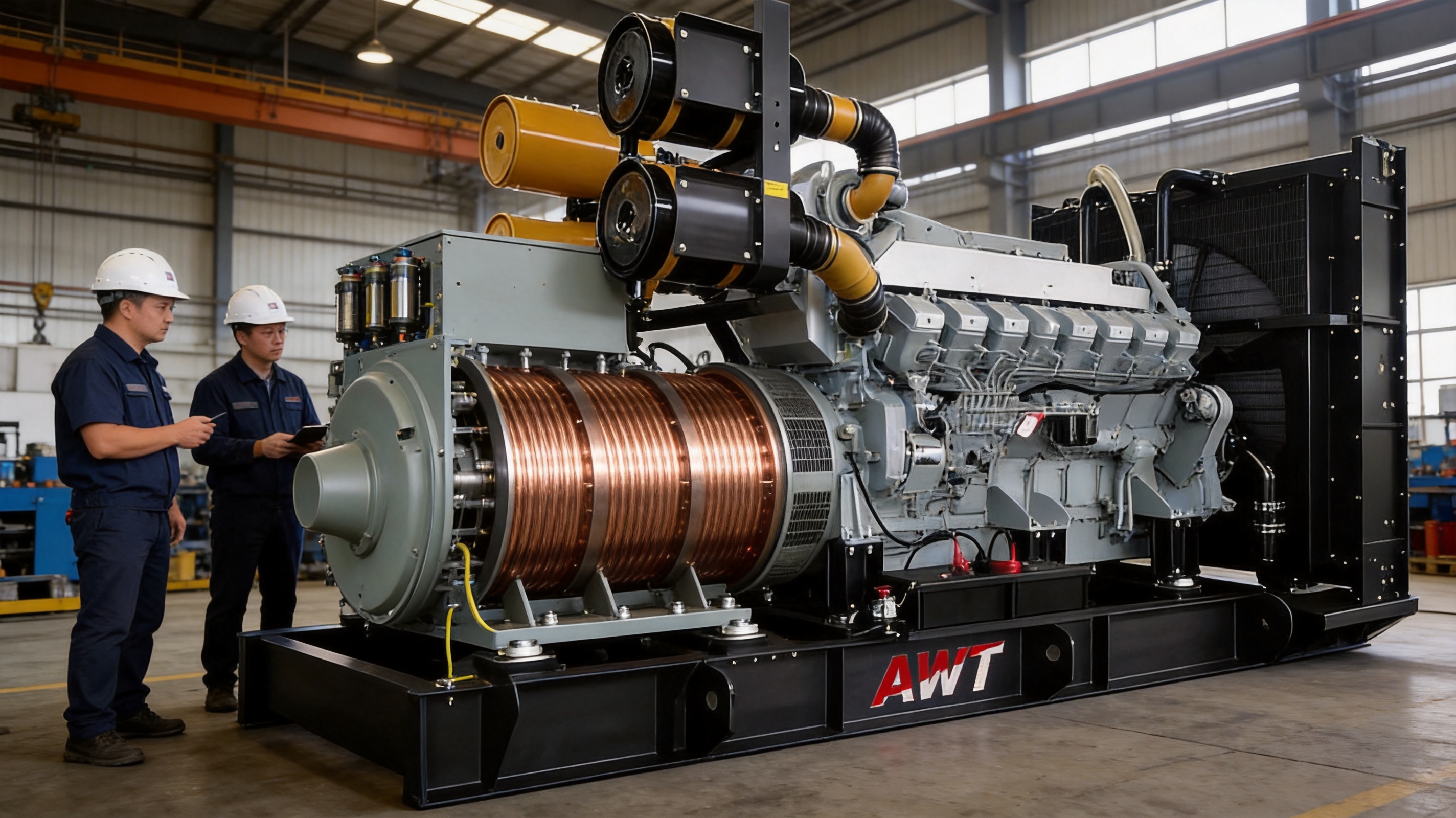
The performance of a generator set depends not only on component quality but also on how the complete unit is manufactured. Yangzhou Aiweite Electromechanical Co., Ltd. operates a production system that integrates engine and alternator assembly, base-frame construction, canopy fabrication, electrical installation and testing.
Manufacturing begins with the review and inspection of key components. Engines, alternators, controllers, electrical protection devices, radiators, fuel systems and structural parts must match the approved configuration. Incoming inspection helps identify dimensional, electrical or documentation issues before assembly begins.
During mechanical assembly, the engine and alternator are mounted on an integrated base frame. Coupling alignment is checked to ensure that mechanical power is transmitted smoothly. Vibration dampers are positioned according to the equipment arrangement, and auxiliary systems are connected to support service access.
The electrical assembly process includes alternator connections, output breakers, control wiring, sensors, battery systems and protective devices. Cable routing is arranged to reduce interference and simplify future maintenance. Control panels are configured according to the customer’s voltage, frequency, operating mode and communication requirements.
For silent or containerized units, the enclosure is fabricated and fitted with ventilation, access doors, acoustic materials, exhaust components and lifting provisions. The design must balance noise reduction with airflow. A well-sealed enclosure that restricts ventilation may reduce acoustic performance in practice by causing overheating, so thermal and acoustic requirements must be evaluated together.
Quality Management
The company’s manufacturing system is certified to ISO 9001 and ISO 14001. ISO 9001 supports a structured quality-management approach, while ISO 14001 provides a framework for environmental management. These systems encourage controlled procedures, documented inspections, traceability and continuous improvement.
Quality control is applied throughout production rather than only at the end. Incoming components are inspected, assembly processes are verified and electrical safety checks are completed. Mechanical fitting inspections help confirm that mounts, guards, couplings, piping and structural components are correctly installed.
As an OEM and ODM manufacturer, the company can define the configuration around the project instead of offering only a fixed standard package. Power range, engine platform, alternator rating, enclosure, control system, fuel autonomy, monitoring method and environmental protection can be reviewed during the engineering stage.
Testing Before Delivery
Every completed generator set must demonstrate reliable performance before shipment. Testing includes full-load operation from 0% to 110% of rated capacity, step-load response testing, continuous operation endurance testing, voltage and frequency stability testing and emergency protection verification.
Load Testing
Load testing confirms that the engine and alternator can deliver the specified power. The unit is operated at different load levels to observe temperature, voltage, frequency, fuel behavior and control response. Testing above the rated level can help verify the response of protective functions and the stability of the complete system under demanding conditions.
Step-Load Testing
Step-load testing evaluates what happens when a significant load is connected or disconnected suddenly. The test measures temporary voltage and frequency deviations, recovery time and engine response. This is particularly important for facilities with large motors, pumps, compressors, elevators or information technology loads.
Endurance Testing
Continuous operation testing provides evidence that the generator set can operate for an extended period without abnormal overheating, leakage, vibration or control faults. Endurance tests also help identify installation issues such as insufficient airflow, exhaust restriction or unstable sensor readings.
Protection Testing
Protection systems are tested to confirm that the generator responds correctly to abnormal conditions. Typical functions include low oil pressure, high coolant temperature, overspeed, overcrank, emergency stop, overvoltage, undervoltage, overfrequency, underfrequency and overload protection.
Test records can be prepared for project approval, factory acceptance testing and customer documentation. Inspection requirements, languages, witness testing and acceptance criteria should be established before production so that the final test plan matches the project contract.
Configurations for Different Applications
| Configuration | Typical Application | Main Considerations |
|---|---|---|
| Open-frame | Indoor plant rooms, factories and dedicated generator buildings | Ventilation, exhaust routing, acoustic treatment and foundation design |
| Silent canopy | Hospitals, hotels, offices, urban buildings and residential areas | Noise limit, airflow, access doors and weather protection |
| Mobile trailer | Construction sites, temporary power and emergency deployment | Towing safety, axle loading, braking, fuel autonomy and site access |
| Containerized | Data centers, ports, offshore sites, mines and remote facilities | Corrosion protection, lifting points, ventilation and cable entry |
Open-Frame Generator Sets
Open-frame units are suitable for indoor generator rooms or installations where the building itself provides weather and acoustic protection. They generally offer easy access to the engine, alternator and control panel. This configuration can be cost-effective for factories and utility rooms that already have suitable ventilation and exhaust systems.
Silent Canopy Generator Sets
Silent canopy units include an enclosure designed to reduce sound and protect the generator from weather. They are commonly used where the generator is installed close to occupied buildings or where local noise requirements are strict. The canopy can include acoustic materials, ventilation fans, access panels, rain protection and an integrated fuel system.
Trailer-Mounted Generator Sets
Trailer-mounted units provide mobility for construction, emergency response, rental power and temporary industrial operations. The trailer must be designed for the generator’s total weight and center of gravity. Towing equipment, braking, lighting, axle capacity and local road regulations must be confirmed before delivery.
Containerized Generator Sets
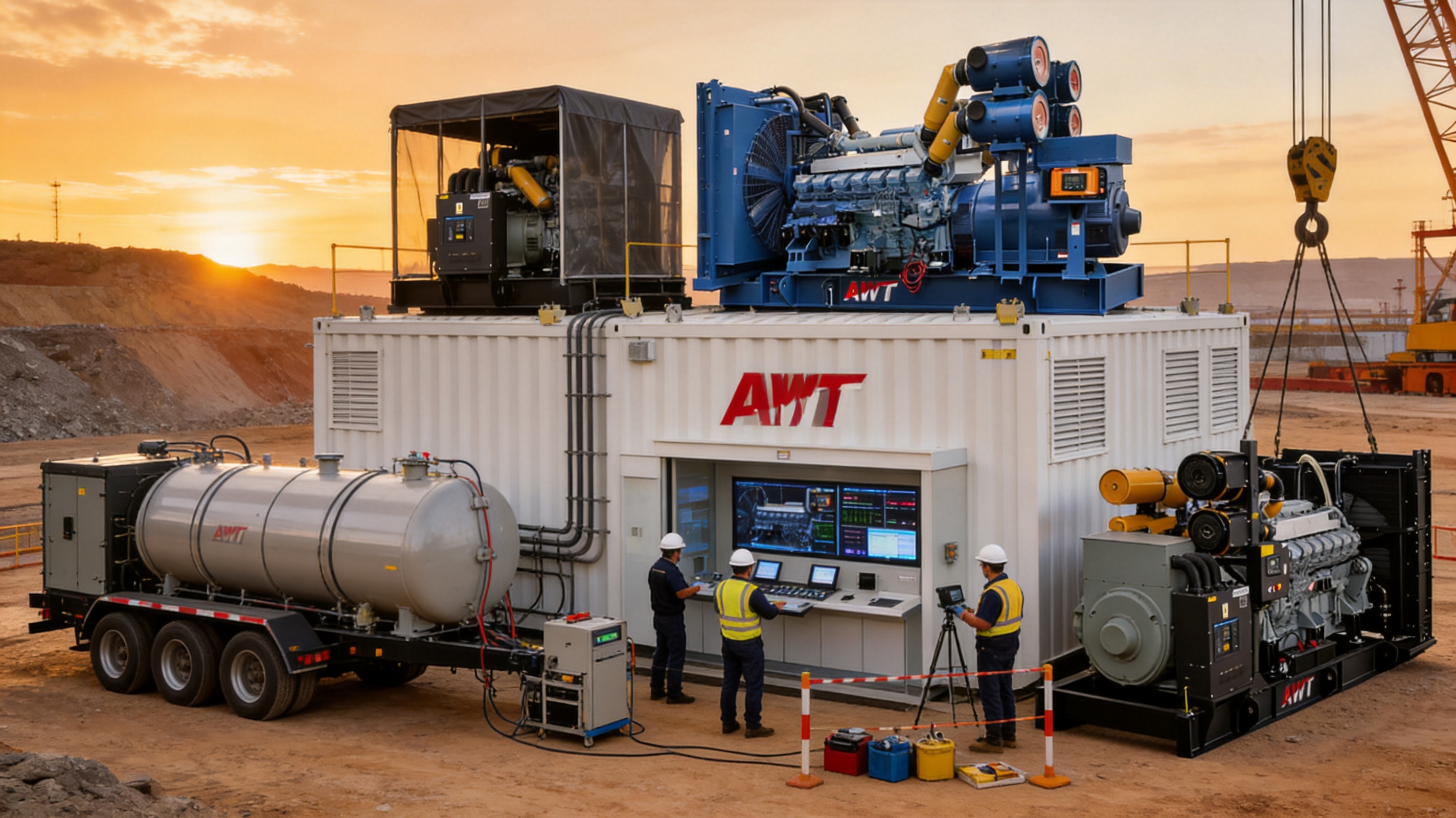
Containerized generator sets provide a robust solution for remote, offshore and large-scale industrial installations. The container can include acoustic treatment, fuel storage, control rooms, cable connections, fire-safety provisions and corrosion-resistant coatings. Lifting points and transport dimensions should be reviewed at the beginning of the project.
Power Range and Model Selection
The product range includes compact units for commercial backup and high-capacity units for major industrial installations. The correct model is selected according to required prime power, standby power, frequency, voltage, load characteristics and installation conditions.
| Power Band | Typical Applications | Representative Engine Platforms |
|---|---|---|
| 20–100 kW | Commercial buildings, offices, communities and emergency backup | Compact Mitsubishi industrial engine configurations |
| 100–1000 kW | Hospitals, hotels, shopping centers, municipal works and medium factories | S6R2-PTA, S12A2-PTA, S12H-PTA and S12R-PTA |
| 1000–2000 kW | Industrial plants, data centers, mines and large commercial facilities | S16R-PTA, S16R-PTA2 and S16R-PTAA2 |
| 2000–4000 kW | Industrial parks, ports, offshore facilities and large data centers | S16R2-PTAW, S16R2-PTAW-E and S16R2-PTAW2-E |
The published model schedule includes Mitsubishi series units for both 50 Hz and 60 Hz operation. Examples in the 50 Hz range include AWT-SL600, AWT-SL660, AWT-SL704, AWT-SL935, AWT-SL1100, AWT-SL1200, AWT-SL1320, AWT-SL1540, AWT-SL1650, AWT-SL1800, AWT-SL2000, AWT-SL2068 and AWT-SL2209.
The 60 Hz series includes models such as AWT-SL473, AWT-SL745, AWT-SL982, AWT-SL1154, AWT-SL1290, AWT-SL1484, AWT-SL1545, AWT-SL1727 and AWT-SL1953. The SME series provides additional engine configurations, including AWT-LZ600, AWT-LZ660, AWT-LZ1100, AWT-LZ1200, AWT-LZ1320, AWT-LZ1540, AWT-LZ1650, AWT-LZ1800 and AWT-LZ2000.
Model availability, dimensions, weight, emissions configuration and enclosure options should be confirmed during quotation. The technical table provides representative open and silent dimensions, but final shipping dimensions may vary according to the selected radiator, fuel tank, muffler, control cabinet and accessories.
Advantages Compared with Basic Generator Suppliers
Many generator suppliers assemble an engine, alternator and control panel into a basic package. This may be adequate for simple backup use, but demanding projects require greater integration and engineering support. The Mitsubishi powered range offers several advantages over basic, low-cost alternatives.
Engine and Alternator Compatibility
The engine and alternator are selected as a matched system. This supports suitable transient performance, stable frequency control and reliable mechanical integration. A poorly matched engine and alternator can create slow load response, excessive voltage deviation or unnecessary fuel consumption.
Industrial-Grade Components
Genuine Mitsubishi engines, full-copper brushless alternators and Class H insulation provide a stronger foundation than low-grade components designed only for occasional operation. Industrial components are better suited to long operating hours, frequent load changes and critical applications.
Broader Configuration Capability
The availability of open, silent, trailer and containerized designs allows the same product platform to serve different site requirements. Customers do not need to change to an unrelated supplier when a project requires mobility, low noise, weather protection or corrosion resistance.
Advanced Controls
Automatic transfer, remote monitoring, cloud management and multi-unit paralleling are available for projects requiring automation. These functions can improve operational visibility, reduce manual intervention and support more efficient maintenance planning.
Factory Testing
Full-load, step-load, endurance and protection testing provides greater confidence than a simple no-load start test. A documented test process helps identify issues before shipment, when corrections are faster and less expensive than field repairs.
Project-Oriented Customization
The company supports OEM and ODM requirements. Customers can specify electrical configuration, control language, acoustic performance, fuel capacity, environmental protection, communications and installation format. This project-based approach is valuable for engineering contractors, distributors, equipment integrators and end users with specialized requirements.
Environmental Adaptability
Generator sets are often installed in locations that are more severe than ordinary indoor environments. High altitude reduces air density and can affect engine output. High temperatures increase cooling demands. Cold climates make starting more difficult. Humidity and salt spray can accelerate corrosion, while dust can restrict filters and damage electrical components.
The product range supports customized solutions for these conditions. Cold-start preheaters can assist engine starting in low temperatures. Enlarged fuel tanks can extend operating autonomy. Dust-protection measures can be added for mining and construction sites. Anti-corrosion coatings and enclosure treatments can be selected for coastal and offshore applications.
At high altitude, engineering review should consider derating, radiator capacity, turbocharger performance and combustion calibration. At high ambient temperatures, ventilation, radiator size and hot-air discharge must be carefully evaluated. For coastal locations, exposed fasteners, electrical cabinets, cable glands and enclosure surfaces may require additional corrosion protection.
Emission and Environmental Considerations
Diesel generator projects must comply with the regulations applicable to the installation country and operating location. The product information identifies compliance with China National III/IV non-road emission standards where applicable. The final emissions configuration depends on engine model, power rating, fuel specification, operating mode and local regulatory requirements.
Environmental responsibility also involves fuel efficiency, maintenance and noise control. Electronic fuel injection supports efficient combustion and can reduce fuel consumption when the generator is correctly sized and maintained. Long service intervals and durable components can reduce waste and lifecycle maintenance requirements.
Noise control is important in urban, healthcare and commercial environments. Silent enclosures, high-efficiency mufflers, vibration isolation and appropriate installation distances can reduce the acoustic impact. Noise performance should be verified against the required measurement standard and site boundary conditions.
Installation and Maintenance Planning
A reliable generator set requires proper installation. The foundation must support the complete operating weight and withstand dynamic forces. Adequate clearance is needed around the engine, alternator, control panel and service points. Ventilation must provide sufficient combustion air and remove radiator heat without recirculation.
The exhaust system should use suitable pipe diameter, flexible connectors, supports and insulation. Exhaust back pressure must remain within the engine manufacturer’s limits. Fuel systems should include appropriate filtration, isolation valves, flexible connections and provisions for safe refueling and drainage.
Electrical installation includes output cables, grounding, protection, ATS connections, battery charging and control communication. Cable size and routing must be selected according to current, distance, voltage drop, temperature and installation method. Grounding and neutral arrangements should match the site distribution system.
Routine maintenance normally includes engine oil and filter service, fuel-filter inspection, air-filter replacement, coolant checks, battery testing, belt inspection, radiator cleaning and exhaust inspection. Remote monitoring can assist with maintenance scheduling, but physical inspections remain necessary.
Information Required for Accurate Configuration
Customers should provide complete project information before a generator set is selected. The following details help the engineering team determine the correct engine, alternator, control system and enclosure.
- Required duty: standby, prime or continuous power.
- Total running load in kilowatts and kilovolt-amperes.
- Largest motor, transformer or other starting load.
- Voltage, frequency, phase arrangement and power factor.
- Neutral grounding and distribution-system requirements.
- Altitude and ambient temperature range.
- Humidity, dust, salt exposure and corrosive conditions.
- Available installation footprint and access route.
- Required noise limit and exhaust-routing restrictions.
- Fuel storage capacity and desired operating autonomy.
- ATS, paralleling, SCADA, BMS or remote-monitoring requirements.
- Applicable emissions, safety and inspection standards.
- Documentation language and factory acceptance requirements.
Providing these details at the beginning avoids under-sizing and reduces changes during production. It also allows the manufacturer to determine whether a standard model is sufficient or whether a customized radiator, fuel system, enclosure, control panel or corrosion package is required.
Applications Across Multiple Industries
Data Centers
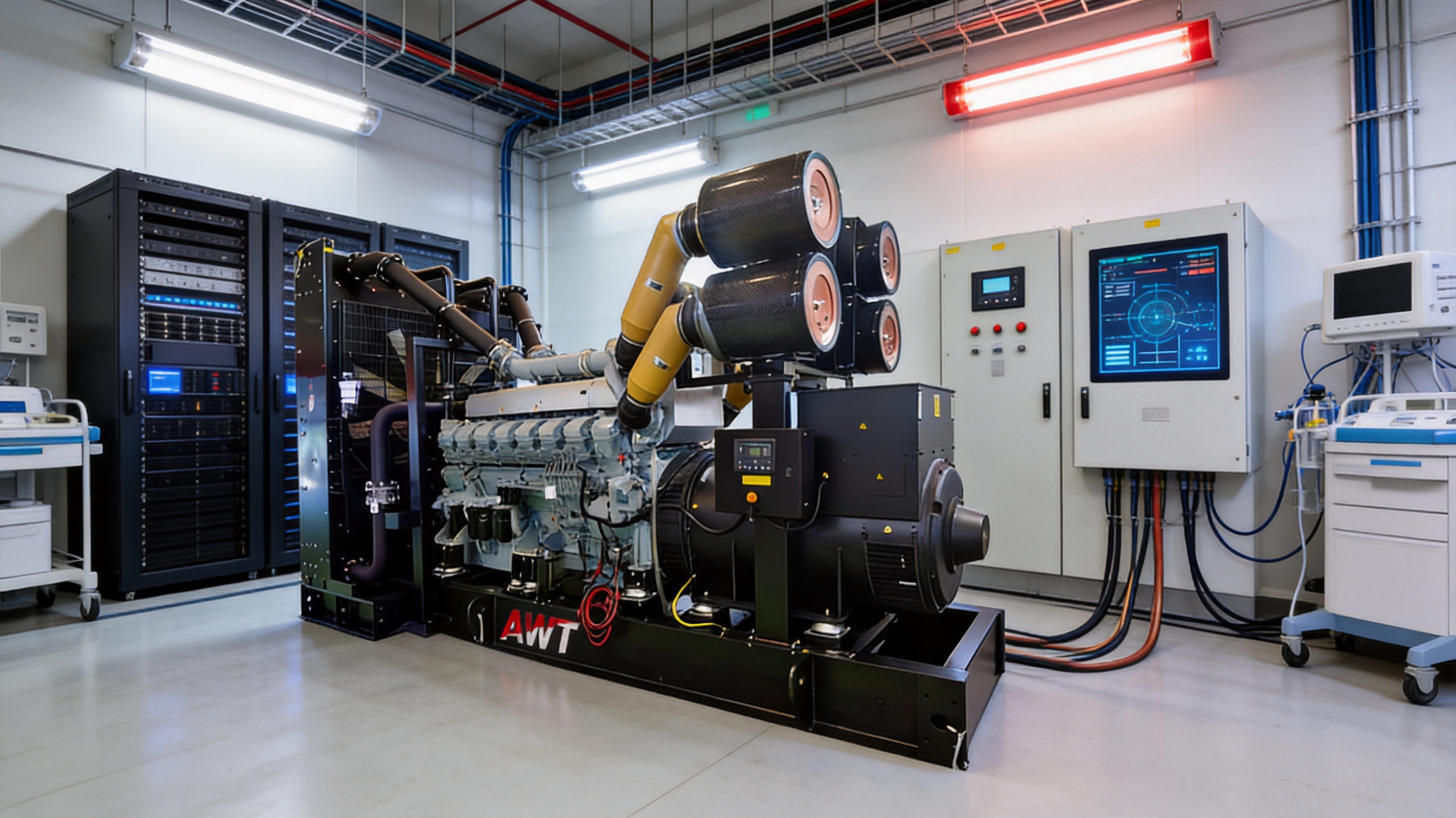
Data centers require fast starting, stable frequency, low voltage fluctuation and high availability. Generator sets may be installed in redundant arrangements with automatic transfer and paralleling. Remote monitoring and scheduled testing help confirm readiness without interrupting critical loads.
Hospitals
Hospitals depend on emergency power for operating rooms, intensive-care systems, elevators, medical equipment, lighting and ventilation. Generator sets must start rapidly and operate safely in an environment where noise, exhaust and maintenance access require careful planning. Silent configurations and automatic transfer systems are commonly used.
Manufacturing Plants
Factories may contain motors, compressors, welding equipment, conveyors, furnaces and automated control systems. These loads can create severe starting and transient demands. The high-load capability and fast response of the Mitsubishi engine platform can support production continuity when utility power is interrupted.
Mines and Remote Industrial Sites
Mines and remote sites often have limited grid access and harsh environmental conditions. Generator sets may operate as prime or continuous power sources. Dust protection, large fuel tanks, containerized construction, remote monitoring and service support are important factors.
Ports and Offshore Facilities
Port terminals and offshore facilities require compact, robust power systems that can tolerate humidity, salt spray and difficult logistics. Containerized configurations with anti-corrosion treatment, lifting points and remote monitoring are suitable for these conditions.
Municipal and Commercial Projects
Municipal engineering projects, shopping centers, hotels, office parks and intelligent communities often need standby power for emergency systems and essential services. Low noise, automatic transfer and compact installation can be more important than maximum continuous output.
Frequently Asked Questions
What power range is available?
The Mitsubishi powered diesel generator range covers approximately 20 kW to 4000 kW, depending on the selected engine, frequency and configuration. Specific models and ratings should be confirmed according to prime or standby duty and the project’s electrical requirements.
Are both 50 Hz and 60 Hz versions available?
Yes. The published product range includes Mitsubishi series models for 50 Hz and 60 Hz applications. Voltage, phase, power factor and control settings must be specified during engineering review.
Can the generator sets operate as prime power units?
Yes. The generator sets can be configured for standby, prime and continuous power applications. The appropriate rating depends on operating hours, load profile, maintenance plan and applicable engine derating requirements.
Can several generator sets operate in parallel?
Yes. Multi-unit paralleling is available with synchronization, load sharing, protective relays and a paralleling cabinet. The system should be designed according to the load profile, redundancy requirement, short-circuit level and site distribution architecture.
Can the controller connect to a BMS or SCADA system?
Yes. The intelligent controller supports automatic start and stop, ATS transfer, 4G remote monitoring, cloud management and multi-unit parallel operation. Communication protocols and required input/output points are defined during the engineering stage.
What enclosure types are offered?
Open-frame, silent canopy, mobile trailer and containerized configurations are available. The appropriate type depends on the installation location, noise requirement, mobility, weather exposure, ventilation arrangement and transport limitations.
How quiet are the silent versions?
The product information states that silent versions can achieve noise levels of 75 dB(A) or lower under specified conditions. Actual results depend on measurement distance, load, enclosure design, ventilation openings, installation structure and surrounding reflections.
Can the generator be adapted for high altitude or extreme temperatures?
Yes. High-altitude, high-temperature, cold-start and other environmental requirements can be evaluated during configuration. Possible options include cold-start preheaters, enhanced cooling, derating adjustments, dust protection and special enclosure treatments.
Are corrosion-resistant options available?
Yes. Anti-corrosion treatment can be specified for coastal, offshore, humid and chemically aggressive environments. The treatment may include enclosure coatings, protected electrical components, corrosion-resistant hardware and customized ventilation arrangements.
What tests are completed before delivery?
Testing may include operation from 0% to 110% rated capacity, step-load response, continuous endurance, voltage and frequency stability, emergency protection verification, electrical safety checks and mechanical inspection.
Does the company provide spare parts and technical support?
Yes. Genuine engine components, alternator parts, filters, consumables, electrical components and control-system parts are available. Support can include configuration assistance, installation guidance, commissioning advice, troubleshooting and lifecycle maintenance planning.
What should be provided when requesting a quotation?
Customers should provide the required power, duty type, voltage, frequency, phase, load profile, largest starting load, site conditions, noise limit, enclosure preference, fuel autonomy, monitoring requirements and applicable standards. Complete information improves configuration accuracy and quotation speed.
Conclusion
Mitsubishi powered diesel generator sets provide a complete industrial power solution for applications where reliability, durability and fast load response are essential. Genuine Mitsubishi engines deliver strong mechanical performance, while full-copper brushless alternators provide stable electrical output with reduced maintenance requirements. Intelligent controllers add automatic operation, remote monitoring, cloud management and multi-unit paralleling capability.
The product range is supported by a manufacturing process that includes component inspection, integrated assembly, controlled electrical installation, enclosure fabrication and comprehensive factory testing. Open-frame, silent, trailer and containerized configurations allow the equipment to be adapted to commercial buildings, hospitals, factories, mines, ports, offshore facilities and critical infrastructure projects.
Compared with basic generator packages, the product offers stronger system integration, broader customization, industrial-grade components and more extensive testing. With appropriate engineering input, the generator sets can be configured for standby, prime or continuous operation and adapted to high-altitude, high-temperature, cold, dusty, humid and corrosive environments.
For a reliable configuration, customers should evaluate the complete load profile, site conditions, electrical requirements, installation space, control architecture and regulatory obligations before selecting a model. This engineering-led approach helps ensure that the generator set performs as expected throughout its service life.
References
ISO 8528, Reciprocating Internal Combustion Engine Driven Alternating Current Generating Sets.
GB/T 2828, Sampling Procedures and Tables for Lot-by-Lot Inspection.
ISO 9001, Quality Management Systems—Requirements.
ISO 14001, Environmental Management Systems—Requirements with Guidance for Use.
IEC 60034, Rotating Electrical Machines.
Manufacturer technical information for Mitsubishi powered diesel generator sets, engine configurations, alternator systems and control options.
Manufacturer production, testing, customization and after-sales service information supplied for this product range.