English
 Français
 Español
100kVA–400kVA Universal Diesel Generator Sets for Reliable Commercial and Industrial Power
Oct 28, 2026
Content
- 1 Understanding the 100kVA–400kVA Power Range
- 2 Typical Operating Modes
- 3 Engine Technology for Medium-Duty Applications
- 4 Heavy-Duty Alternator Performance
- 5 Intelligent Control and Electrical Integration
- 6 Structure Options for Different Environments
- 7 Engine Brand Selection and Supply Flexibility
- 8 Advantages Over Inadequately Sized or Less Flexible Alternatives
- 9 Advanced Manufacturing and Quality Management
- 10 Performance Testing Before Delivery
- 11 Applications Across Commercial and Industrial Sectors
- 12 Installation Planning and Site Requirements
- 13 Maintenance and Lifecycle Support
- 14 Customization and OEM/ODM Capability
- 15 Information Required for Accurate Configuration
- 16 Frequently Asked Questions
- 16.1 What distinguishes the 100kVA–400kVA series from smaller diesel generators?
- 16.2 Can the generator supply motors, pumps, and air-conditioning equipment?
- 16.3 Which structure should be selected for an outdoor project?
- 16.4 Are specific engine brands available?
- 16.5 Can the generator operate automatically during a utility failure?
- 16.6 Can several generator sets operate in parallel?
- 16.7 What tests are completed before shipment?
- 16.8 How can the generator remain reliable during long-term standby?
- 16.9 Does the company provide installation and after-sales support?
- 16.10 What is the normal production lead time?
- 17 Why Select This Medium-Power Generator Platform?
- 18 References
- 19 Product: 100kVA – 400kVA Universal Diesel Generator Sets
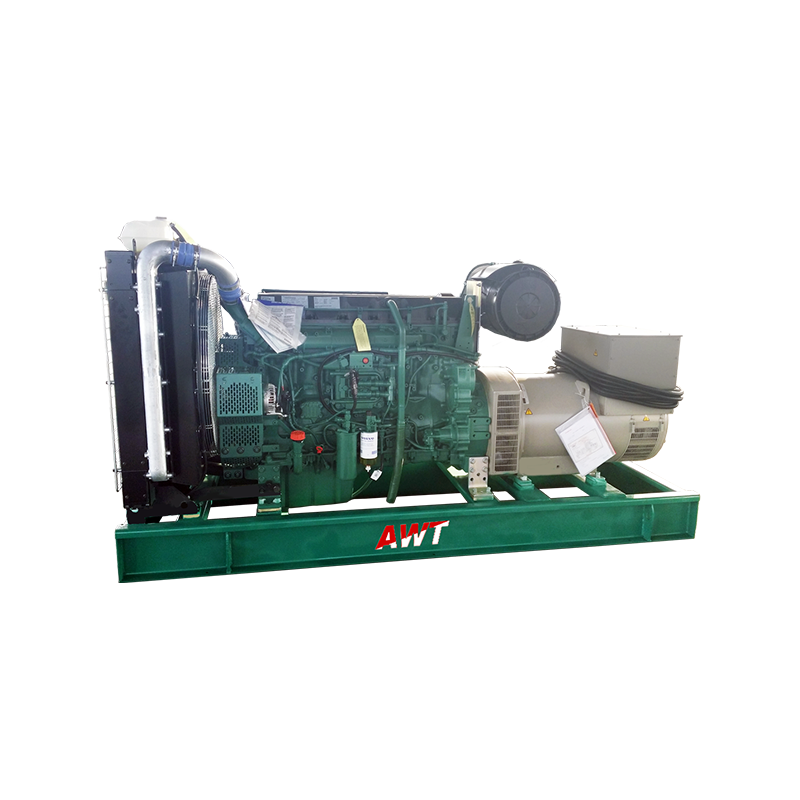
Reliable electrical power is essential for commercial buildings, manufacturing facilities, medical institutions, municipal infrastructure, communication systems, construction projects, and many other critical applications. When utility power becomes unstable or unavailable, a properly specified diesel generator set protects operations, equipment, productivity, safety, and business continuity. The 100kVA–400kVA universal diesel generator set series is designed to meet these medium-scale power requirements with a balanced combination of output capacity, operating durability, intelligent control, structural flexibility, and long-term serviceability.
These generator sets bridge the gap between small backup units and large industrial power systems. Smaller gensets may be economical for limited loads but can become overloaded when supporting central air conditioning, production machinery, pumps, elevators, servers, or multiple electrical systems at the same time. Conversely, an oversized generator can increase capital expenditure, fuel consumption, installation requirements, and maintenance costs without providing practical benefits. The 100kVA–400kVA range offers a suitable power platform for projects that need substantial reserve capacity, stable voltage and frequency, strong motor-starting performance, and reliable continuous or standby operation.
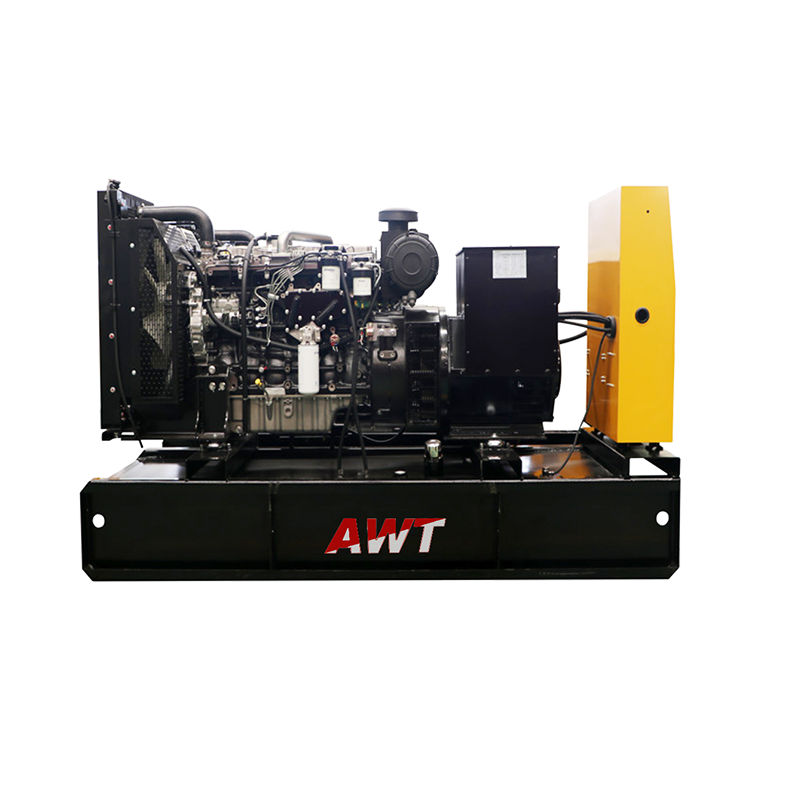
Yangzhou Aiweite Electromechanical Co., Ltd. manufactures and installs diesel generator sets from 1kVA to 2,500kVA. Its 100kVA–400kVA products are developed for commercial, industrial, medical, municipal, infrastructure, and engineering applications. The company combines mainstream industrial diesel engines, heavy-duty alternators, intelligent controllers, reinforced structures, systematic factory testing, and project-oriented technical support to create generator solutions that can be configured for different site conditions and operating requirements.
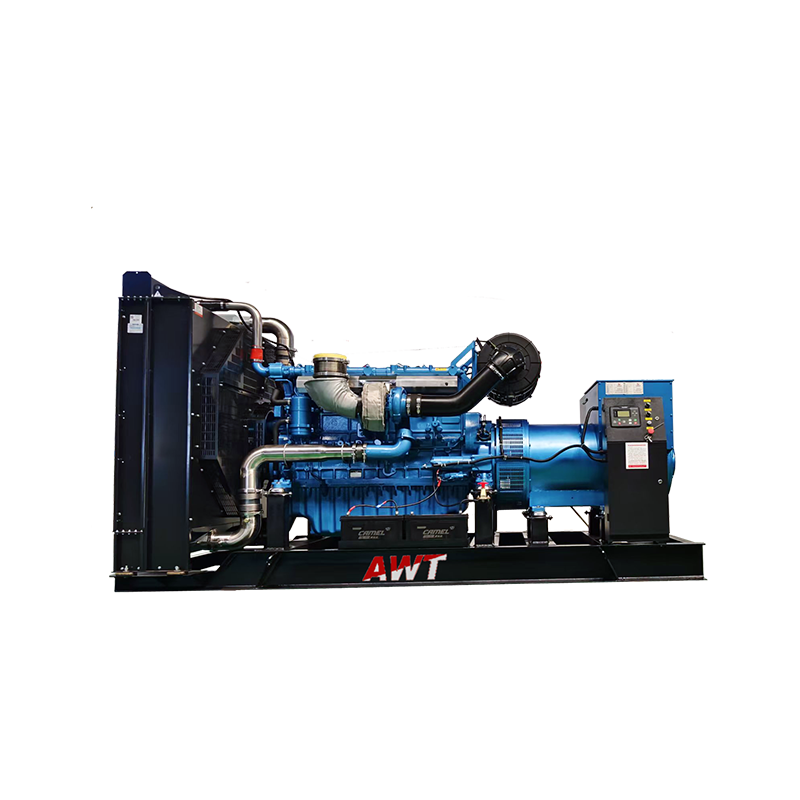
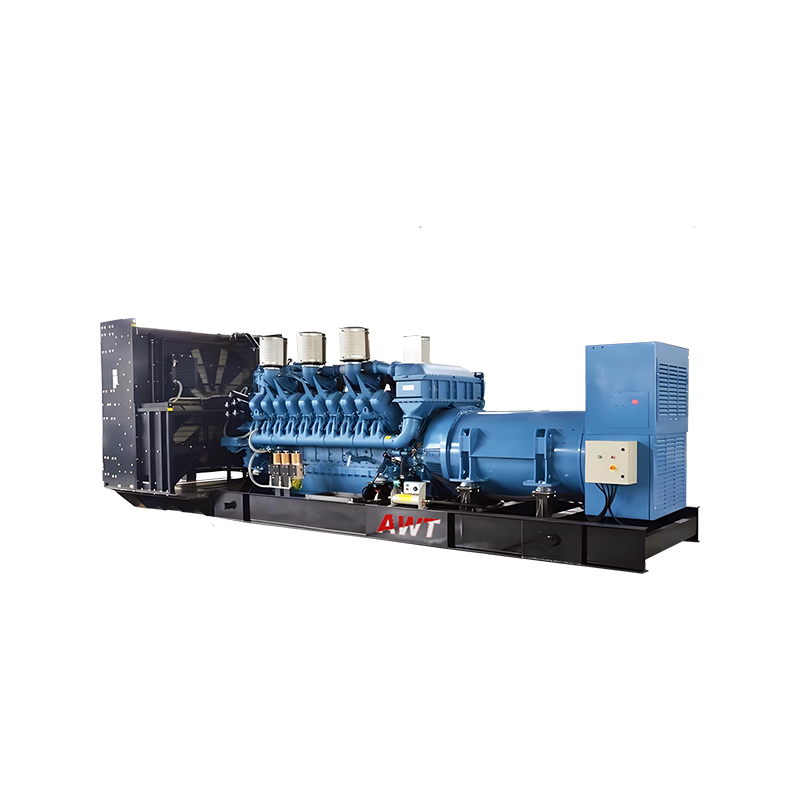
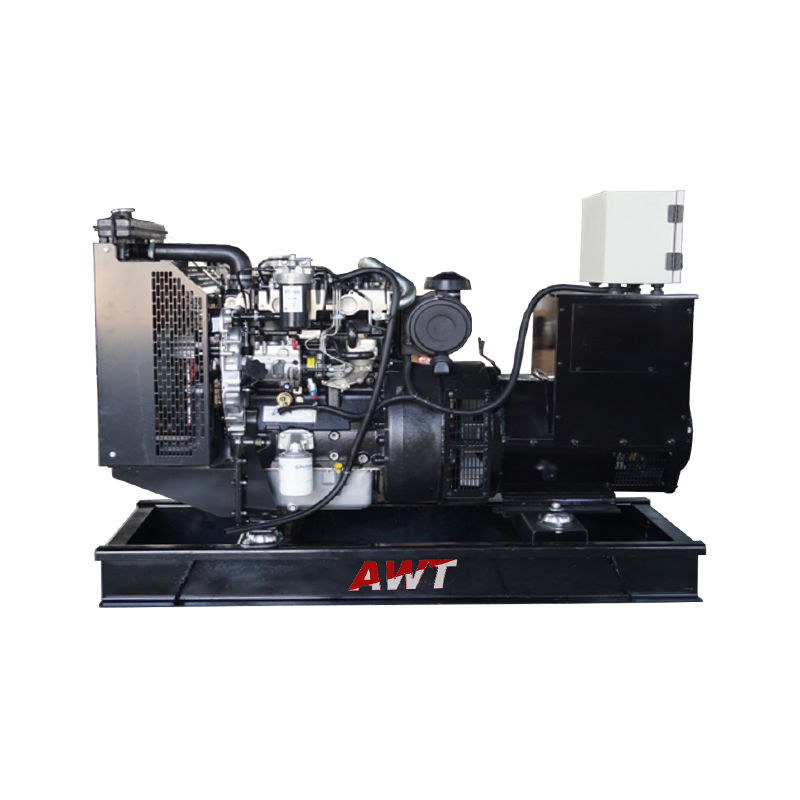
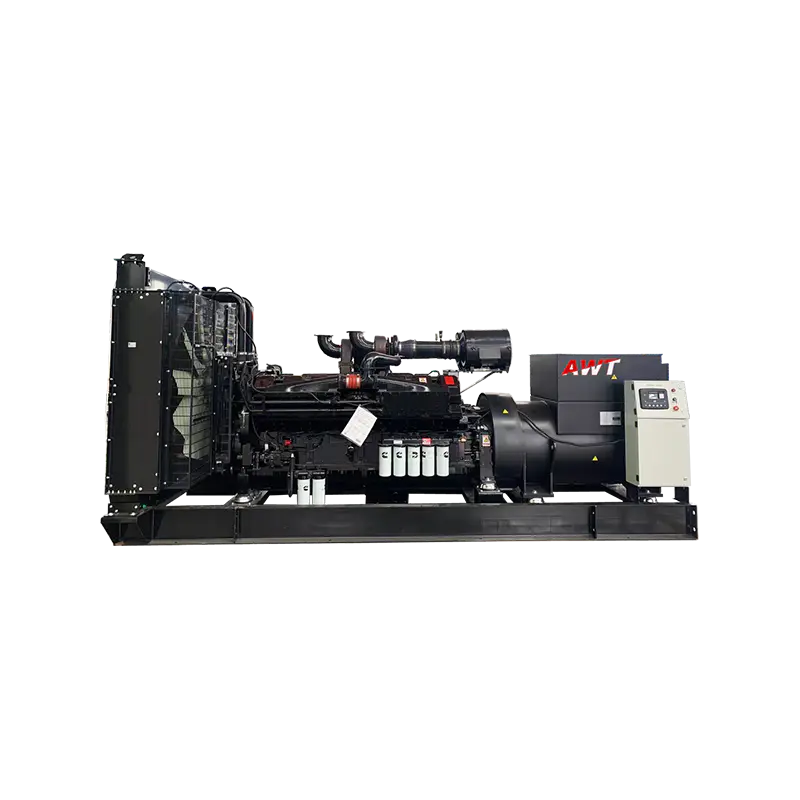
100kVA – 400kVA Universal Diesel Generator Sets
Understanding the 100kVA–400kVA Power Range
The 100kVA–400kVA category is commonly selected when a project requires more than basic emergency lighting and small office loads. At this level, the generator may be responsible for essential building services, production equipment, water pumps, refrigeration, information technology systems, communication devices, medical equipment, and other mixed electrical loads. The selected model must therefore do more than produce its rated output. It must respond quickly to load changes, tolerate starting currents, maintain acceptable voltage and frequency stability, and operate safely for extended periods.
A generator’s apparent power is expressed in kilovolt-amperes, or kVA, while its real power is commonly expressed in kilowatts, or kW. The relationship between these values depends on the power factor of the connected load. A typical generator specification may use a 0.8 power factor, although the final selection must be based on the actual project load. Motors, compressors, pumps, transformers, elevators, and air-conditioning systems may have demanding starting characteristics that require additional generator capacity even when their running power appears moderate.
Correct sizing is therefore an engineering process rather than a simple comparison of total equipment wattage. The project review should consider continuous running loads, starting loads, intermittent loads, future expansion, harmonic-producing equipment, phase balance, allowable voltage dip, and the required operating mode. A generator used for standby duty may be sized differently from one used for prime or continuous power. The 100kVA–400kVA platform provides enough flexibility to accommodate these different design conditions.
Typical Operating Modes
Standby Power
Standby generators operate when the normal utility supply fails. They are commonly installed in commercial complexes, hospitals, schools, hotels, office buildings, communication sites, and public facilities. An automatic transfer switch detects the loss of utility power, sends a start command to the generator, and transfers the selected emergency loads after the generator reaches acceptable voltage and frequency.
Prime Power
Prime power applications use the generator as the main source of electricity where utility power is unavailable, unreliable, or unsuitable. Construction sites, temporary industrial parks, remote facilities, rural projects, and certain infrastructure installations may require this operating mode. Prime-power operation places greater demands on engine cooling, lubrication, filtration, fuel systems, maintenance planning, and load management.
Continuous Power
Continuous operation requires the generator to run for long periods at a relatively stable load. Industrial processes, remote communication facilities, energy projects, and isolated power systems may use this arrangement. Detailed engineering is necessary to confirm the expected load profile, service intervals, fuel storage, ventilation, exhaust routing, and environmental conditions.
Engine Technology for Medium-Duty Applications
The engine is the primary mechanical power source of a diesel generator. The 100kVA–400kVA series uses mainstream medium-bore industrial diesel engines selected according to the required output, fuel availability, service network, emissions requirements, ambient conditions, and project budget. The use of established industrial engine platforms provides access to standardized service procedures and widely available replacement parts in many regions.
Turbocharged and intercooled engine configurations improve the utilization of intake air and support efficient combustion. Turbocharging increases the volume of air supplied to the cylinders, while intercooling helps reduce intake-air temperature before combustion. This combination can improve power density, combustion efficiency, and response to sudden load changes. It is especially valuable in medium-power applications where the generator may need to start motors, energize transformers, or accept several loads in quick succession.
High-precision fuel injection systems contribute to consistent combustion and stable engine operation. Accurate fuel delivery helps the engine respond to changing demand while supporting controlled fuel consumption and reduced smoke under correctly maintained conditions. Engine selection also considers altitude and temperature. At high elevations, the reduced air density can affect available engine output. High ambient temperatures can influence cooling performance and alternator capacity. These conditions should be confirmed during the quotation and engineering stages rather than addressed after installation.
Industrial diesel engines are designed for demanding service. Their reinforced construction, durable crankshaft and bearing systems, heavy-duty cooling arrangements, and serviceable filtration systems support long operating life when maintenance requirements are followed. The product platform is intended to operate in high-temperature, high-humidity, dusty, and high-altitude environments, subject to correct derating and site preparation.
Heavy-Duty Alternator Performance
The alternator converts mechanical energy from the diesel engine into electrical energy. In the 100kVA–400kVA series, heavy-duty brushless synchronous full-copper alternators are used to provide stable output and reliable operation. Full-copper windings offer strong thermal conductivity and mechanical durability. A brushless excitation system reduces the need for brush replacement and helps simplify routine service.
Class H insulation provides a high thermal tolerance suitable for industrial service, while IP23 protection helps protect the alternator against solid objects and vertically or obliquely falling water within the defined protection limits. The alternator should still be installed in an environment with suitable ventilation, drainage, and protection from excessive dust, water, corrosive gases, and direct weather exposure unless a weatherproof enclosure has been specified.
Alternator selection is particularly important when the generator supplies mixed resistive and inductive loads. Heating systems, lighting, computers, motors, pumps, compressors, and power electronics may behave differently during operation. A properly selected alternator with adequate power margin helps maintain voltage quality and reduces the risk of instability during load transitions.
Low waveform distortion and good dynamic performance are valuable for modern facilities containing variable-frequency drives, data-processing equipment, building-management systems, medical electronics, and communication equipment. The final electrical design should also consider harmonic content, neutral loading, grounding, phase balance, and coordination with upstream and downstream protection devices.
Intelligent Control and Electrical Integration
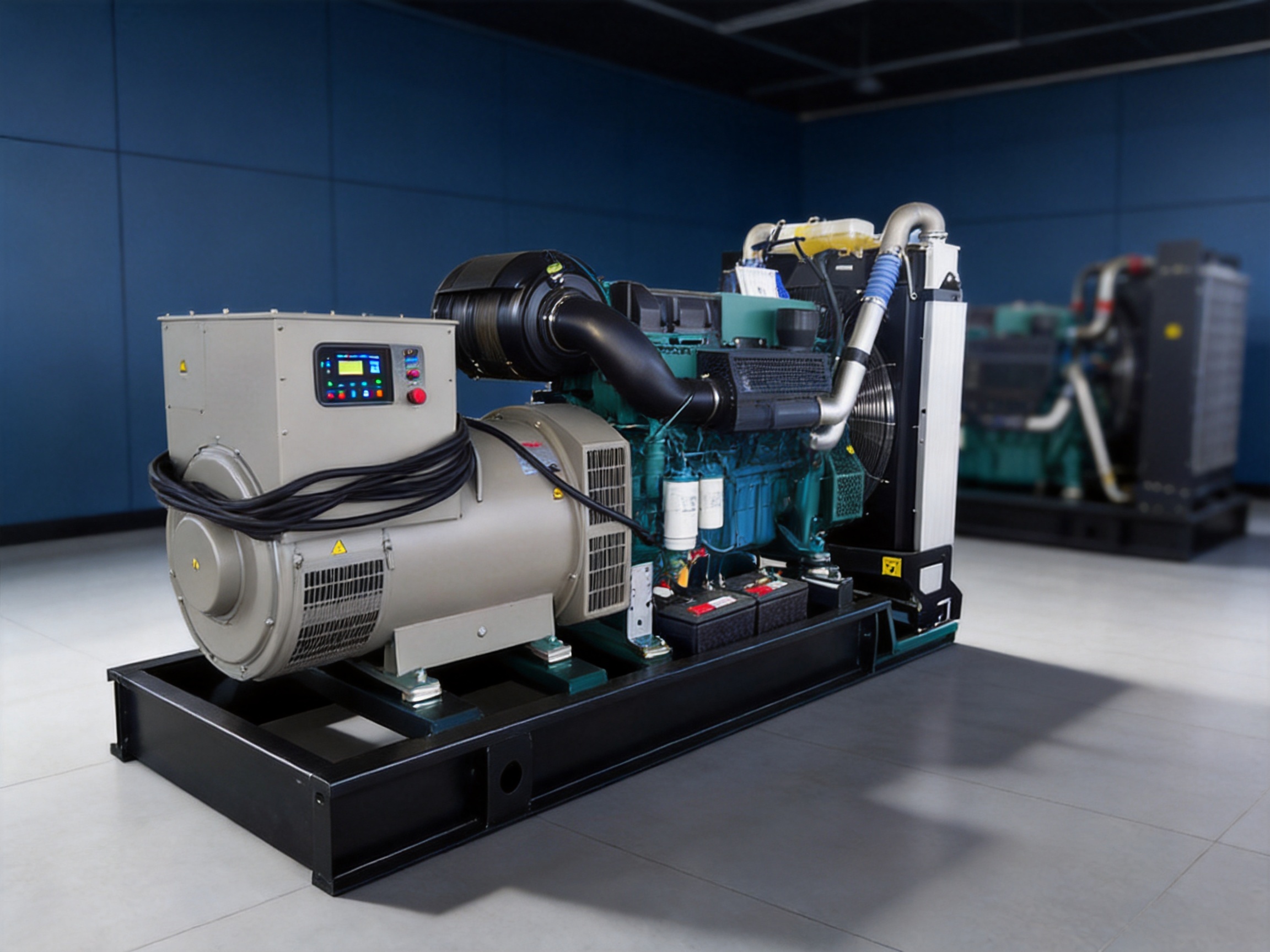
The control system is the operating interface between the generator, the facility, and the service team. The industrial-grade intelligent controller used in this series provides operating information, alarm notifications, protection functions, and automatic control. It can be configured for automatic start and stop, automatic transfer switch operation, remote monitoring, cloud-based management, and multi-unit parallel operation.
Automatic Start and Stop
When the generator is connected to an automatic transfer system, the controller can receive a remote start signal following utility failure. It supervises engine speed, oil pressure, coolant temperature, battery voltage, output voltage, frequency, and other critical parameters. Once stable output is confirmed, the transfer system can connect the emergency load. When utility power returns and remains stable for the programmed period, the load can be transferred back and the generator can perform a cool-down cycle before stopping.
Protection Functions
Protection functions may include low oil pressure, high coolant temperature, overspeed, overcrank, emergency stop, overvoltage, undervoltage, overfrequency, underfrequency, overload, short circuit, and battery charging faults. The exact protection package depends on the selected controller, alternator, switchgear, and project specifications. Early detection of abnormal conditions helps prevent equipment damage and provides maintenance personnel with useful diagnostic information.
Remote Monitoring
Remote monitoring is increasingly important for distributed infrastructure and facilities without permanent technical staff. The controller can be integrated with communication equipment and a remote management platform to report running status, alarms, operating hours, fuel information, and selected electrical parameters. For building management systems or SCADA integration, communication protocols, alarm mapping, data points, and cybersecurity requirements should be confirmed during engineering review.
Parallel Operation
Multiple generator sets may be operated in parallel when a project requires redundancy, staged capacity, improved fuel efficiency at changing loads, or future expansion. Synchronization, load sharing, protection coordination, busbar design, and control logic must be carefully engineered. A multi-unit system can provide operational flexibility, but it requires more detailed commissioning and maintenance than a single-generator installation.
Structure Options for Different Environments
The universal design concept allows the same power range to be supplied in several structural formats. The correct enclosure or chassis depends on noise restrictions, weather exposure, mobility requirements, installation space, ventilation, fuel storage, transport conditions, and local regulations.
| Structure | Typical Applications | Main Advantages | Important Selection Considerations |
|---|---|---|---|
| Open type | Factory workshops, generator rooms, temporary indoor installations | Compact footprint, convenient access, and economical initial cost | Requires a suitable ventilated and weather-protected room with acoustic treatment where necessary |
| Silent type | Hospitals, hotels, offices, commercial buildings, and residential-adjacent sites | Reduced noise and improved protection from normal outdoor exposure | Confirm sound-pressure requirements, airflow, exhaust routing, and service access |
| Container type | Data rooms, communication sites, municipal projects, and outdoor industrial facilities | Weatherproof enclosure, transportability, integrated fuel and control-room options | Review container dimensions, lifting points, ventilation, fire safety, and foundation requirements |
| Trailer type | Construction sites, road projects, bridge works, and temporary industrial parks | Mobility and road-towable operation | Confirm axle loading, braking, lighting, towing regulations, and site access |
Open-Type Generator Sets
Open generator sets are frequently installed inside dedicated generator rooms. Their exposed layout provides direct access to the engine, alternator, control panel, filters, batteries, and service points. This arrangement is practical for factories and plant rooms where acoustic treatment, ventilation, and weather protection are already available. Open units are also useful when customers require a custom room, special exhaust system, or project-specific fuel arrangement.
Silent Generator Sets
Silent units use an acoustic canopy and internal sound-attenuation materials to reduce operating noise. They are suitable for commercial buildings, hotels, hospitals, offices, and sites near residential areas. Acoustic performance depends on engine speed, load, enclosure construction, airflow design, exhaust silencers, installation surface, and measurement distance. The required noise level should be stated in dB(A) together with the measurement distance and operating condition.
Containerized Generator Sets
Containerized systems are designed for outdoor installation and can incorporate weatherproof access doors, ventilation fans, fuel tanks, cable-entry systems, fire-protection equipment, control rooms, and maintenance lighting. They are often selected for municipal facilities, communication infrastructure, data-related applications, and projects where a complete transportable power package is preferred.
Trailer-Mounted Generator Sets
Trailer-mounted units provide a practical solution for projects that move between locations. A road-towable chassis, lifting arrangement, fuel system, control panel, and stabilizing equipment can be configured according to local transport requirements. Before delivery, the customer should confirm road regulations, towing vehicle specifications, axle limits, braking requirements, and access conditions at the project site.
Engine Brand Selection and Supply Flexibility
One of the strengths of a universal generator platform is the ability to select from several mainstream engine families. Different projects may prioritize global service coverage, local parts availability, purchase price, emission compliance, fuel quality tolerance, compact dimensions, or high-load durability. The engine should therefore be selected based on the complete project environment rather than brand preference alone.
Available engine options may include Cummins, Perkins, Weichai, Yuchai, Baudouin, MTU, Volvo, SDEC, and Mitsubishi, subject to model availability and output requirements. Cummins and Perkins are often selected where international service networks and widely distributed spare parts are important. Weichai, Yuchai, and SDEC may be attractive where domestic supply chains and cost efficiency are priorities. Baudouin can be considered for demanding environments, while MTU may be selected for high-performance critical standby applications. Volvo and Mitsubishi engines are frequently evaluated for smooth operation, compact design, efficiency, and commercial installations.
Engine brand selection should also consider the location of the end user. A technically excellent engine may not be the best project choice if local technicians are unfamiliar with it or replacement parts require long delivery times. Aiweite reviews the customer’s fuel conditions, service network, operating mode, emission requirements, load profile, and expected lifecycle before confirming a recommended configuration.
Advantages Over Inadequately Sized or Less Flexible Alternatives
The main advantage of the 100kVA–400kVA series is not simply its rated output. Its value comes from the coordination of engine reserve, alternator capacity, intelligent control, structural options, and manufacturing quality. Compared with small-power gensets, these units offer stronger capability for motor starting, mixed loads, long-duration operation, and frequent load changes. Compared with unnecessarily large generators, they can reduce wasted capacity, installation space, fuel consumption at appropriate loading, and initial investment.
Many low-cost generator sets are designed around a narrow application and may have limited reserve capacity, basic controllers, lightweight frames, or restricted enclosure options. Such equipment may perform adequately under simple resistive loads but struggle when connected to central air conditioning, pumps, elevators, compressors, or production equipment. The 100kVA–400kVA range is designed with a more comprehensive industrial configuration that supports complex commercial and industrial loads.
Another competitive advantage is configuration flexibility. Customers can choose open, silent, container, or trailer structures; different engine brands; 50Hz or 60Hz frequency; global voltage standards; automatic transfer systems; remote monitoring; and parallel operation. This makes it possible to match the generator to the actual project rather than forcing every customer into one standard configuration.
Reliability is also influenced by serviceability. Reinforced base frames, accessible maintenance points, standardized components, high-efficiency filtration, heavy-duty shock absorption, and documented testing can reduce downtime and simplify the work of operators and service technicians. A generator that is easy to inspect and maintain is more likely to remain dependable throughout its operating life.
Advanced Manufacturing and Quality Management
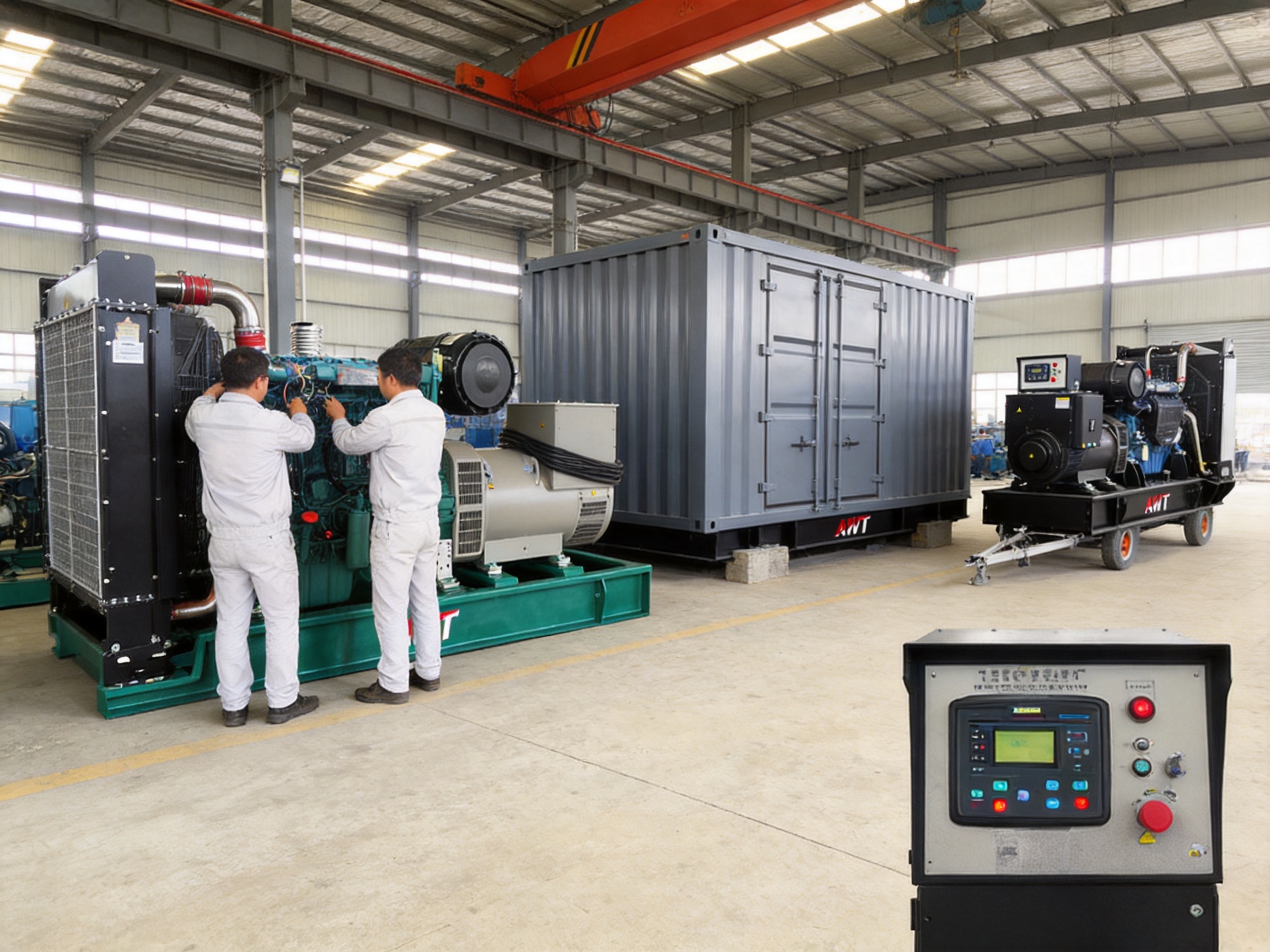
Generator reliability begins before assembly. Aiweite uses a structured manufacturing process covering technical review, component procurement, incoming inspection, mechanical assembly, electrical integration, factory testing, documentation, packaging, and delivery coordination. This process is intended to reduce configuration errors and ensure that each unit corresponds to the customer’s approved specifications.
Project and Technical Review
Before production, the technical team reviews the required power rating, operating mode, site conditions, electrical parameters, load profile, structure, control functions, engine brand, inspection requirements, and delivery conditions. This review helps identify issues such as insufficient starting capacity, unsuitable voltage, improper phase arrangement, inadequate cooling, excessive altitude, restricted access, or incompatible communication requirements.
Component Inspection
Key components are inspected before entering the assembly process. Inspection may include model verification, nameplate confirmation, physical condition, dimensional compatibility, electrical connections, accessories, and documentation. The goal is to ensure that the engine, alternator, controller, base frame, fuel system, cooling components, batteries, switchgear, and enclosure correspond to the approved configuration.
Mechanical Assembly
The engine and alternator are mounted on a reinforced integrated base frame using suitable vibration-isolation components. Alignment, fastening, flexible connections, exhaust routing, cooling airflow, and service clearances are reviewed during assembly. Heavy-duty shock absorption helps limit the transfer of engine vibration to the foundation and surrounding structure.
Electrical Integration
Electrical integration includes alternator termination, control-panel wiring, protection devices, battery charging, emergency-stop circuits, output breakers, sensing connections, and external interfaces. When an automatic transfer switch, remote monitoring system, synchronization panel, or parallel controller is included, the wiring and communication interfaces are checked against the project diagram.
Testing and Documentation
Before shipment, each generator undergoes a structured factory acceptance process. Testing can include operation from 0% to 110% of rated capacity, step-load response, continuous endurance operation, voltage and frequency stability, alarm verification, emergency protection checks, and inspection of mechanical and electrical connections. Test results are recorded and supplied as part of the delivery documentation. Third-party inspection and witness testing can also be coordinated where required by the customer or project contract.
Performance Testing Before Delivery
Load testing confirms that the generator responds correctly under progressively increasing demand. Testing from no load through rated load and controlled overload conditions helps identify abnormal temperature rise, unstable frequency, voltage irregularities, fuel-system problems, cooling deficiencies, or protection faults before the unit reaches the site.
Step-load testing is important because real facilities rarely apply load smoothly. A generator may suddenly supply a pump, compressor, elevator, transformer, or group of lighting circuits. During step-load testing, engineers observe voltage dip, frequency recovery, engine response, smoke behavior, and controller operation. The results help verify that the selected engine and alternator are appropriate for the expected load profile.
Endurance testing provides additional confidence in the mechanical and thermal behavior of the unit. Extended operation allows technicians to monitor coolant temperature, oil pressure, exhaust conditions, vibration, battery charging, output stability, and alarm functions. Emergency protection testing confirms that the controller reacts correctly when simulated abnormal conditions are introduced.
Applications Across Commercial and Industrial Sectors
Commercial Complexes
Shopping malls, supermarkets, office buildings, hotels, resorts, exhibition centers, and commercial streets may use generator sets to support emergency lighting, elevators, fire pumps, security systems, access control, communication equipment, refrigeration, ventilation, and central air conditioning. A properly sized generator helps maintain essential services and reduce disruption to visitors, tenants, and building operators.
Hospitals and Medical Institutions
Hospitals require dependable emergency power for medical equipment, operating rooms, intensive care areas, laboratories, elevators, lighting, data systems, ventilation, and safety equipment. The generator system must be coordinated with the facility’s emergency power architecture, transfer times, priority loads, grounding arrangements, fuel storage, ventilation, and testing procedures. Redundant systems or parallel generator arrangements may be considered for large medical campuses.
Educational Institutions
Universities, schools, research centers, and campus parks may need backup power for laboratories, server rooms, security systems, access control, emergency lighting, water pumps, and communication systems. The medium-power range is suitable for facilities that require more capacity than a small office generator but do not need a large central power plant.
Municipal and Public Facilities
Municipal engineering projects, public service centers, water supply and drainage facilities, traffic systems, energy stations, and emergency-response sites depend on reliable electrical equipment. Containerized and trailer-mounted configurations are particularly useful where the generator must be installed outdoors or moved between project locations.
Manufacturing and Processing Plants
Factories and workshops may use generators to protect production lines from grid interruptions. Depending on the process, the generator may supply motors, pumps, compressors, packaging systems, control equipment, lighting, and ventilation. Load sequencing can be programmed to prevent excessive starting demand and to prioritize critical machinery.
Construction and Engineering Projects
Construction sites, bridge projects, road works, temporary industrial parks, and infrastructure projects often operate before permanent grid connections are available. Trailer-mounted or containerized generator sets provide flexible temporary power for cranes, welding equipment, lighting, pumps, site offices, tools, and worker facilities.
Communication and Data Infrastructure
Communication base stations, regional network centers, server rooms, and data-related facilities require stable power for information technology equipment, cooling, monitoring, and security systems. Automatic start, remote monitoring, fuel-level supervision, and redundant generator arrangements may be included to support unattended operation.
Installation Planning and Site Requirements
Successful generator operation depends on correct installation. The foundation must support the weight of the generator, enclosure, fuel system, and accessories while limiting vibration. The room or outdoor area must provide adequate clearance for maintenance, lifting, ventilation, exhaust routing, fuel connection, cable termination, and emergency access.
Ventilation must remove heat generated by the engine, alternator, exhaust system, and ancillary equipment. Insufficient airflow can cause overheating, reduced output, premature component wear, and nuisance shutdowns. The ventilation design should account for radiator airflow, room temperature, prevailing wind, duct length, louvers, filters, and acoustic attenuation.
The exhaust system must safely discharge combustion gases away from occupied areas and air intakes. Exhaust piping requires suitable supports, flexible connections, insulation where necessary, condensate management, and a properly selected silencer. Back pressure must remain within the engine manufacturer’s specified limit.
Fuel systems should be designed for the required operating duration, local fire regulations, fuel quality, access, filtration, and spill control. Long-term fuel storage requires attention to water contamination, sediment, microbial growth, tank ventilation, and periodic fuel management. Electrical installation includes output cables, breakers, grounding, neutral arrangements, automatic transfer equipment, protection coordination, and connection to the facility distribution system.
Maintenance and Lifecycle Support
Preventive maintenance protects reliability and helps reduce long-term operating costs. Daily or routine checks may include engine oil level, coolant level, fuel condition, battery voltage, visible leaks, belt condition, hose condition, control-panel alarms, and general cleanliness. Filters, lubricating oil, coolant, batteries, and belts should be serviced according to operating hours and manufacturer recommendations.
Periodic load testing is recommended for standby generators because an engine that rarely operates may not reveal problems until an emergency occurs. Testing verifies starting performance, transfer operation, load acceptance, battery condition, coolant temperature, output stability, and alarm functions. Facilities with critical loads should maintain written test records and corrective-action procedures.
Aiweite provides installation guidance, technical troubleshooting, operation support, and genuine spare parts supply. Available service items may include engine components, alternator parts, filters, consumables, batteries, control-system components, electrical accessories, and structural parts. The use of appropriate replacement components helps preserve compatibility and performance.
Customization and OEM/ODM Capability
Different projects require different generator configurations. Aiweite supports OEM and ODM solutions covering engine selection, power rating, voltage, frequency, control system, enclosure design, acoustic treatment, fuel capacity, trailer chassis, cable connections, monitoring functions, and documentation. Customization begins with a review of the customer’s technical specification and project environment.
For international projects, the generator can be configured for 50Hz or 60Hz operation and for different voltage standards. The control panel may be adapted to local communication systems, automatic transfer equipment, remote monitoring platforms, and parallel-control requirements. Enclosure color, labeling, nameplates, access arrangements, lifting points, packaging, and documentation language can also be reviewed during order confirmation.
Customization should not compromise serviceability. Special layouts must preserve access to filters, batteries, control panels, inspection points, and lifting locations. Aiweite’s engineering process balances the customer’s requested design with safe operation, maintainability, ventilation, thermal performance, and applicable standards.
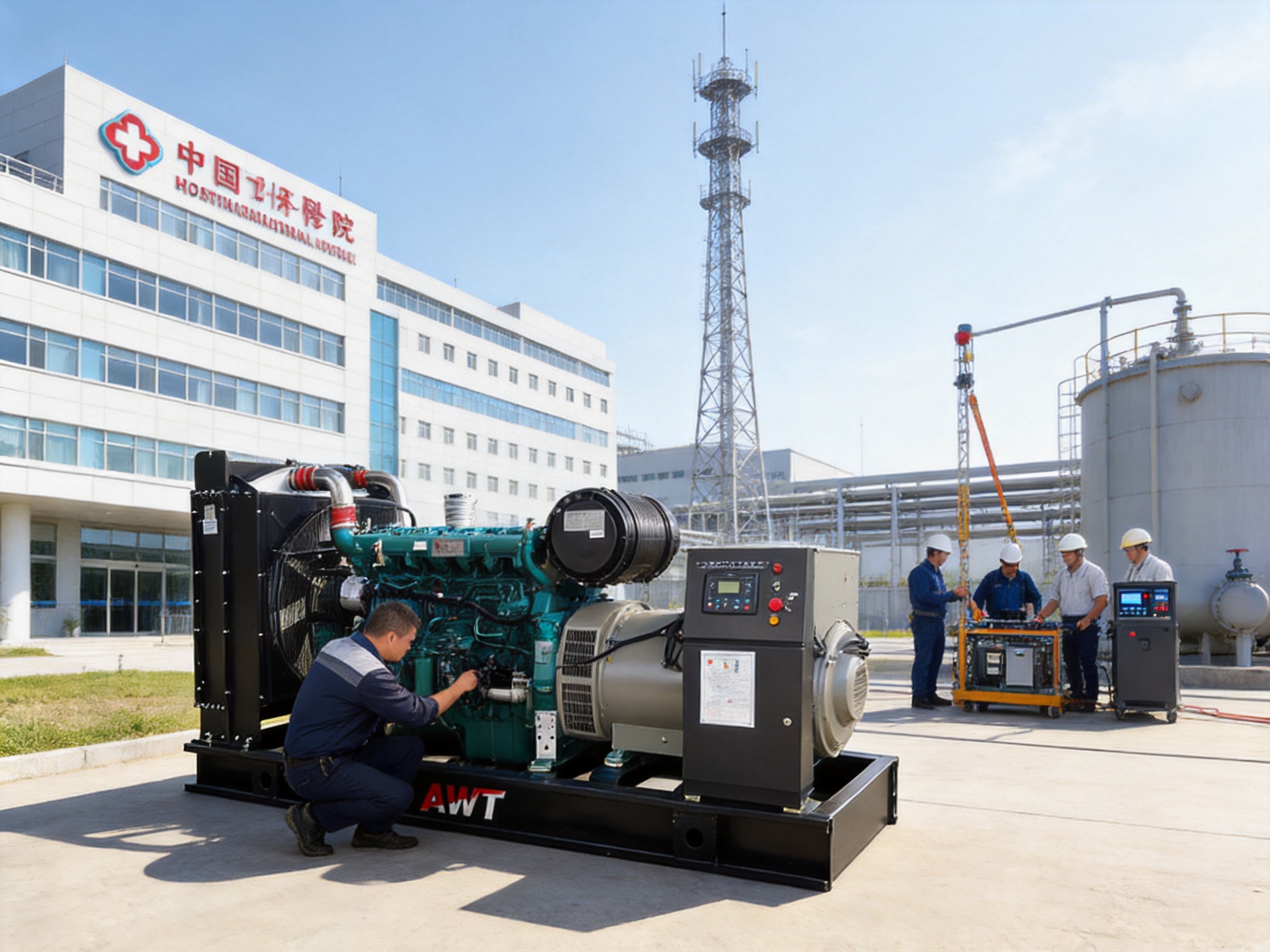
Information Required for Accurate Configuration
Customers can improve quotation accuracy by providing complete project information. The required power rating should be stated in kVA or kW, together with the intended standby, prime, or continuous operating mode. If the generator will supply motors or other high-starting-current equipment, the starting method and starting sequence should be included.
- Required generator rating and expected operating mode
- Voltage, frequency, phase, and number of wires
- Load list, power factor, starting currents, and step-load requirements
- Ambient temperature, humidity, altitude, dust level, and installation environment
- Indoor or outdoor installation conditions
- Preferred structure: open, silent, container, or trailer
- Engine brand preference and local service considerations
- Automatic transfer, remote monitoring, synchronization, or parallel-operation requirements
- Noise limits and acoustic measurement conditions
- Fuel storage capacity and expected autonomy
- Applicable standards, inspection requirements, and documentation language
- Delivery destination, packaging needs, access limitations, and project schedule
Providing this information at the beginning allows the engineering team to evaluate derating, alternator selection, enclosure airflow, fuel capacity, control interfaces, transport requirements, and testing procedures. It also reduces the risk of changes after production has started.
Frequently Asked Questions
What distinguishes the 100kVA–400kVA series from smaller diesel generators?
The series uses medium-bore industrial engines, larger heavy-duty alternators, reinforced structures, and more advanced control systems. It provides stronger overload resistance, better response to sudden load changes, improved support for mixed electrical loads, and higher reliability during long-duration operation. It is intended for medium-scale commercial, industrial, municipal, and infrastructure applications.
Can the generator supply motors, pumps, and air-conditioning equipment?
Yes, provided the generator is correctly sized for both running and starting requirements. Motor-starting current, starting method, load sequence, power factor, and allowable voltage dip must be reviewed. In some applications, a larger alternator, staged load connection, soft starter, variable-frequency drive, or parallel generator arrangement may be appropriate.
Which structure should be selected for an outdoor project?
Silent, containerized, and trailer-mounted structures are commonly considered for outdoor use. The choice depends on noise limits, mobility, weather exposure, fuel requirements, available space, transport conditions, and maintenance access. A container is suitable for a more permanent weatherproof installation, while a trailer is useful when the generator must move between sites.
Are specific engine brands available?
Yes. The platform can be configured with mainstream brands including Cummins, Perkins, Weichai, Yuchai, Baudouin, MTU, Volvo, SDEC, and Mitsubishi, subject to model availability and project requirements. The recommended engine is selected according to service coverage, fuel availability, emission requirements, load profile, budget, and application environment.
Can the generator operate automatically during a utility failure?
Yes. With a suitable automatic transfer switch and control configuration, the generator can start when utility power fails, reach stable operating conditions, accept the emergency load, monitor the system, and stop after utility power returns. Transfer times and priority-load arrangements should be defined during electrical design.
Can several generator sets operate in parallel?
Yes. Multi-unit parallel operation can provide redundancy, staged capacity, improved load management, and easier future expansion. The system requires synchronization controls, load-sharing functions, suitable switchgear, protection coordination, and a clearly defined operating strategy.
What tests are completed before shipment?
Factory testing may include operation from 0% to 110% of rated capacity, step-load response, endurance operation, voltage and frequency stability, alarm verification, emergency shutdown, and mechanical and electrical inspection. Test records are prepared for the delivery package. Third-party inspection or witness testing can be arranged when required.
How can the generator remain reliable during long-term standby?
Regular inspections, battery maintenance, periodic load testing, fuel management, coolant checks, oil and filter replacement, and controller verification are essential. A standby generator should be treated as critical equipment even when it operates only a few hours per year.
Does the company provide installation and after-sales support?
Aiweite provides installation guidance covering foundations, ventilation, exhaust routing, fuel connection, electrical termination, and commissioning considerations. Technical troubleshooting, operation support, and genuine spare parts are available after installation to support long-term generator performance.
What is the normal production lead time?
Lead time depends on the selected engine, alternator, structure, control system, accessories, inspection requirements, and production schedule. The delivery plan is confirmed during technical and commercial order review.
Why Select This Medium-Power Generator Platform?
The 100kVA–400kVA universal diesel generator set series offers a practical balance between capacity and efficiency. It is large enough to support demanding commercial and industrial loads while remaining more manageable than heavy industrial power systems. Its engine and alternator configuration provides reserve capacity for load changes, while the intelligent controller supports automation, protection, remote monitoring, and system integration.
The availability of several engine brands and structural formats gives customers greater control over lifecycle cost, serviceability, noise, mobility, and installation design. The reinforced base frame, cooling system, filtration, shock absorption, and industrial silencer are intended to support reliable operation in varied working environments. Systematic manufacturing, component inspection, factory testing, and documentation further strengthen confidence before delivery.
For customers seeking a dependable medium-power solution, the most important decision is not simply choosing a kVA number. It is selecting a complete system that matches the load profile, environmental conditions, operating mode, electrical standards, structural requirements, service network, and future expansion plans. With the right configuration and maintenance program, a 100kVA–400kVA generator can provide stable backup or prime power for many years across commercial, industrial, medical, municipal, communication, and construction applications.
References
International Organization for Standardization, ISO 8528, Reciprocating Internal Combustion Engine Driven Alternating Current Generating Sets.
General Administration of Quality Supervision, Inspection and Quarantine of the People’s Republic of China, GB/T 2828, Sampling Procedures and Tables for Inspection by Attributes.
International Electrotechnical Commission, IEC 60034, Rotating Electrical Machines.
International Electrotechnical Commission, IEC 60529, Degrees of Protection Provided by Enclosures.
International Organization for Standardization, ISO 3046, Reciprocating Internal Combustion Engines.
Manufacturer technical documentation for industrial diesel engines, synchronous alternators, intelligent generator controllers, automatic transfer systems, and generator installation practices.
Yangzhou Aiweite Electromechanical Co., Ltd., product engineering, manufacturing, testing, installation, and service information for diesel generator sets.