English
 Français
 Español
Container Type Diesel Generator Sets for Reliable Outdoor and Industrial Power
Oct 22, 2026
Content
- 1 What Is a Container Type Diesel Generator Set?
- 2 Why Containerized Power Is Increasingly Important
- 3 Core Advantages Compared with Conventional Generator Solutions
- 4 Product Range and Configuration Options
- 5 Engine and Alternator Integration
- 6 Manufacturing Process and Quality Strengths
- 7 Application Scenarios
- 8 Installation Requirements
- 9 Maintenance and Serviceability
- 10 Limitations and Practical Considerations
- 11 How to Select the Correct Container Generator
- 12 Frequently Asked Questions
- 12.1 What is the available power range?
- 12.2 Can the generator operate as a prime power source?
- 12.3 What container sizes are available?
- 12.4 Can different engine brands be integrated?
- 12.5 Are container units suitable for coastal environments?
- 12.6 How quiet is a container generator set?
- 12.7 Can multiple container generators operate in parallel?
- 12.8 What foundation is required?
- 12.9 Does the unit include a fuel tank?
- 12.10 How is quality verified before shipment?
- 12.11 What information should be provided for a quotation?
- 12.12 How does the manufacturer support customers after delivery?
- 13 Manufacturing Capability and Supplier Strengths
- 14 Conclusion
- 15 References
- 16 Product: Container Type Diesel Generator Sets
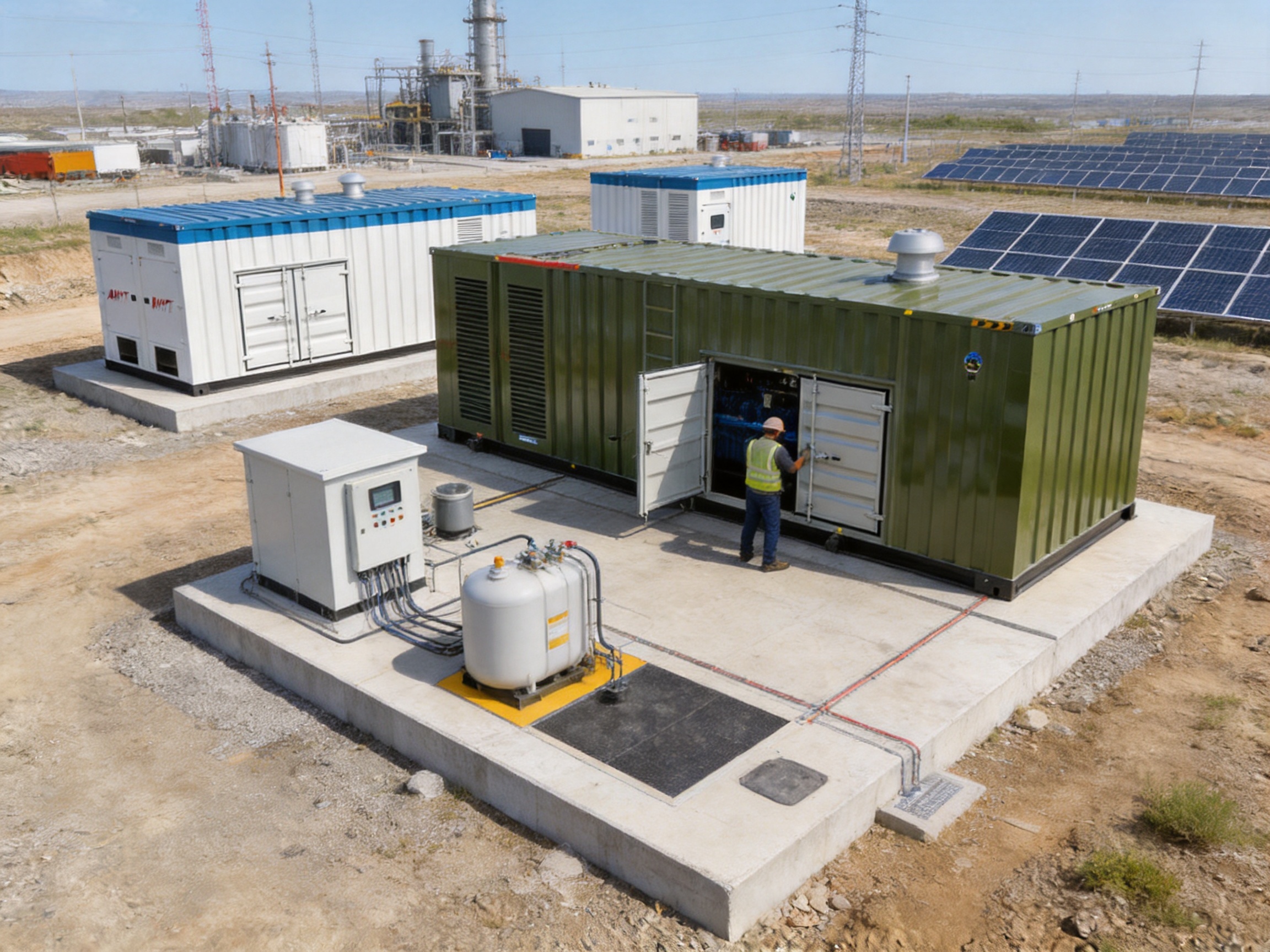
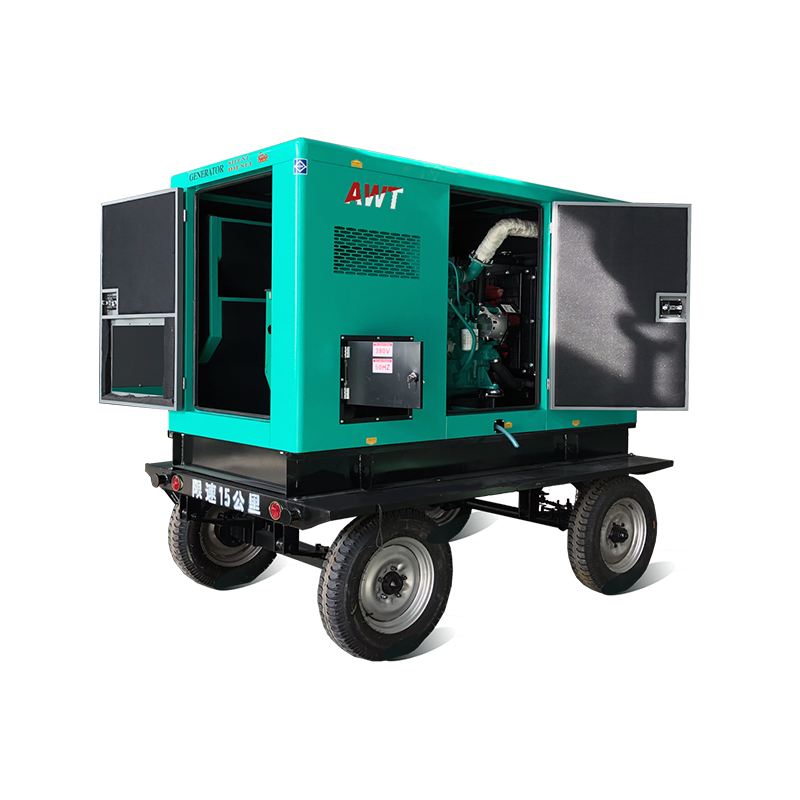
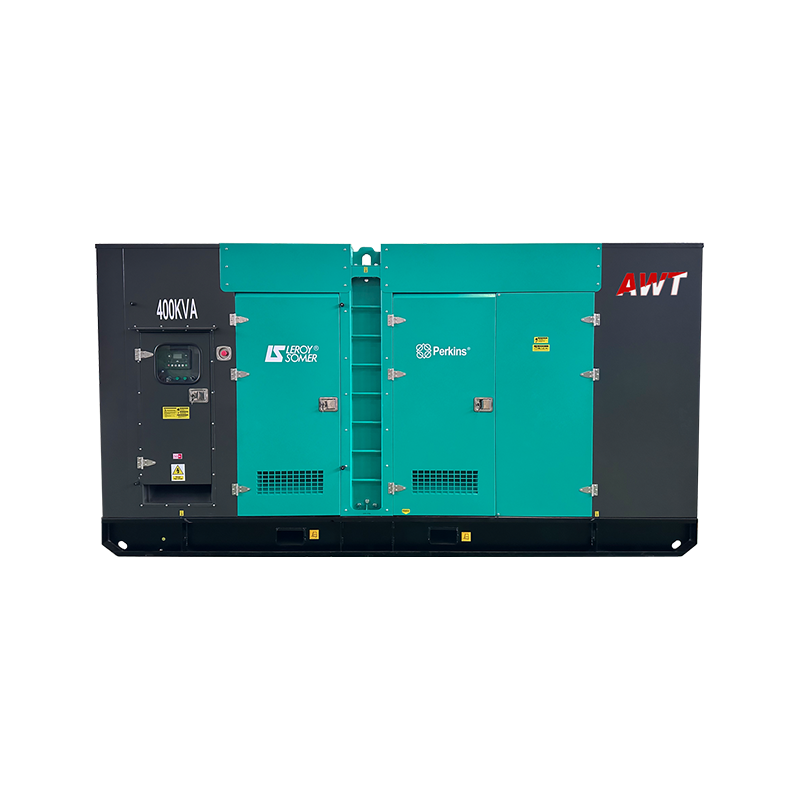
Container type diesel generator sets are integrated power systems designed for projects that require dependable electricity in demanding outdoor, industrial, municipal, and remote environments. Unlike conventional open-type generator sets, a containerized unit combines the engine, alternator, fuel system, control panel, exhaust system, ventilation equipment, fire protection provisions, and acoustic treatment inside a standard 20-foot or 40-foot container shell. The result is a complete power station that can be transported, installed, commissioned, and operated with comparatively limited site construction.
These generator sets are commonly selected for industrial parks, data centers, mining operations, oilfields, island facilities, ports, infrastructure projects, commercial complexes, logistics centers, and emergency power stations. They can be configured for standby, prime, or continuous operation and are available across a broad capacity range from 10 kVA to 2,500 kVA. Depending on the project, several units can also operate in parallel to create a larger and more flexible power plant.
The container format offers important advantages over standard open-frame and traditional silent-type generator sets. It provides improved weather protection, enhanced security, reduced noise, simplified transportation, faster deployment, and better suitability for sites without a dedicated generator room. At the same time, containerization introduces practical considerations, including higher initial cost, larger installation requirements, and the need for carefully planned service access.
When manufactured and engineered correctly, a container type diesel generator set is more than an engine placed inside a box. It is a coordinated system in which airflow, heat dissipation, acoustic control, fuel storage, exhaust routing, electrical output, fire safety, structural strength, and maintenance access must work together. A reliable supplier therefore needs strong design capabilities, controlled manufacturing processes, comprehensive testing procedures, and experience with different operating environments.
What Is a Container Type Diesel Generator Set?
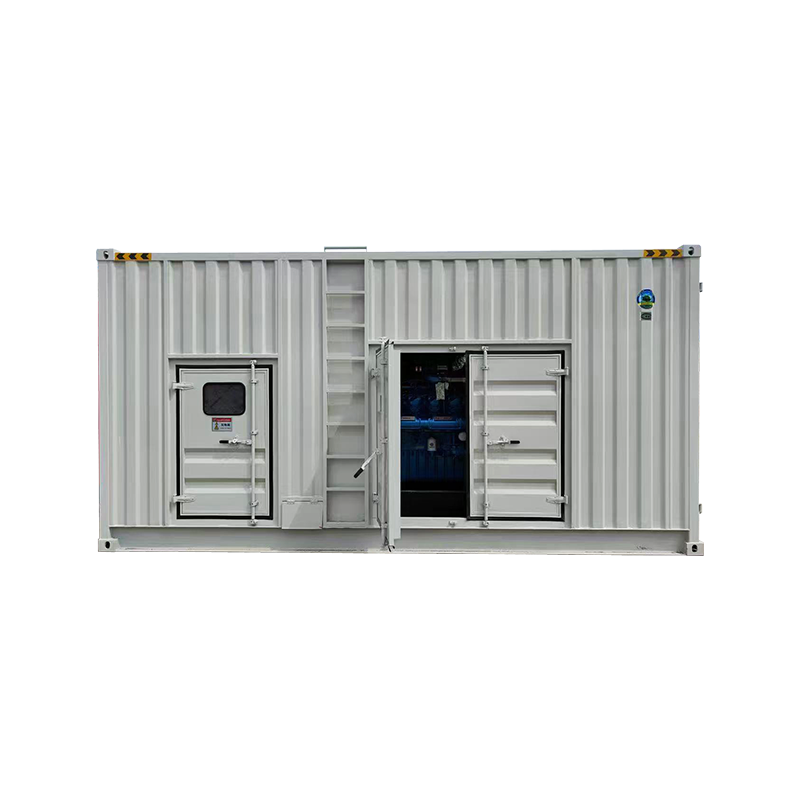
A container type diesel generator set is a diesel-powered generating system installed inside a modified ISO-style container enclosure. The container serves as the main structural and protective housing for the equipment. Depending on the power rating and design specification, the enclosure may be based on a 20-foot or 40-foot container shell, with customized openings, doors, ventilation sections, cable entries, exhaust outlets, lighting, fire detection, and maintenance access points.
The internal system normally includes a diesel engine, alternator, radiator, starting batteries, battery charger, control panel, fuel tank or fuel connection system, exhaust silencer, flexible exhaust section, ventilation fans, emergency stop devices, distribution equipment, and protective components. Additional equipment can include automatic transfer controls, synchronizing panels, remote monitoring devices, fire extinguishing systems, cold-weather heaters, air-intake filters, and sound-absorbing materials.
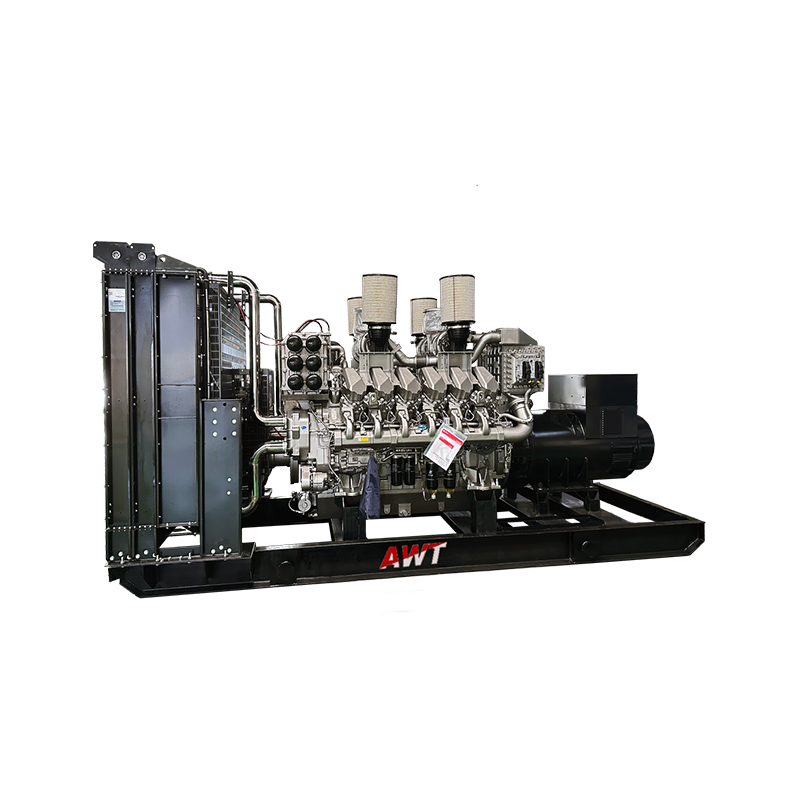
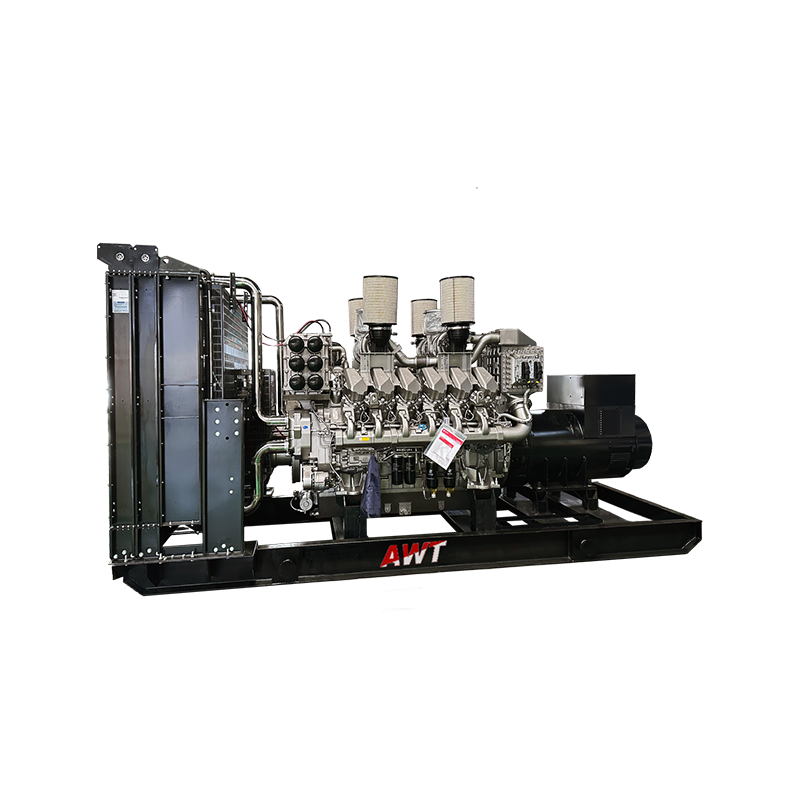
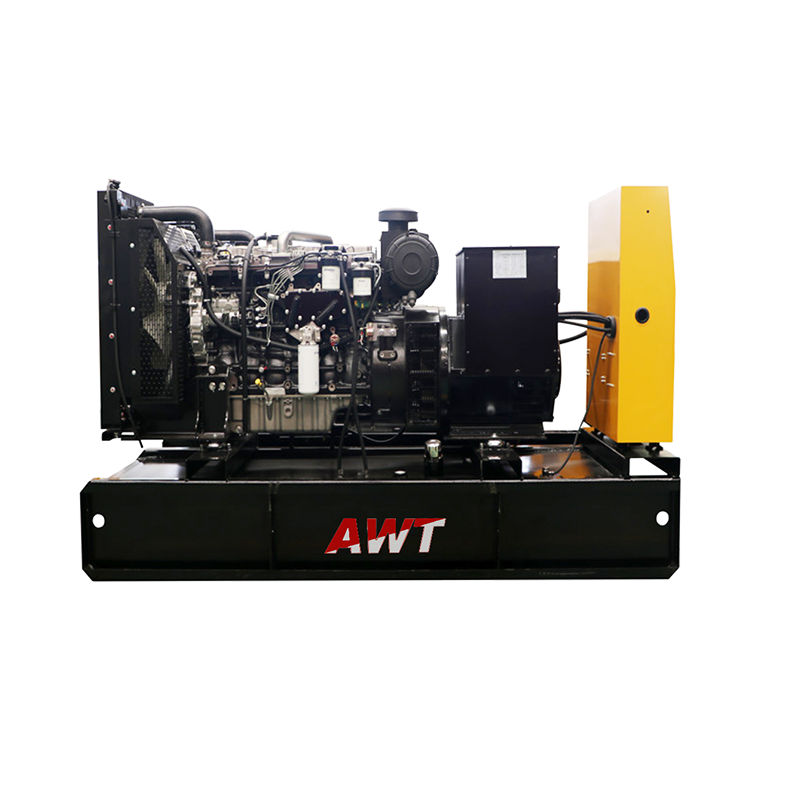
Container generator sets are generally built on heavy-duty open-type generator platforms. The open unit is first selected according to the required power output and operating duty. Engineers then design the container package around the engine and alternator, ensuring that the enclosure has sufficient space for air circulation, maintenance, fuel management, exhaust discharge, and safe operation.
The container structure provides a practical balance between mobility and permanence. It is more substantial than a lightweight weatherproof canopy but more transportable than a purpose-built concrete generator room. Once delivered to the site, the unit can be positioned on a suitable foundation and connected to the fuel, electrical, exhaust, grounding, and monitoring interfaces.
Why Containerized Power Is Increasingly Important
Many modern projects require reliable power but cannot justify building a dedicated generator room. Construction schedules may be short, the project may be located far from established infrastructure, or the equipment may need to be moved between locations. In these situations, a containerized system can reduce civil construction requirements and simplify project planning.
Industrial and commercial facilities also face stricter requirements regarding noise, environmental exposure, operational continuity, and equipment security. A bare open-type generator may require a separate building, acoustic room, weather canopy, fencing system, and fire protection installation. A properly engineered container unit integrates many of these functions into one factory-assembled package.
Remote sites benefit particularly from containerized equipment. Mining camps, oilfield bases, island facilities, pastoral areas, and construction projects may not have stable grid access or suitable buildings for generator installation. A container generator can be shipped to the site, positioned on a prepared foundation, connected to the local distribution system, and placed into service without extensive construction work.
Container systems are also valuable as temporary or transitional power sources. They can supply electricity during infrastructure construction, grid expansion, plant relocation, emergency recovery, or planned maintenance. When the project changes, the complete unit can potentially be disconnected and transported to a new location.
Container Type Diesel Generator Sets
Core Advantages Compared with Conventional Generator Solutions
All-Weather Protection
The fully enclosed container structure protects the generating equipment from rain, wind, dust, direct sunlight, and accidental external impact. With appropriate coatings, sealing arrangements, and corrosion-resistant materials, the enclosure can also be configured for coastal and high-salt environments.
This protection is especially important in desert regions, where fine dust can affect radiators, alternators, filters, and electrical components. It is also valuable in coastal areas, where salt spray can accelerate corrosion of steel structures, fasteners, cable glands, and electrical terminals. For cold regions, the enclosure can be equipped with heaters and insulation to support reliable starting and operation at low ambient temperatures.
Weather protection does not eliminate the need for correct site design. The foundation must provide proper drainage, cable routes must be sealed, and ventilation openings must be positioned to prevent water ingress. Nevertheless, the container shell provides a much stronger first line of defense than an unprotected open-frame installation.
Reduced Operating Noise
Noise control is a major advantage of a container type generator set. Diesel engines, cooling fans, exhaust systems, and alternators all create sound during operation. In urban projects, hospitals, residential areas, business facilities, and public infrastructure sites, uncontrolled noise may create operational and regulatory problems.
Containerized units can incorporate multi-stage exhaust silencers, acoustic lining, sound-absorbing panels, vibration isolation, low-noise ventilation fans, and specially designed air-intake and discharge paths. These features reduce the transmission of mechanical and airborne noise while maintaining adequate cooling airflow.
The final noise level depends on engine type, rated load, fan speed, enclosure construction, acoustic materials, site conditions, and measurement distance. During engineering review, the required noise limit should therefore be defined clearly rather than treated as a general assumption.
Fast Deployment
A factory-integrated container generator requires less on-site assembly than a conventional engine and alternator installation. Major components are installed, wired, tested, and coordinated before shipment. At the project site, the main activities generally include unloading, positioning, grounding, fuel connection, exhaust verification, electrical connection, control wiring, and commissioning.
This approach can shorten the construction schedule and reduce the number of trades required at the site. It also decreases the risk that important interfaces will be overlooked during field assembly. Because many components are installed under controlled factory conditions, the finished package can provide more consistent workmanship than equipment assembled in a remote or poorly equipped location.
Improved Equipment Security
The steel container shell provides a more secure enclosure than an open canopy. Lockable access doors, protected cable entries, internal lighting, and controlled access can help prevent unauthorized operation, vandalism, and accidental contact with moving or energized components.
Security is important at unmanned power stations, construction sites, isolated industrial facilities, and remote field bases. The enclosure can also help protect control systems and spare parts from weather exposure and unauthorized interference.
Support for Long-Term Operation
Container sets can be engineered for prime or continuous power duty. A large-flow cooling system, correctly sized radiator, sufficient ventilation, suitable exhaust routing, and carefully selected engine rating are essential for long-duration operation.
For 24-hour operation, the generator should not be selected solely according to the average load. Engineers must consider peak demand, motor starting, harmonic loads, step-load changes, ambient temperature, altitude, fuel quality, maintenance intervals, and the percentage of time the unit will operate near full rating.
A properly configured container unit can provide stable electricity for production lines, data infrastructure, pumping stations, telecommunications facilities, and remote communities. Where continuous power is required, operating procedures and preventive maintenance remain as important as the initial equipment selection.
Parallel Operation and Expandability
Large projects may require more capacity than one generator can provide. Parallel operation allows two or more generator sets to share the load through a synchronizing and load management system. This arrangement can improve redundancy, simplify staged capacity expansion, and allow individual units to be shut down for maintenance while the remaining units continue supplying power.
Containerized units are well suited to centralized power plants because standard enclosure dimensions and integrated controls make it easier to organize multiple machines. The parallel system must be designed around load-sharing accuracy, synchronization, protection coordination, cable arrangement, fault levels, and operating philosophy.
Product Range and Configuration Options
A container generator solution should be configured according to the project rather than selected as a one-size-fits-all product. The power rating, engine platform, alternator, control system, enclosure size, acoustic treatment, voltage, frequency, fuel system, and environmental protection level can all affect the final design.
| Configuration Area | Typical Options | Selection Considerations |
|---|---|---|
| Power range | 10 kVA to 2,500 kVA | Prime load, standby load, motor starting, future expansion, and operating duty |
| Engine platforms | Cummins, Perkins, Volvo, MTU, Weichai, Yuchai, Baudouin, SDEC, Mitsubishi, and other mainstream brands | Fuel availability, service support, emissions requirements, spare parts, and project preference |
| Container enclosure | 20-foot or 40-foot ISO-style shell | Equipment dimensions, maintenance clearance, transport restrictions, and auxiliary systems |
| Control system | Deep Sea, SmartGen, ComAp, PLC-based, or customized systems | Automatic start, remote monitoring, synchronization, load sharing, and facility integration |
| Electrical output | 50 Hz or 60 Hz; multiple voltage standards; three-phase or single-phase configurations | Local grid requirements, connected equipment, transformer arrangement, and export specifications |
| Operating mode | Standby, prime, or continuous power | Expected annual operating hours, load profile, maintenance planning, and fuel strategy |
| Environmental design | Standard, desert, coastal, high-temperature, cold-weather, or high-altitude configurations | Ambient temperature, humidity, dust, salt spray, altitude, and weather exposure |
| Safety equipment | Emergency stop, fire detection, fire suppression, alarms, and protective shutdowns | Local regulations, risk assessment, fuel volume, and facility safety standards |
Power ratings must be evaluated using the correct standard and duty category. A standby rating is normally used for emergency operation when the utility supply fails. A prime rating is suitable for variable-load operation where the generator is the main source of power. Continuous ratings are used for stable, long-duration operation at a defined load level.
The distinction between these ratings is important. Using a standby-rated generator for continuous prime duty can result in excessive thermal stress, shortened service life, higher maintenance costs, and reduced reliability. The supplier should review the actual load profile before recommending a rating.
Engine and Alternator Integration
The engine is the primary mechanical power source, while the alternator converts mechanical energy into electrical energy. Their compatibility affects fuel consumption, transient response, voltage stability, emissions performance, serviceability, and overall operating cost.
Engine selection should consider the expected load, starting requirements, fuel quality, altitude, ambient temperature, available technical support, and required emissions performance. Mainstream platforms can provide advantages in parts availability and technician familiarity, but the most suitable choice depends on the destination market and project conditions.
The alternator should be selected according to voltage regulation, insulation class, short-circuit capability, starting performance, harmonic environment, and control-system compatibility. Facilities with large motors, variable-frequency drives, rectifiers, UPS systems, or other nonlinear loads may require additional analysis to ensure stable voltage and frequency performance.
The engine and alternator combination must be mounted on a rigid base frame with suitable anti-vibration supports. Flexible connections are normally used for exhaust, fuel, and other interfaces so that vibration is not transferred directly to the container structure or external piping.
Cooling and Ventilation Engineering
Heat management is one of the most important design tasks in a container generator. The engine radiator, alternator, exhaust system, and auxiliary equipment all release heat into the enclosure. If hot air is not discharged effectively, the internal temperature can rise, reducing power output and increasing the risk of protective shutdown.
A typical system uses an engine-driven radiator fan or an electrically assisted ventilation arrangement. Cool air enters through a protected intake section, passes through the alternator and engine area, and exits through a radiator discharge opening. The intake and exhaust openings must be sized to control air velocity and pressure losses.
Acoustic louvers and sound-attenuating sections can reduce noise but may also restrict airflow. Engineers therefore need to balance acoustic performance with cooling requirements. High-temperature and high-altitude sites generally require special attention because reduced air density and elevated ambient temperature can reduce cooling capacity.
Fuel System Design
Fuel arrangements vary according to project duration, local regulations, and operating strategy. Some container units include an integrated base tank, while others connect to an external bulk fuel tank. The system may include a fuel transfer pump, day tank, level sensors, filtration, leak detection, isolation valves, and emergency shutoff provisions.
The fuel system should be designed to support the expected operating period without creating unnecessary fire or environmental risk. Fuel quality also affects engine performance. Water, sediment, microbial contamination, and long-term storage degradation can cause filter blockage and injector problems.
For remote installations, the fuel system may need additional filtration and storage capacity. For urban or institutional projects, the design may be governed by strict requirements for tank location, spill containment, fire separation, ventilation, and emergency access.
Exhaust and Emissions Control
The exhaust system removes combustion gases and reduces noise. It normally includes a flexible connector, silencer, exhaust pipe, rain cap or weather protection, supports, and an outlet positioned to prevent gases from re-entering the container or nearby buildings.
Exhaust back pressure must remain within the engine manufacturer's limits. Excessive pipe length, too many bends, an undersized silencer, or an incorrectly designed outlet can affect engine performance and increase exhaust temperature. The final arrangement should consider personnel safety, nearby air intakes, building openings, prevailing wind direction, and applicable emissions requirements.
Manufacturing Process and Quality Strengths
The performance of a container generator set depends heavily on manufacturing discipline. A well-designed drawing can still produce an unreliable product if welding, wiring, assembly, inspection, or testing is inconsistent. A capable manufacturer therefore uses a controlled process from engineering review through final shipment.
Project Engineering Review
Manufacturing begins with a technical review of the customer's requirements. The engineering team evaluates the required power rating, voltage, frequency, engine preference, operating mode, enclosure dimensions, noise target, environmental conditions, control functions, fuel arrangement, and delivery location.
Site conditions are particularly important. Temperature, altitude, humidity, dust, salt spray, rainfall, wind, foundation design, transport access, and available fuel infrastructure can all affect the final configuration. Reviewing these factors before production helps prevent expensive changes after the equipment reaches the site.
For larger projects, the manufacturer may prepare general arrangement drawings, foundation loads, cable-entry layouts, ventilation calculations, exhaust plans, control schematics, and maintenance access diagrams. These documents allow the customer and installation contractor to coordinate the project before delivery.
Component Inspection
Key components should be inspected before assembly. This includes the engine, alternator, control panel, radiator, fuel tank, circuit breakers, batteries, silencers, flexible connectors, cables, sensors, and structural materials.
Incoming inspection may verify model numbers, ratings, dimensions, visible condition, documentation, and compatibility with the approved design. Electrical components should be checked against voltage, current, frequency, protection, and control requirements. Engines and alternators should be confirmed as the specified models before they enter the production line.
Container Modification and Structural Fabrication
The container shell must be modified carefully to accommodate doors, louvers, radiators, exhaust outlets, cable entry points, lifting components, emergency exits, and service access. Cutting and welding operations should follow approved drawings to maintain structural integrity.
Doors must be aligned correctly and fitted with durable hinges, locks, seals, and restraints. Ventilation sections should be protected against rain while allowing the required airflow. Cable glands and entry plates should provide suitable mechanical protection and environmental sealing.
Surface preparation and coating are also important. The steel structure may be cleaned, treated, primed, and finished with a durable coating system suited to the expected environment. Coastal and high-humidity projects may require additional corrosion protection, sealed electrical compartments, stainless or treated fasteners, and careful separation of dissimilar metals.
Mechanical Assembly
The engine and alternator are installed on a common base frame or structural support system. Alignment, vibration isolation, clearances, and service access are checked during assembly. The radiator and cooling system are positioned to achieve the intended airflow path.
Fuel lines, exhaust components, batteries, chargers, filters, and auxiliary devices are installed according to the approved layout. Service items such as oil filters, fuel filters, belts, battery terminals, and control modules should remain accessible for routine maintenance.
Mechanical assembly also includes the installation of lifting points and transport restraints. A container unit can be heavy, and the lifting arrangement must be suitable for the total shipping weight and center of gravity. Incorrect lifting can damage the enclosure or create a serious safety risk.
Electrical Wiring and Control Integration
Electrical wiring must be routed in a clean, protected, and serviceable manner. Power cables should be separated from sensitive control and communication wiring where necessary. Cable glands, terminal markings, ferrules, labels, and grounding conductors help reduce commissioning errors.
The control system may include automatic start and stop, low oil pressure shutdown, high coolant temperature shutdown, overspeed protection, overcurrent protection, under and overvoltage alarms, emergency stop functions, battery monitoring, fuel-level indication, and remote communication.
For parallel operation, the control system must support synchronization, load sharing, frequency regulation, voltage matching, breaker control, and coordinated fault protection. Remote monitoring may be connected to a cloud platform, supervisory control system, or customer SCADA network.
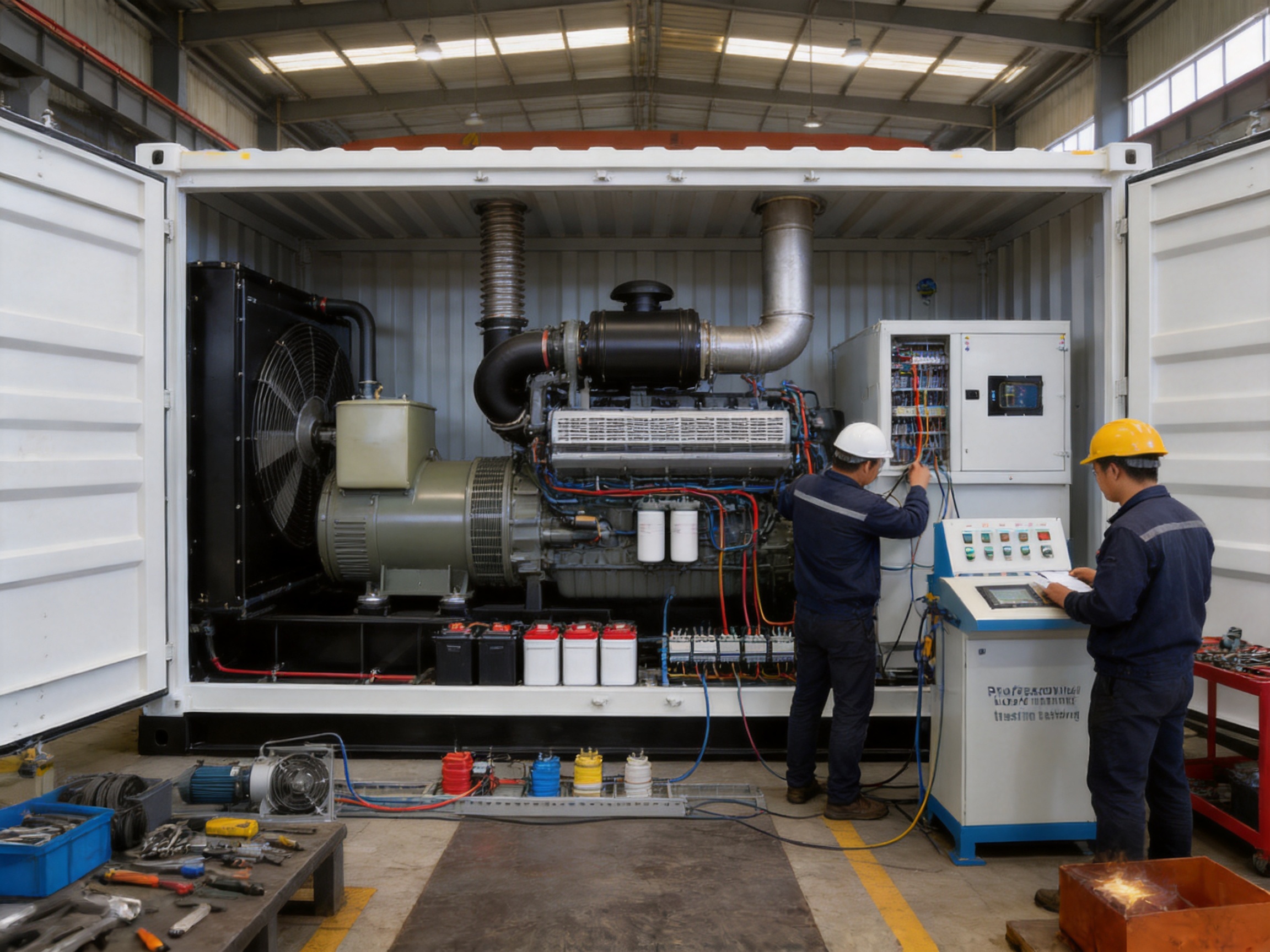
Factory Testing
Before shipment, the completed container generator set should undergo a series of inspections and functional tests. These may include mechanical fitting checks, insulation resistance tests, grounding verification, control-panel checks, alarm testing, emergency-stop testing, battery charging verification, fuel-system inspection, and visual quality inspection.
Load testing is used to verify voltage stability, frequency stability, thermal behavior, engine response, and protective functions. Testing can include no-load operation, partial-load operation, rated-load operation, step-load response, and overload verification where applicable. The provided materials specify testing from 0% to 110% of rated capacity for relevant configurations.
Test records provide useful evidence of the unit's condition at the time of delivery. They can include test duration, load levels, voltage, frequency, oil pressure, coolant temperature, fuel consumption observations, alarm status, and emergency shutdown performance.
Application Scenarios
Industrial Park Power Stations
Industrial parks often contain production lines, warehouses, water treatment systems, compressors, pumps, and administrative buildings. A power interruption can stop production, damage materials, disrupt process controls, and create significant financial losses.
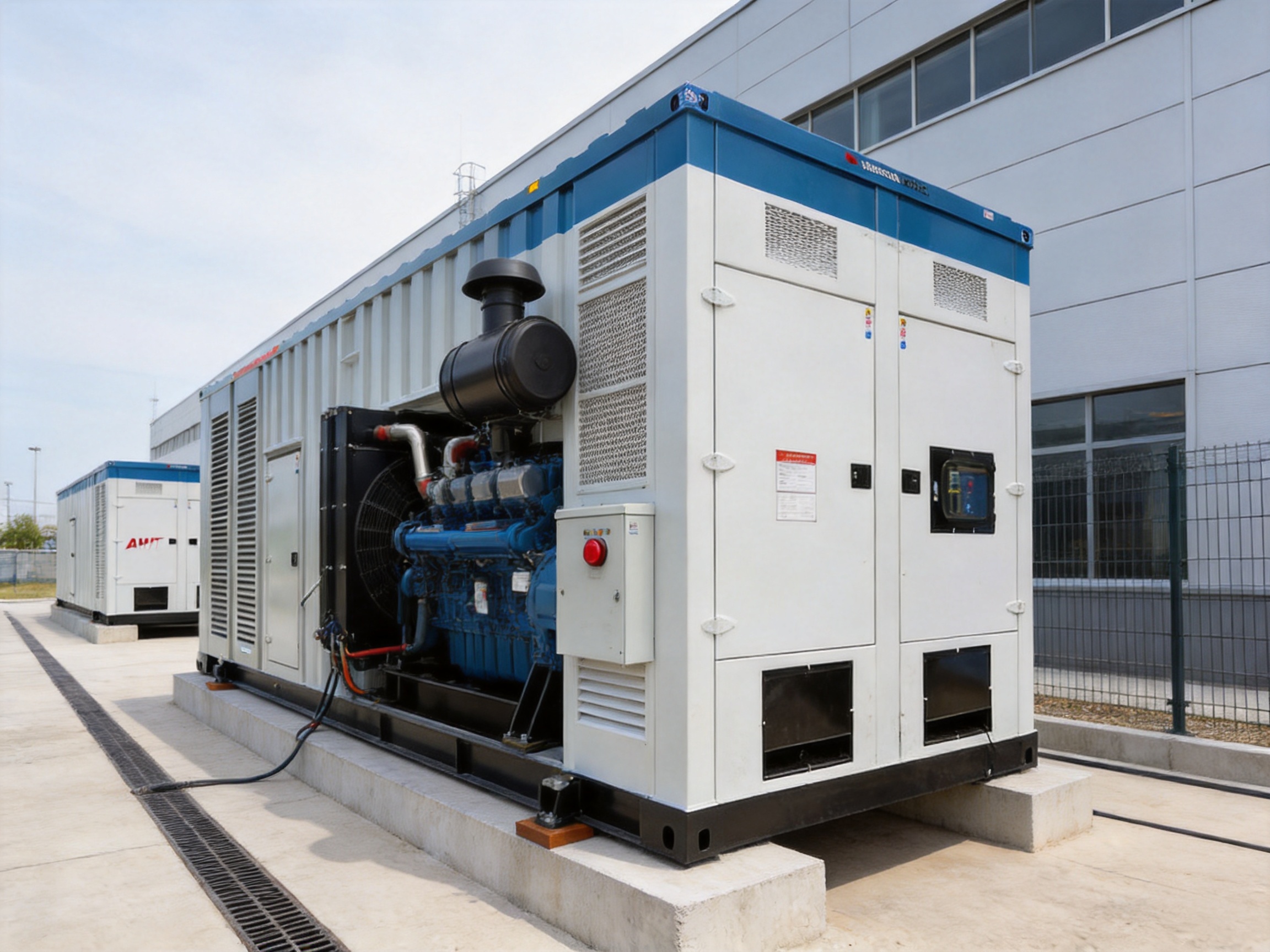
Container generator sets can serve as standby systems for critical facilities or as prime power sources in locations where the utility grid is insufficient. Multiple units may be installed in parallel to provide capacity, redundancy, and staged maintenance.
Municipal and Public Infrastructure
Municipal projects may include water treatment plants, drainage stations, transportation systems, public buildings, emergency centers, and temporary infrastructure. These facilities often require dependable power in adverse weather or during grid failures.
The container enclosure supports outdoor installation and can be equipped with automatic transfer controls, remote alarms, fire protection, and fuel systems designed for extended emergency operation. Factory integration also helps standardize equipment across several project locations.
Data Centers and Large Commercial Facilities
Data centers, logistics parks, shopping complexes, financial facilities, and office campuses require stable electricity and carefully coordinated backup systems. Containerized generators can be installed as part of a larger electrical resilience plan that includes uninterruptible power supplies, automatic transfer switches, medium-voltage distribution, and redundant generator capacity.
For these applications, engineers must pay close attention to transient response, harmonic loads, synchronization, fuel autonomy, sound levels, maintenance procedures, and remote supervision. Generator availability is only one part of the system; the entire emergency power chain must be tested as an integrated installation.
Mining and Oilfield Operations
Mining and oilfield sites are frequently located far from utility networks. They may power drilling equipment, crushers, pumps, accommodation camps, workshops, lighting systems, and communications infrastructure.
These environments can expose equipment to dust, vibration, extreme temperatures, limited maintenance resources, and difficult logistics. A sealed container structure, reinforced ventilation system, heavy-duty base, corrosion protection, and accessible spare parts can improve operating reliability.
Coastal Ports and Offshore-Related Projects
Coastal locations expose equipment to humidity, salt spray, strong wind, and corrosion. Container generator sets for these sites should use appropriate coatings, sealed electrical components, corrosion-resistant fasteners, protected cable entries, and suitable ventilation filters.
Ports may use generator sets for cranes, lighting, workshops, warehouses, emergency systems, and temporary construction. Offshore-related facilities may require additional structural, safety, and environmental specifications determined by the project owner and applicable regulations.
Remote Islands and Off-Grid Communities
In island and remote community projects, diesel generators may provide the main source of electricity or support a hybrid system with solar, wind, or battery storage. Containerized units simplify transportation and reduce dependence on local construction resources.
Fuel logistics, spare parts, remote monitoring, operator training, and preventive maintenance are especially important in these locations. The control system can provide operating data and alarms to a central service team, helping reduce the time required to diagnose problems.
Construction and Temporary Power
Construction projects require electricity for cranes, welding equipment, lighting, pumps, site offices, and worker facilities. The demand changes as the project progresses, so the generator may need to be relocated or operated at different load levels.
A containerized unit provides a robust temporary power source that can be moved after project completion. The equipment should be installed on a stable foundation with suitable cable protection, fuel management, grounding, and access control.
Installation Requirements
Although container generator sets are pre-assembled, correct site preparation remains essential. The unit should be placed on a level, stable foundation capable of supporting the operating weight and resisting vibration. The foundation should also allow water drainage and provide sufficient clearance for doors, ventilation, exhaust discharge, and maintenance operations.
The site must have adequate access for delivery vehicles and lifting equipment. The customer should confirm route restrictions, crane capacity, turning radii, overhead obstructions, ground bearing conditions, and unloading arrangements before shipment.
Electrical installation includes output cables, grounding, protective devices, transfer equipment, synchronizing equipment, and connection to the facility distribution system. Cable sizes should be selected according to rated current, voltage drop, installation method, ambient temperature, and short-circuit conditions.
Fuel connections should be installed with suitable valves, filters, flexible sections, ventilation, spill control, and emergency isolation. Exhaust systems should discharge safely away from buildings, air intakes, walkways, and combustible materials.
Where remote monitoring is required, communication wiring and network arrangements should be established before commissioning. The customer should define access permissions, alarm recipients, data retention, cybersecurity requirements, and responsibility for responding to alerts.
Maintenance and Serviceability
Containerized systems require planned maintenance just like open-type generator sets. The enclosure protects the equipment, but it does not remove the need for regular inspection. Daily or routine checks may include oil level, coolant level, fuel level, battery condition, leakage, unusual noise, exhaust appearance, control alarms, and ventilation opening condition.
Filters, belts, batteries, hoses, coolant, lubricating oil, terminals, and exhaust components should be serviced according to the engine and alternator manufacturer's recommendations. Operating conditions may require shorter intervals, especially in dusty, hot, humid, or high-load environments.
Maintenance access should be considered before installation. Doors must be able to open fully, and technicians should have enough space to remove filters, inspect belts, access batteries, and work safely around electrical equipment. The container should not be positioned so close to walls or other equipment that routine service becomes impossible.
A spare parts strategy is valuable for remote and critical installations. Recommended parts may include filters, belts, hoses, sensors, fuses, relays, batteries, control modules, lamps, gaskets, and emergency repair materials. For multiple units, a centralized spare parts list can reduce inventory duplication while protecting against extended downtime.
Limitations and Practical Considerations
Container generator sets offer significant advantages, but they are not suitable for every application. The complete enclosure, acoustic treatment, ventilation system, fire equipment, and structural modifications generally result in a higher purchase price than an open-type unit of the same electrical rating.
Transportation can also be more expensive because of the size and weight of the container. Some sites may require cranes, special trailers, road permits, or port handling arrangements. These costs should be included in the project budget at an early stage.
The unit requires more space than the footprint of the engine and alternator alone. Clearances are needed for door opening, ventilation, exhaust discharge, fuel connections, lifting, and maintenance. A narrow site may therefore be unsuitable even when the electrical capacity is appropriate.
Maintenance inside a container can be more complex than maintenance on an open-frame unit. Technicians may have limited working space, and large components can be difficult to remove. Good internal layout, removable panels, service lighting, and planned access points help reduce this limitation.
Heat accumulation is another risk if the ventilation design is inadequate. The container should never be treated as a passive box. It must be engineered as a controlled airflow system, particularly when operating at high load or in hot climates.
How to Select the Correct Container Generator
The first step is to define whether the generator will provide standby, prime, or continuous power. Next, the customer should prepare a load schedule showing running loads, starting loads, critical loads, noncritical loads, future expansion, and expected operating hours.
Voltage, frequency, phase, neutral arrangement, and short-circuit requirements must be confirmed. The engine brand and alternator preference may depend on local service networks, fuel quality, spare parts availability, and the customer's existing equipment fleet.
Environmental information should include minimum and maximum temperature, altitude, humidity, dust, salt exposure, rainfall, wind, and expected installation elevation. These factors affect engine derating, radiator selection, filtration, enclosure coating, and heater requirements.
Noise limits and fire protection requirements should be stated clearly. The customer should also define whether the system needs automatic transfer, remote monitoring, parallel operation, synchronization with the utility, black-start capability, or integration with a building management system.
Finally, the project schedule, destination port, unloading method, foundation details, applicable standards, required documentation, and commissioning responsibilities should be agreed before production begins.
Frequently Asked Questions
What is the available power range?
Container type diesel generator sets can be configured from approximately 10 kVA to 2,500 kVA. The final selection depends on the required duty rating, load profile, environmental conditions, starting demand, and future expansion requirements.
Can the generator operate as a prime power source?
Yes. Properly rated configurations can operate as prime or continuous power sources. The engine, cooling system, fuel supply, ventilation arrangement, maintenance plan, and load profile must all be suitable for long-duration operation.
What container sizes are available?
Most units use standard 20-foot or 40-foot container shells. The appropriate size depends on generator capacity, engine dimensions, acoustic requirements, fuel equipment, fire protection, control systems, and required maintenance clearance.
Can different engine brands be integrated?
Yes. Container platforms can be built around mainstream engine brands such as Cummins, Perkins, Volvo, MTU, Weichai, Yuchai, Baudouin, SDEC, and Mitsubishi, subject to availability, power requirements, project specifications, and local support considerations.
Are container units suitable for coastal environments?
They can be configured for coastal use with corrosion-resistant coatings, protected electrical equipment, suitable fasteners, sealed cable entries, improved ventilation filtration, and other measures appropriate for salt-spray exposure. The specific protection level should be defined during engineering review.
How quiet is a container generator set?
Noise performance depends on the engine, exhaust silencer, fan, acoustic lining, ventilation openings, load, and measurement distance. Multi-stage silencing and sound-absorbing systems can significantly reduce noise, but the required target should be confirmed for the specific project.
Can multiple container generators operate in parallel?
Yes. With suitable synchronizing and load-sharing controls, multiple units can operate in parallel. This arrangement can provide higher total capacity, redundancy, staged expansion, and improved maintenance flexibility.
What foundation is required?
The unit should be installed on a level and structurally adequate foundation designed for its operating weight and vibration. The foundation should provide drainage and allow access for cable connections, fuel piping, exhaust routing, lifting, and maintenance.
Does the unit include a fuel tank?
Fuel arrangements vary. Some projects use an integrated base tank, while others require an external bulk tank, day tank, transfer pump, filtration system, or extended fuel autonomy. The final design depends on operating hours, regulations, site layout, and fire safety requirements.
How is quality verified before shipment?
Quality verification may include component inspection, structural inspection, mechanical assembly checks, electrical safety tests, control-function testing, emergency shutdown verification, and load testing. Test records can be included in the delivery documentation.
What information should be provided for a quotation?
The customer should provide required power and duty rating, load profile, voltage, frequency, phase, preferred engine brand, site temperature, altitude, humidity, dust and salt exposure, noise limits, container restrictions, control requirements, remote monitoring needs, delivery location, and applicable standards.
How does the manufacturer support customers after delivery?
Support can include installation guidance, interface drawings, commissioning assistance, operating instructions, maintenance recommendations, troubleshooting, spare parts planning, and technical communication with the site team. The scope should be confirmed according to project complexity and location.
Manufacturing Capability and Supplier Strengths
A dependable container generator supplier must combine product knowledge with manufacturing control. The ability to integrate different engines, alternators, control platforms, enclosure designs, and environmental options allows the supplier to adapt the product to real project conditions rather than forcing every customer into the same configuration.
Yangzhou Aiweite Electromechanical Co., Ltd. was founded in 2008 and specializes in the manufacture and installation of diesel generator sets from 1 kVA to 2,500 kVA. Its product capability covers containerized systems as well as generator sets categorized by engine, power range, and structure.
The company's manufacturing approach is based on stable equipment integration, factory assembly, quality inspection, and project-oriented configuration. Its container solutions are designed around standard 20-foot and 40-foot structures and can include silencing, ventilation, fire protection, control, remote monitoring, and parallel operation functions.
With foreign trade activities expanding from 2022, the company has developed experience in supporting international customers and different project environments. Export-oriented production requires attention to voltage and frequency standards, documentation, packaging, shipping, destination requirements, and communication across different technical teams.
The company's stated quality principles emphasize stable, durable, efficient, and environmentally responsible power solutions. Its quality management approach is aligned with ISO 9001 and ISO 14001 principles, while its products are designed to comply with applicable international standards, including ISO 8528 requirements for generating set performance and classification.
For customers, the principal advantage of this manufacturing strength is the ability to receive a complete engineered package rather than separately sourced components. A single supplier can coordinate the engine, alternator, control system, enclosure, cooling, exhaust, fuel system, testing, documentation, and after-sales support.
The company also provides technical assistance before, during, and after projects. This can include equipment selection, configuration review, installation guidance, commissioning support, troubleshooting, maintenance advice, and recommended spare parts. Such support is particularly valuable for remote power stations and multi-unit installations.
Conclusion
Container type diesel generator sets provide a practical and reliable solution for outdoor, industrial, municipal, commercial, and remote power applications. Their integrated structure combines weather protection, acoustic treatment, ventilation, fire protection, control, and power generation in a transportable package.
Compared with conventional open-type installations, containerized systems can reduce site construction, improve environmental resistance, simplify deployment, enhance equipment security, and support long-term operation. They can also be expanded through parallel operation and connected to remote monitoring or centralized energy management systems.
The best results depend on correct engineering. Power rating, duty category, load profile, engine selection, alternator compatibility, cooling, fuel storage, exhaust routing, noise limits, foundation design, environmental conditions, and maintenance access must all be evaluated together.
With experience in diesel generator manufacturing, container integration, international project support, and factory testing, Yangzhou Aiweite Electromechanical Co., Ltd. is positioned to provide customized container generator solutions from 10 kVA to 2,500 kVA. Its product and service approach focuses on stable operation, controlled manufacturing, flexible configuration, and dependable support throughout the equipment lifecycle.
References
International Organization for Standardization. ISO 8528, Reciprocating Internal Combustion Engine Driven Alternating Current Generating Sets.
International Organization for Standardization. ISO 9001, Quality Management Systems — Requirements.
International Organization for Standardization. ISO 14001, Environmental Management Systems — Requirements with Guidance for Use.
International Electrotechnical Commission. IEC standards and technical guidance for low-voltage electrical installations, control equipment, and rotating electrical machines.
Engine and alternator manufacturers' technical manuals covering installation, rating definitions, operation, maintenance, cooling, fuel systems, and exhaust requirements.
Project engineering documentation for containerized diesel generator sets, including load schedules, ventilation calculations, foundation drawings, electrical schematics, and factory test records.